SUMMARY
- Rust develops when exposed metal reacts with oxygen and moisture over time.
- Early rust treatment is often simpler than repairing advanced corrosion.
- Professional inspections determine the type and severity of rust before repairs begin.
- Repair methods vary depending on whether the corrosion is cosmetic or structural.
- Proper surface preparation and refinishing help protect repaired areas from future corrosion.
- Routine inspections and prompt repairs help preserve your vehicle’s appearance and long-term value.
- Drivers in Downtown Little Rock benefit from addressing rust damage before it spreads.
- Bale Collision Center provides professional auto body repair services to restore rust-damaged vehicles using modern repair methods and quality refinishing procedures.
Rust is one of the most common forms of long-term vehicle damage, yet many drivers underestimate how quickly it can spread once it begins. What starts as a small paint chip or surface blemish can gradually develop into more significant corrosion if moisture reaches the exposed metal. Left untreated, rust can weaken body panels, damage structural components, and lead to more extensive repairs.
Fortunately, professional auto body repair can often address rust damage before it becomes a major problem. The repair process depends on the location, severity, and extent of the corrosion, making a thorough inspection the first and most important step. Understanding how technicians evaluate and repair rust damage can help drivers make informed decisions about maintaining their vehicles and preventing additional deterioration.
What Causes Rust?
Rust forms when exposed metal reacts with oxygen and moisture over time.
Common causes include:
- Road salt
- Rain and humidity
- Scratches and paint chips
- Stone impacts
- Poor drainage
- Previous collision damage
Once the protective paint system is compromised, moisture can reach the metal beneath the surface and begin the corrosion process.
According to the National Highway Traffic Safety Administration (NHTSA), maintaining your vehicle’s exterior helps preserve its long-term condition and overall safety.
Rust is a natural chemical process that occurs when unprotected steel is exposed to oxygen and moisture for extended periods. Although modern vehicles are manufactured with corrosion-resistant coatings and durable paint systems, these protective layers can become damaged through everyday driving.
Even a small stone chip, scratch, or minor collision can expose bare metal, creating an entry point for water and other contaminants. Once the protective barrier has been broken, oxidation can begin beneath the surface, often spreading gradually before it becomes visible to the driver.
Environmental conditions also play a significant role in the development of corrosion. Rain, high humidity, standing water, and accumulated dirt can trap moisture against the vehicle’s body panels, especially in areas where drainage is limited.
If these areas are not cleaned regularly or repaired promptly after sustaining damage, corrosion may continue to spread beneath the paint, weakening the metal over time. While Arkansas does not experience the same level of road salt exposure as many northern states, year-round humidity and seasonal storms can still contribute to rust formation when paint damage is left untreated.
For drivers in Downtown Little Rock, understanding how rust begins highlights the importance of repairing minor paint damage before it develops into a larger problem. Bale Collision Center performs comprehensive inspections to identify early signs of corrosion and determine the most effective repair strategy.
By addressing rust at its earliest stages and restoring the vehicle’s protective finish, the team helps preserve structural integrity, maintain appearance, and reduce the likelihood of more extensive repairs in the future.
Different Types of Rust Require Different Repairs
Not every rust problem is the same.
Technicians commonly evaluate:
- Surface rust
- Scale rust
- Penetrating rust
- Structural corrosion
Each type requires a different repair strategy depending on the severity of the damage and the affected components.
Surface rust is the earliest stage of corrosion and typically affects only the outer layer of the metal. At this point, the damage is often limited to small areas where the paint has been chipped or scratched, making it easier to remove and repair if addressed promptly.
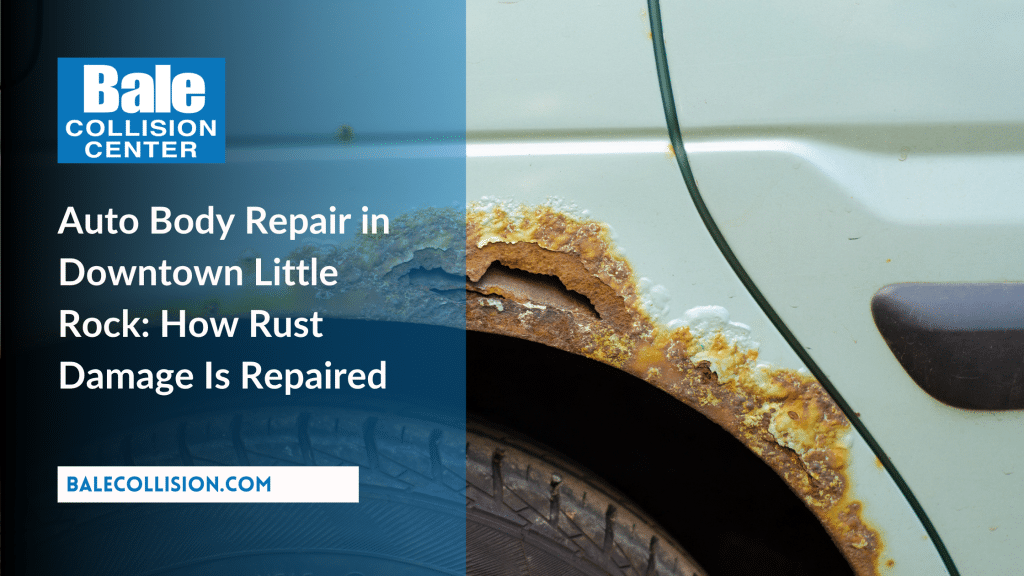
If corrosion continues to spread, it can develop into scale rust, where the metal begins to flake and weaken as oxidation penetrates deeper beneath the surface. Left untreated, rust may eventually progress into penetrating or structural corrosion, creating holes in body panels or affecting critical structural components that contribute to the vehicle’s overall strength and safety.
Because each stage of corrosion presents different challenges, technicians carefully inspect the affected area before recommending a repair method. Minor surface rust may require cleaning, corrosion treatment, and refinishing, while more advanced corrosion could involve repairing or replacing damaged panels.
Structural corrosion often requires the most extensive repairs because weakened components must be restored or replaced to help maintain the vehicle’s integrity. Determining the severity of the rust through a professional inspection helps ensure the repair addresses both the visible damage and any hidden deterioration beneath the surface.
For drivers in Downtown Little Rock, understanding the different stages of rust emphasizes the importance of early intervention. Bale Collision Center performs comprehensive inspections to evaluate the extent of corrosion and recommend the most appropriate repair strategy for each vehicle.
By identifying rust before it spreads further, the team helps protect your vehicle’s appearance, structural integrity, and long-term value while delivering repairs designed to withstand everyday driving conditions.
Professional Inspections Determine the Best Repair Method
Every rust repair begins with a comprehensive inspection.
Technicians may evaluate:
- Paint condition
- Panel thickness
- Structural integrity
- Hidden corrosion
- Drainage areas
- Adjacent components
These inspections help determine whether affected areas can be repaired or require replacement.
Drivers seeking professional auto body repair benefit from repair facilities that perform detailed inspections before beginning repairs.
Removing Rust Is Only One Step
Successful rust repair involves more than simply removing visible corrosion.
The repair process may include:
- Rust removal
- Surface preparation
- Panel repair or replacement
- Corrosion treatment
- Primer application
- Paint refinishing
- Protective clear coat
Each step helps restore both the appearance and durability of the repaired area.
According to I-CAR, proper repair procedures and refinishing techniques contribute to complete, safe, and quality collision repairs.
Simply removing visible rust does not eliminate the entire problem. Corrosion often extends beneath the surrounding paint or into areas that cannot be seen during a quick visual inspection. For this reason, technicians carefully assess the full extent of the damage before beginning repairs.
Any remaining corrosion must be completely removed or treated to help prevent it from returning after the repair is finished. Once the damaged metal has been addressed, technicians prepare the surface to create a clean, stable foundation for refinishing and any necessary panel repairs or replacement.
The refinishing process is equally important because it restores the protective barrier that shields the metal from moisture, road debris, and environmental exposure. High-quality primers, corrosion-resistant coatings, color-matched base coats, and durable clear coats work together to protect the repaired area while blending it with the surrounding factory finish.
Proper surface preparation and careful paint application help improve both the appearance and the longevity of the repair, reducing the likelihood of future corrosion in the same location.
For drivers in Downtown Little Rock, professional rust repair involves far more than improving the vehicle’s appearance. Bale Collision Center follows a comprehensive repair process that addresses the underlying cause of corrosion, restores damaged panels using proven repair methods, and applies quality refinishing products designed to protect against future rust.
This attention to every stage of the repair helps preserve your vehicle’s structural integrity, maintain its value, and provide long-lasting results that withstand everyday driving conditions.
Why Early Repairs Matter
Addressing rust early offers several important benefits.
Prompt repairs may help:
- Prevent corrosion from spreading
- Preserve structural integrity
- Reduce repair costs
- Maintain vehicle appearance
- Protect resale value
Small areas of corrosion are often easier to repair than extensive rust damage that has progressed over time.
Paint Protects Against Future Corrosion
One of the most important steps in rust repair is restoring the vehicle’s protective finish.
Modern refinishing systems typically include:
- Corrosion-resistant primer
- Base coat
- Clear coat
- UV protection
Drivers requiring professional auto paint services benefit from refinishing procedures designed to protect repaired surfaces from future environmental exposure.
Routine Inspections Help Prevent Rust
Regular vehicle inspections can help identify corrosion before it becomes severe.
Pay attention to:
- Wheel wells
- Rocker panels
- Door edges
- Hood edges
- Trunk openings
- Areas with chipped paint
Addressing small concerns early often helps avoid larger repairs later.
Choosing the Right Auto Body Repair Facility
Before scheduling rust repairs, consider asking:
- How severe is the corrosion?
- Can the damaged panel be repaired?
- Will replacement be necessary?
- How will the repaired area be protected?
- How is repair quality verified?
These questions help you better understand the recommended repair approach.
According to Consumer Reports, consumers should evaluate repair quality, technician experience, and communication when choosing an auto body repair facility.
Frequently Asked Questions
1. Can rust always be repaired?
Many rust issues can be repaired, but the appropriate solution depends on the severity and location of the corrosion.
2. What is surface rust?
Surface rust affects only the outer layer of the metal and is generally easier to repair than advanced corrosion.
3. When does rust require panel replacement?
If corrosion has significantly weakened the metal or created perforations, replacement may be recommended.
4. Why is a professional inspection important?
An inspection helps determine whether hidden corrosion or structural damage is present.
5. How does paint help prevent rust?
Paint and clear coat create a protective barrier that limits moisture from reaching the underlying metal.
6. Can rust spread if left untreated?
Yes. Corrosion typically continues to spread when exposed to moisture and oxygen.
7. How can I reduce the risk of rust?
Promptly repairing paint damage, washing your vehicle regularly, and addressing corrosion early can help minimize long-term damage.
8. Why choose Bale Collision Center?
Bale Collision Center combines experienced technicians, advanced refinishing techniques, comprehensive inspections, and quality workmanship to restore rust-damaged vehicles for drivers throughout Downtown Little Rock.
Conclusion
Rust damage may begin as a small cosmetic concern, but it can develop into a much larger repair if ignored. Professional inspections, proper rust removal, quality refinishing, and protective coatings all play important roles in restoring your vehicle and helping prevent future corrosion. Addressing rust early not only protects your vehicle’s appearance but also helps preserve its long-term durability and value.
If you’ve noticed rust damage on your vehicle in Downtown Little Rock, Bale Collision Center is ready to help. Visit 100 N Cross St, Little Rock, AR 72201, United States, to schedule an inspection, request an estimate, or learn more about our professional auto body repair services and comprehensive rust repair solutions.

