Home
/ FAQ
FAQs
Frequently Asked Questions About Collision Repair & Insurance
After an accident, it’s normal to have questions about the repair steps, insurance claims, timelines, and whether your vehicle is safe to drive. At Bale Collision Center, we believe customers deserve clear answers and honest guidance every step of the way.
With more than 70 years serving Arkansas families, our goal is to make the collision repair process easier, safer, and less stressful.
After an Accident
First, make sure everyone is safe and call emergency services if anyone may be injured. If the vehicle can be moved safely, get it out of traffic, exchange information with the other driver, and take photos of the scene, damage, license plates, and surrounding area.
After the immediate situation is under control, the next important step is having the vehicle professionally inspected. Many drivers assume the damage is minor based only on what they can see, but modern vehicles often experience hidden structural, suspension, sensor, or calibration-related damage after an impact.
At Bale Collision Center, we recommend addressing accident damage quickly so small issues do not become larger safety concerns later. Even low-speed collisions can affect the integrity of your vehicle and the performance of advanced driver-assistance systems.
Not always. If your vehicle has warning lights, steering problems, fluid leaks, wheel damage, rubbing tires, unusual sounds, or anything that feels unstable, it’s best not to continue driving until the vehicle has been inspected.
Even when a vehicle still runs and drives, hidden damage can exist underneath the surface. Modern vehicles are designed with complex structural components and electronic safety systems that may be affected after a collision.
At Bale Collision Center, we perform thorough inspections, vehicle scanning, and repair planning to help identify safety-related damage that may not be immediately visible. Your safety should never be based solely on whether the vehicle still moves.
Yes. A vehicle may still drive while having hidden damage underneath the surface.
Modern vehicles contain advanced safety systems, sensors, structural components, and calibration requirements that are not always visible after an accident. That’s why a professional inspection is important even after what appears to be minor damage.
Minor-looking bumper damage can still hide more serious problems underneath.
Sensors, brackets, reinforcement bars, mounting points, and safety-related components behind the bumper cover may also be damaged even if the outside appears relatively small.
If there is any uncertainty about injuries, fault, or road safety, calling the police is usually the safest decision.
An official accident report can also help later during the insurance and repair steps.
Insurance & Claims
Yes. Arkansas drivers generally have the legal right to choose the collision repair shop they want to use after an accident.
Although insurance companies may recommend shops within their preferred network, the final decision belongs to you. Choosing the right collision repair center matters because repair quality, communication, repair procedures, and overall customer experience can vary significantly between shops.
At Bale Collision Center, we believe customers should feel confident in the repair process and understand their options before making a decision. Our team works with insurance companies while still prioritizing safe repairs, OEM procedures, and a customer-first experience.
No. Insurance companies may suggest shops within their preferred network, but they cannot force you to use one.
At Bale Collision Center, we work with insurance companies while maintaining our focus on safe repairs, OEM procedures, and customer experience.
Yes. Bale Collision Center works with most major insurance companies, including:
- State Farm
- Allstate
- Liberty Mutual
- Hanover
- USAA
- Nationwide
- Safeco
- AAA
We also work with customers who choose to use their own insurance provider outside of direct repair programs.
Yes. One of the most stressful parts of an accident is often dealing with the insurance claim itself.
At Bale Collision Center, our team helps guide customers through the system by assisting with communication, repair planning, approvals, supplements, and coordination with insurance companies. Our goal is to make the system feel more organized, transparent, and manageable.
We understand that most customers are not collision repair experts, which is why we focus heavily on communication and education throughout the repair journey. From the initial inspection to final delivery, we want customers to feel informed and supported every step of the way.
It depends on the claim. Some insurance claims require photos, inspections, or approvals before repairs move forward.
Our team helps guide you through the next steps based on your specific claim situation.
Estimates & Repair Process
The first step is contacting Bale Collision Center and explaining what happened.
Depending on the situation, we may recommend an in-person inspection, photo estimate, or direct vehicle drop-off.
We offer estimate workflows based on the situation, including in-person inspections and photo-based estimate options.
If you have questions about the steps, our team can explain the best next step for your specific situation.
Yes. In many situations, photo estimates can provide a helpful starting point.
However, photos can only show visible damage. Additional damage may be discovered later during disassembly and inspection.
Different shops may approach repairs differently, identify different levels of visible damage, or use different assumptions about parts and repair procedures.
The lowest estimate is not always the best estimate. A more complete estimate may reflect a more detailed and safety-focused repair plan.
A repair estimate typically includes visible damage, labor operations, parts, paint and refinishing work, and repair procedures based on what can be confirmed during the initial inspection.
If hidden damage is later discovered, the estimate may need to be updated.
This is common in collision repair.
Once damaged parts are removed, technicians may discover additional structural, mechanical, or safety-related damage that was not visible during the first inspection.
When this happens, the repair plan and insurance supplement are updated accordingly.
A supplement is an update to the original repair estimate after additional damage or repair operations are identified.
Supplements are a normal part of many collision repairs and help ensure the vehicle is repaired properly instead of overlooking hidden damage.
Collision repair timelines vary depending on several factors, including the extent of the damage, vehicle type, parts availability, insurance approvals, and whether additional damage is discovered during disassembly.
Some repairs may move quickly, while others require additional repair planning, OEM research, structural work, or calibration procedures. Modern vehicles are more advanced than ever, which means proper repairs often involve more than just replacing visible damaged parts.
At Bale Collision Center, we focus on completing repairs correctly and safely rather than making unrealistic promises simply to sound convenient. Clear communication throughout the process is one of the ways we help customers feel more confident while their vehicle is in repair.
Yes. Communication is an important part of the customer experience.
Bale Collision Center provides regular updates throughout the repair process so customers understand the current stage of repairs and any factors affecting timelines.
If the vehicle is safe to drive, bring the vehicle along with:
- Insurance claim information
- Claim number
- Photos from the accident
- Registration and insurance documents
- Any paperwork related to the accident
Having this information available helps make the process smoother and more efficient
Collision Repair Services
Bale Collision Center specializes in a wide range of collision repair and auto body services designed to restore vehicles safely and professionally after an accident.
Our services include:
- Collision repair
- Auto body repair
- Paintless dent repair (PDR)
- Glass replacement
- Paint and refinishing
- ADAS calibrations
- Fleet collision repair
- Mechanical-related collision services
- Vehicle scanning and repair planning
We work on most makes and models and focus primarily on late-model collision-damaged vehicles. Our repair process is built around OEM procedures, advanced repair technology, quality control, and customer communication.
Yes. Bale Collision Center is a collision-focused repair facility equipped to handle both major and minor collision damage.
Our process includes repair planning, structural repair procedures, vehicle scanning, calibration considerations, and quality control.
Yes. Smaller cosmetic damage can still be professionally inspected and repaired.
Even minor damage can sometimes involve hidden issues beneath the surface.
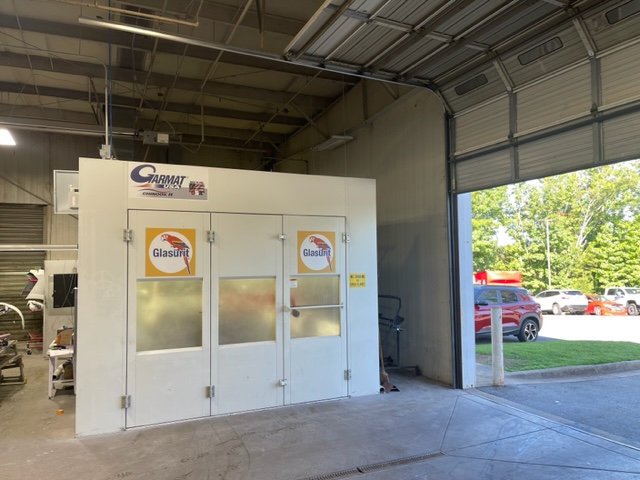
Yes. We use professional paint-matching technology and BASF waterborne paint systems to help achieve a consistent, factory-quality finish.
That is always the goal.
Factors like vehicle age, sun exposure, previous repairs, and paint condition can affect refinishing results, but our repair process is designed to create a clean and consistent appearance.
Yes. Bale Collision Center works with fleet vehicles and business owners who need dependable collision repair support.
We understand that downtime affects business operations, which is why communication and repair planning are important parts of the process.
OEM Procedures, Certifications & Vehicle Technology
Modern vehicles are engineered with highly specific materials, structural designs, electronics, and safety systems. Because of that, manufacturers often require very specific repair procedures after a collision.
OEM repair procedures are designed to help restore the vehicle according to manufacturer standards rather than relying on generic repair methods. These procedures can impact structural integrity, safety system performance, calibration requirements, welding methods, and overall repair quality.
At Bale Collision Center, we believe safe repairs begin with proper repair planning and manufacturer-informed procedures. Following OEM guidelines helps support more accurate repairs and gives customers greater confidence in the repair process.
Bale Collision Center prioritizes OEM parts whenever appropriate and available.
However, parts usage can still depend on insurance approvals, vehicle requirements, and claim-specific factors.
OEM parts are produced by or for the vehicle manufacturer.
Aftermarket parts are produced by third-party manufacturers.
The difference may affect fit, finish, consistency, and how closely the part matches the original vehicle specifications.
OEM-certified repair means a collision repair facility has invested in manufacturer-aligned repair standards, training, tooling, and repair procedures.
At Bale Collision Center, safe repairs and OEM procedures are an important part of our repair philosophy.
Bale Collision Center holds:
- I-CAR Gold Class certification
- ASE certifications
- I-CAR Platinum technician certifications
These certifications reflect ongoing investment in training, repair standards, and modern vehicle repair knowledge.
Many modern vehicles require pre-scans and post-scans after a collision.
Electronic systems, sensors, safety features, and warning codes may need to be checked even when damage appears limited.
ADAS calibration involves checking and adjusting advanced driver-assistance systems such as cameras, sensors, lane-assist systems, and collision-avoidance features.
These systems often require calibration after certain repairs or collisions to help ensure proper functionality.
Warranty & Customer Experience
Yes. Bale Collision Center supports its repairs with a limited lifetime warranty structure.
Customers should review the written warranty for complete coverage details.
Bale Collision Center has proudly served Arkansas families since 1952. Over the decades, we have built our reputation around safe repairs, honest communication, and a customer-focused experience.
What truly separates Bale Collision Center is our commitment to combining advanced collision repair procedures with a family-centered approach to customer care. We understand that being involved in an accident is stressful, which is why we focus heavily on communication, transparency, and helping customers feel supported throughout the process.
Our team invests in ongoing training, modern repair technology, OEM repair procedures, and industry certifications to help ensure repairs are completed properly. At the same time, we never want customers to feel like just another repair order.
As our slogan says:
“We are generations of family, helping generations of families do life.”
That philosophy influences everything we do — from the first estimate to final delivery.
Communication is a major part of our process.
Customers receive regular repair updates throughout the process so they always understand the status of their vehicle.
After repairs are completed, Bale Collision Center performs:
- Final inspections
- Post-repair scans
- Calibration verification
- Vehicle cleaning
- Repair review with the customer
Our goal is to ensure customers feel confident and satisfied before vehicle delivery.
Bale Collision Center proudly serves drivers throughout Little Rock and surrounding Arkansas communities from our two locations:
- 13101 Chenal Pkwy, Little Rock, AR 72211
- 100 N Cross St, Little Rock, AR 72201
Still Have Questions?
Every collision repair situation is different.
If you still have questions, contact Bale Collision Center and our team will help guide you through the next step with honest answers and clear communication.
