Arkansas winters bring unique challenges to drivers and collision repair facilities alike. When temperatures drop and precipitation freezes, accident rates climb across Little Rock and the surrounding areas. Modern vehicles house sophisticated electronic systems throughout their structure, and these components respond differently to cold-weather impacts than traditional mechanical parts.
The cameras mounted behind windshields, radar sensors embedded in bumpers, and control modules positioned throughout the vehicle all face increased vulnerability when temperatures plunge. Advanced Driver Assistance Systems (ADAS) include a network of cameras, sensors, and radar units that enable features like automatic emergency braking and lane departure warnings. These require precise calibration after any collision, with winter conditions adding another layer of complexity.
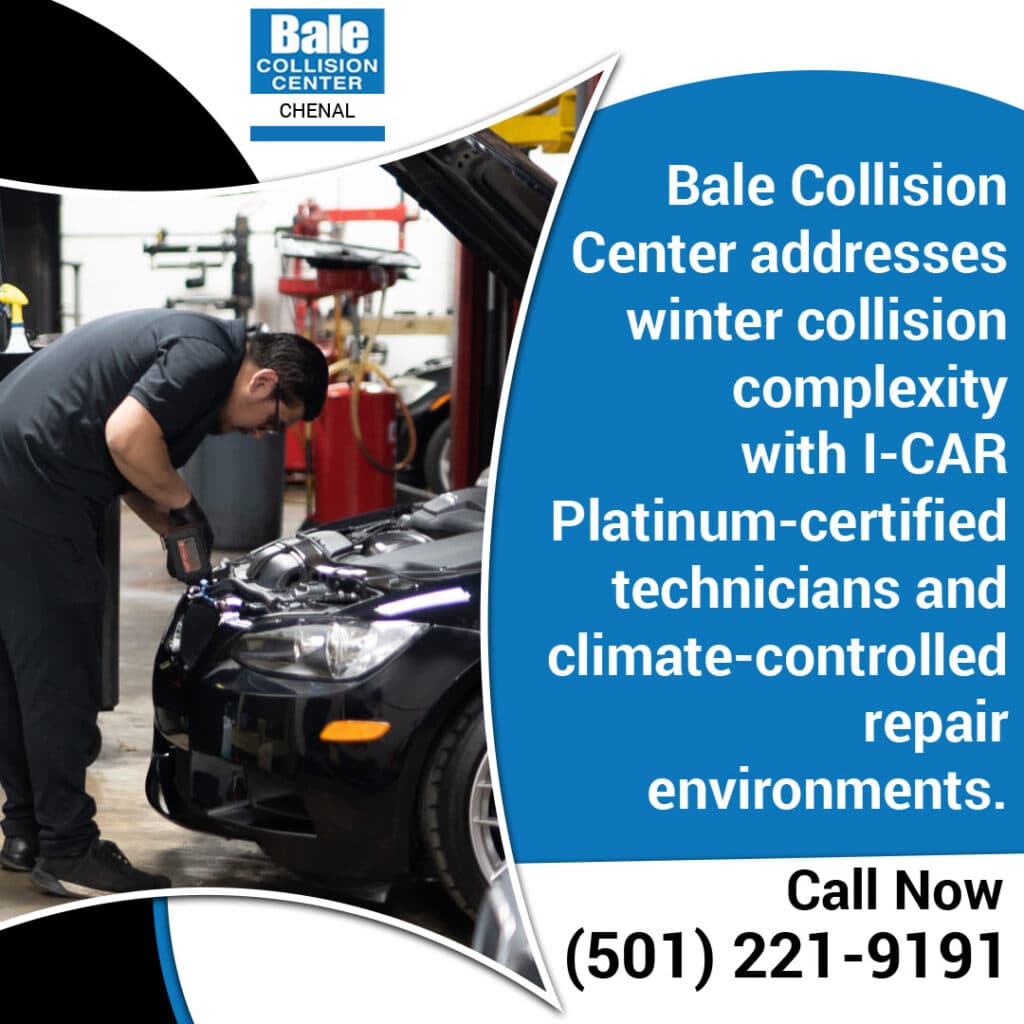
Bale Collision Center (Chenal) has navigated Arkansas weather patterns since 1952, understanding how seasonal conditions affect repair outcomes. We offer collision repair in Chenal Parkway that addresses winter-specific repair challenges through climate-controlled work environments and manufacturer-approved diagnostic equipment. Our certified technicians combine decades of experience with modern diagnostic tools to handle the complexities that winter collisions create, restoring both visible damage and electronic safety systems to factory specifications.
Winter Collision Patterns in Little Rock
Winter weather creates specific accident patterns that require different repair approaches. Black ice forms on bridges and shaded road sections when temperatures hover near freezing. Drivers encounter invisible ice patches that eliminate traction instantly. This causes vehicles to slide into other cars, guardrails, or fixed objects.
Black Ice and Low-Speed Impacts
Black ice conditions contribute to numerous collisions where electronic components behind bumpers shift position or sustain internal damage. The collision forces may seem minor, but electronic components behind bumpers can shift position or sustain internal damage. A vehicle sliding at 15 mph generates enough force to misalign forward-collision sensors without creating visible structural damage.
These collisions also affect side-mounted components. When vehicles slide laterally into curbs or other obstacles, blind-spot monitoring sensors in rear bumpers and side mirrors sustain impact forces that shift their mounting positions. Professional auto collision repair addresses both visible damage and hidden electronic system problems.
Multi-Vehicle Chain Reactions
Winter storms reduce visibility and create slippery conditions that lead to chain-reaction accidents. One vehicle losing control on an icy highway section triggers collisions involving multiple cars.
Multi-vehicle winter collisions typically damage multiple body panels and sensors simultaneously. Side impacts affect blind-spot monitoring sensors, while secondary rear impacts damage backup cameras and parking sensors. The complexity of multi-directional damage means calibration requirements go beyond a single system.
Front-end impacts during pileups often compress the entire front structure, shifting the mounting positions of multiple radar units and cameras. Even vehicles that appear to have minor damage may require extensive sensor replacement and recalibration.
Visibility-Related Front-End Accidents
Freezing rain, snow, and fog reduce visibility on Arkansas roads during the winter months. Drivers maintain normal speeds until visibility suddenly decreases, leading to collisions when they cannot see vehicles ahead.
Visibility-related winter collisions cause front-end damage that affects windshield-mounted cameras and forward radar systems. The impact forces from these accidents crack windshields, requiring replacement that necessitates recalibration of all windshield-mounted ADAS components.
Forward collision warning systems and automatic emergency braking depend on the precise alignment of front-mounted sensors. Higher-speed impacts typically require replacement of these components rather than simple realignment.
Temperature Effects on Repair Quality
Cold weather alters how materials behave and slows the chemical reactions necessary for proper repairs. Materials used in auto collision repair have specific temperature requirements for proper application and curing.
Paint Application and Curing Requirements
Automotive paint requires controlled temperature conditions to cure properly. Most paint systems specify application temperatures between 60°F and 80°F with controlled humidity levels. Cold temperatures slow chemical reactions in paint. This extends curing times and creates surface defects.
When paint cures too slowly, dust and contaminants have more time to settle on wet surfaces. The extended curing period lets solvents evaporate unevenly, creating texture problems or color inconsistencies. Professional facilities handle these challenges by maintaining climate-controlled paint booths that regulate temperature and humidity regardless of outside conditions.
Adhesive and Sealant Performance
Structural adhesives used in modern vehicles bond body panels, windshields, and trim pieces. These adhesives require specific temperature ranges to achieve proper bonding strength. Cold temperatures prevent adhesives from curing fully. This creates weak bonds that may fail over time.
Windshield installation particularly depends on adhesive performance. The urethane adhesive that bonds windshields to vehicle frames needs adequate time at proper temperatures to achieve safe driving strength. Installing windshields in cold conditions without proper temperature control compromises the structural integrity that windshields provide during rollover accidents.
Panel bonding adhesives face similar temperature constraints. Modern repair techniques use adhesives instead of welds in many applications because adhesives distribute stress more evenly across repair areas. However, these adhesives only provide design strength when cured at proper temperatures.
Metal and Plastic Material Behavior
Metal becomes more brittle when cold, increasing the risk of cracking during straightening operations. Steel and aluminum both show reduced ductility at low temperatures, meaning they cannot be formed or straightened as easily without cracking.
Plastic bumper covers and trim pieces also become brittle in cold weather, making them more likely to crack during removal or installation. The plastic clips and fasteners used throughout modern vehicles snap easily when cold, requiring replacement rather than reuse.
Technicians must warm materials to room temperature before working with them to prevent cold-related damage. This adds time to winter repairs but protects the quality of the finished work.
ADAS Calibration Requirements After Winter Accidents
Winter collision damage affects electronic systems in ways that may not be obvious instantly. Modern vehicles contain dozens of electronic control modules throughout the body structure, each vulnerable to impact forces and temperature extremes.
Temperature Effects on Electronic Sensors
Electronic sensors contain components that expand and contract with temperature changes. Sudden temperature shifts during winter collisions cause microscopic cracks in circuit boards or disconnect solder joints. These failures may not activate immediate warning lights but cause intermittent system malfunctions. Radar sensor vulnerabilities include:
- Precisely positioned antenna elements shifting due to impact forces and rapid temperature changes.
- Changed radar interpretation when antenna elements move even slightly.
- Distance and speed detection errors that affect automatic emergency braking.
Camera system challenges include:
- Lens elements that must maintain precise alignment for the software to interpret images.
- Collision impacts that shift lens elements out of position.
- Temperature changes causing expansion and contraction that affect focus.
Salt and Moisture Damage to Electronics
Arkansas road crews apply salt and chemical de-icers to maintain winter driving safety. These chemicals create corrosive conditions that affect electronic components, especially in damaged areas where protective covers have cracked or seals have broken. Winter collision exposure risks include:
- Wiring harnesses and control modules become exposed to salt spray and moisture.
- Salt residue remaining in hidden areas after body repairs are completed.
- Slow corrosion of electrical connections that creates intermittent problems weeks or months later.
Proper winter collision repair near you should include thorough cleaning of all affected areas before reassembly. Technicians must remove salt deposits, apply corrosion inhibitors, and verify that all electrical connections are clean and dry.
Hidden Damage to Control Modules
Control modules mounted throughout the vehicle sustain internal damage during winter collisions without showing external signs of problems. The circuit boards inside control modules crack from impact forces, while connector pins bend or corrode from moisture intrusion. Winter moisture damage occurs through:
- Snow and ice melting during indoor storage causes water to seep into damaged areas.
- Water entering the control module housings through cracked cases or damaged seals.
- Moisture causing corrosion that gradually destroys electronic components.
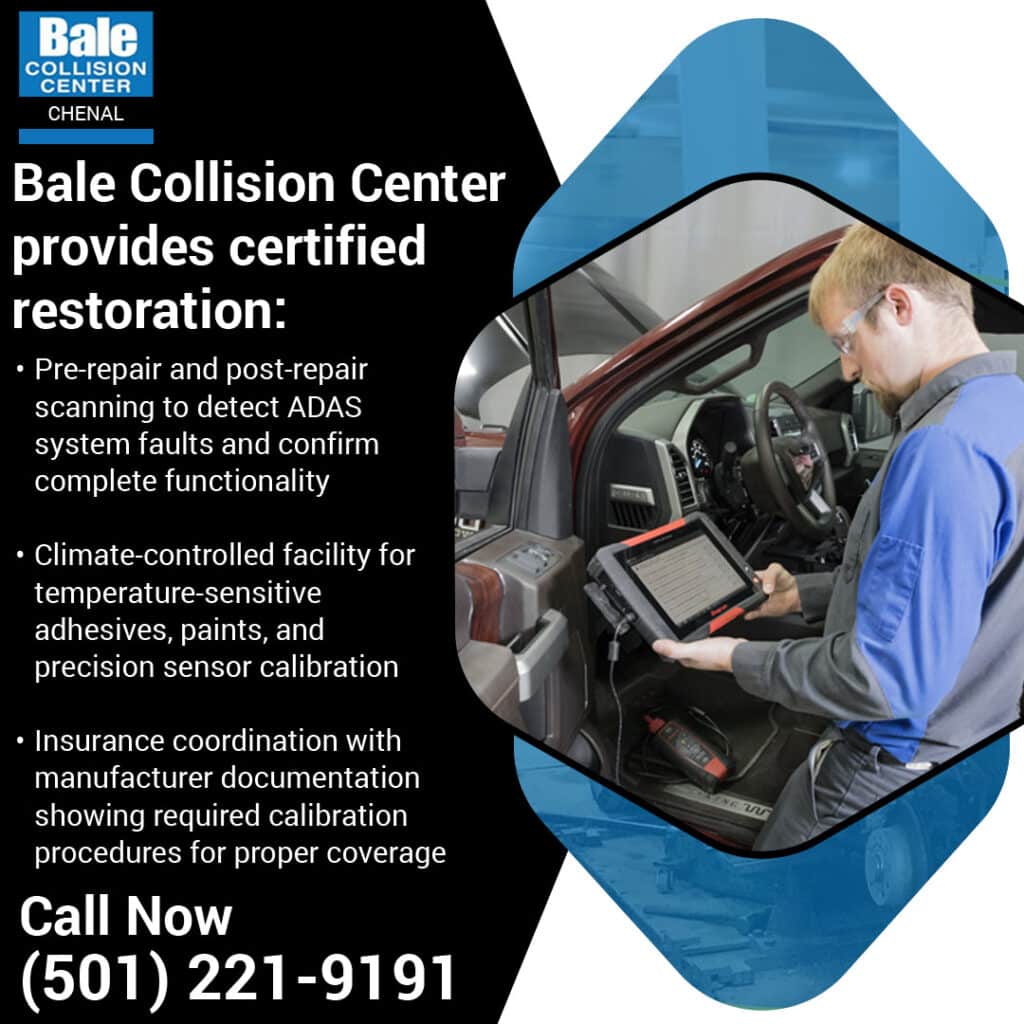
Diagnostic scanning before and after auto collision repairs identifies control module damage that visual inspection cannot detect. The two-scan process documents the problems that existed before repairs and confirms that all issues have been resolved.
The Professional Winter Repair Process
Professional collision repair during the winter months requires specific steps to address both temperature challenges and electronic system vulnerabilities.
Climate-Controlled Repair Environment
Repairing vehicles in heated facilities eliminates most temperature-related quality problems. Maintaining temperatures between 65°F and 75°F allows paint to cure properly, adhesives to bond correctly, and materials to behave predictably during repair operations.
Climate-controlled facilities also improve the accuracy of diagnostic work. Electronic systems function more reliably at normal operating temperatures, making it easier to identify actual damage versus temporary temperature-related issues. Calibration equipment performs more accurately in controlled environments where temperature fluctuations do not affect the precision of measurement.
Pre-Repair Diagnostic Scanning
The first step in proper winter auto collision repair involves connecting diagnostic equipment to the vehicle and scanning all electronic control modules. This pre-repair scan documents what problems exist before any work begins.
Winter collisions often create diagnostic trouble codes in multiple systems. A front-end collision might trigger codes in the airbag system, forward-collision radar, engine control module, and transmission control module. Recording all these codes before repairs protects both the customer and the repair facility by establishing which problems came from the accident.
Each control module in modern vehicles maintains its own diagnostic memory and must be scanned individually to identify all collision-related faults.
Parts Replacement and Alignment
After diagnostic scanning, technicians replace damaged body panels, sensors, cameras, and other components. Winter repairs require extra attention to moisture removal and corrosion prevention. All damaged areas must be cleaned thoroughly, dried completely, and treated with corrosion inhibitors before installing new parts.
Sensors and cameras require precise installation. Mounting brackets must be aligned exactly to factory specifications because even small position errors affect calibration. Parts installed in cold conditions may shift position slightly as materials warm up, which is why climate-controlled environments produce more reliable results.
OEM parts for sensors and cameras meet factory specifications, while aftermarket alternatives may not. ADAS components function as integrated systems where cameras, sensors, and control modules are designed to operate in coordination with each other.
Post-Repair Calibration and Verification
After body repairs and parts installation are complete, technicians perform ADAS calibration using specialized equipment. This process resets sensors and cameras to factory specifications, accounting for any position changes that occurred during repair.
Calibration requirements vary by vehicle make and model. Some systems need static calibration performed in the shop using target boards positioned at precise distances and angles. Other systems require dynamic calibration, where the vehicle is driven in specific conditions while the system learns its environment.
A second diagnostic scan is done as the final step to verify that all repairs are complete and no new problems have appeared during the repair process. This post-repair scan confirms that warning lights will not illuminate after the customer picks up the vehicle and that all safety systems function correctly.
Quality collision repair near you should follow this complete process to deliver repairs that restore both appearance and safety system functionality.
Insurance Coverage for Winter Repairs
Most winter accidents fall under collision coverage, which pays for damage caused by vehicle impacts. Insurance collision repair coverage typically includes all necessary steps to restore the vehicle to pre-accident condition, including diagnostic scanning and ADAS calibration.
Vehicle manufacturers publish position statements that require diagnostic scanning and calibration after specific types of repairs. This documentation helps support the need for complete winter collision repairs.
Communicating Calibration Needs
Insurance adjusters may not automatically include ADAS calibration in initial estimates, especially if they assess damage remotely through photos. Customers need repair facilities that will document calibration requirements and communicate technical details to adjusters.
When adjusters question calibration requirements, repair facilities provide manufacturer documentation showing that calibration is required after specific repairs. Windshield replacement, bumper removal, and any work affecting sensor mounting points trigger calibration requirements according to the vehicle manufacturer’s repair procedures.
Bale Collision Center works directly with all major insurance companies, including State Farm, Allstate, Liberty Mutual, USAA, and Nationwide. Our experience with insurance collision repair helps customers receive approval for complete repairs rather than estimates that skip critical steps like ADAS recalibration and temperature-controlled processes necessary for winter collision damage.
Winter Collision Repair Expertise at Bale Collision Center
Proper winter repairs require specialized knowledge, equipment, and a commitment to thorough restoration rather than superficial fixes.
Seven Decades of Little Rock Service
Since 1952, Bale Collision Center has served Little Rock drivers through every season and weather condition. Our collision repair in Chenal Parkway has evolved through decades of experience to address how winter affects repair quality and what steps are necessary to protect customer safety.
Our family-owned approach means we treat every customer according to our company slogan: “We are generations of family, helping generations of families do life.” Families continue to choose us across generations because we consistently deliver trustworthy, quality vehicle care.
Advanced Winter Repair Capabilities
At Bale Collision Center, we maintain climate-controlled repair bays that eliminate temperature-related quality problems. Heated work areas allow proper paint application, adhesive curing, and material handling regardless of outside temperatures.
We use advanced VSSTA diagnostic equipment because modern vehicles require manufacturer-approved tools for proper repair. This equipment allows us to perform both pre-repair and post-repair diagnostic scanning.
Our technicians hold I-CAR Platinum certifications, representing the highest training level in the industry. This training covers electronic diagnostics, proper scan tool operation, and advanced safety systems understanding necessary to coordinate complete repairs.
Working With Insurance Companies
We have established relationships with all major insurance companies through decades of professional service. These relationships help speed up the approval process for necessary repairs.
Restoring Safety Through Proper Winter Repairs in Little Rock
Winter collisions create distinct challenges that require more than basic bodywork to resolve safely. Temperature affects paint quality, adhesive bonding, and material handling. Electronic systems sustain hidden damage from impact forces and cold weather conditions. ADAS calibration restores safety features that protect you and your passengers during each drive. Choosing a certified facility with climate-controlled repair capabilities and proper diagnostic equipment protects your investment and your safety.
For complete collision repair in Chenal Parkway that addresses both visible damage and electronic system requirements, contact Bale Collision Center. Our I-CAR Gold Class certified facility combines modern equipment, trained technicians, and thorough repair processes to handle winter collision damage correctly. Call (501) 221-9191 or email bccwlr@baleautomotive.com to schedule your free estimate and experience collision repair near you that focuses on both quality and safety.