The aluminum revolution in vehicle manufacturing has transformed the automotive industry over the past decade. What started with luxury vehicles has now reached mainstream trucks and SUVs, with manufacturers like Ford leading the charge by introducing aluminum bodies in their popular F-150 lineup starting in 2015. This shift brought tremendous benefits in fuel efficiency and performance, but it also created a new challenge: finding collision centers equipped to properly repair these vehicles.
Many vehicle owners don’t realize their car or truck contains aluminum body panels until after an accident. At that point, choosing the right repair facility becomes critical. Unlike traditional steel repairs that most body shops handle routinely, aluminum work demands specialized training, dedicated equipment, and strict contamination prevention protocols.
At Bale Collision Center (Chenal), our I-CAR Platinum-certified technicians understand these unique requirements. We’ve invested in dedicated aluminum repair spaces, specialized welding equipment, and ongoing manufacturer training to handle the growing number of aluminum vehicles on Little Rock roads. The difference between proper aluminum repair and inadequate work isn’t always visible immediately, but it affects your vehicle’s safety, longevity, and value for years to come.
Aluminum and Steel: Fundamental Differences
Aluminum and steel are both metals, but they behave completely differently during repairs, requiring separate tools, techniques, and workspaces. The table below illustrates the key differences that impact collision repair:
| Property | Steel | Aluminum |
| Repair Flexibility | Can be reshaped using standard tools and methods | Becomes harder when bent (work hardening), resists reshaping |
| Heat Tolerance | Tolerates high temperatures without strength loss | Must be heated to specific temperatures; overheating causes permanent weakness |
| Heat Conductivity | Heat stays localized to the repair area | Heat spreads quickly throughout the entire panel |
| Primary Joining Method | Spot welding | Adhesives, self-piercing rivets, and specialized fasteners |
| Contamination Risk | Minimal cross-material concerns | Steel particles cause galvanic corrosion |
| Tool Requirements | Standard collision repair tools | Dedicated aluminum-only tools required |
Temperature Sensitivity
The temperature differences shown in the table have practical implications during auto collision repairs. While steel gives technicians flexibility to apply heat without constant monitoring, aluminum demands precision. Heating aluminum too much causes permanent structural weakness that cannot be reversed. Additionally, because heat spreads rapidly through aluminum panels, a technician working on one section must consider thermal effects on the entire component to prevent damage away from the actual repair zone.
Different Joining Methods
The shift from spot welding to alternative joining methods represents one of the most significant changes in auto collision repair. Modern aluminum vehicles rely heavily on self-piercing rivets throughout their body structure, each requiring precise installation with specialized equipment. Structural adhesives bond panels while distributing crash forces across larger areas than individual welds. During repairs, replicating these manufacturer-specified joints exactly maintains your vehicle’s ability to absorb crash energy during future accidents.
The Critical Contamination Issue
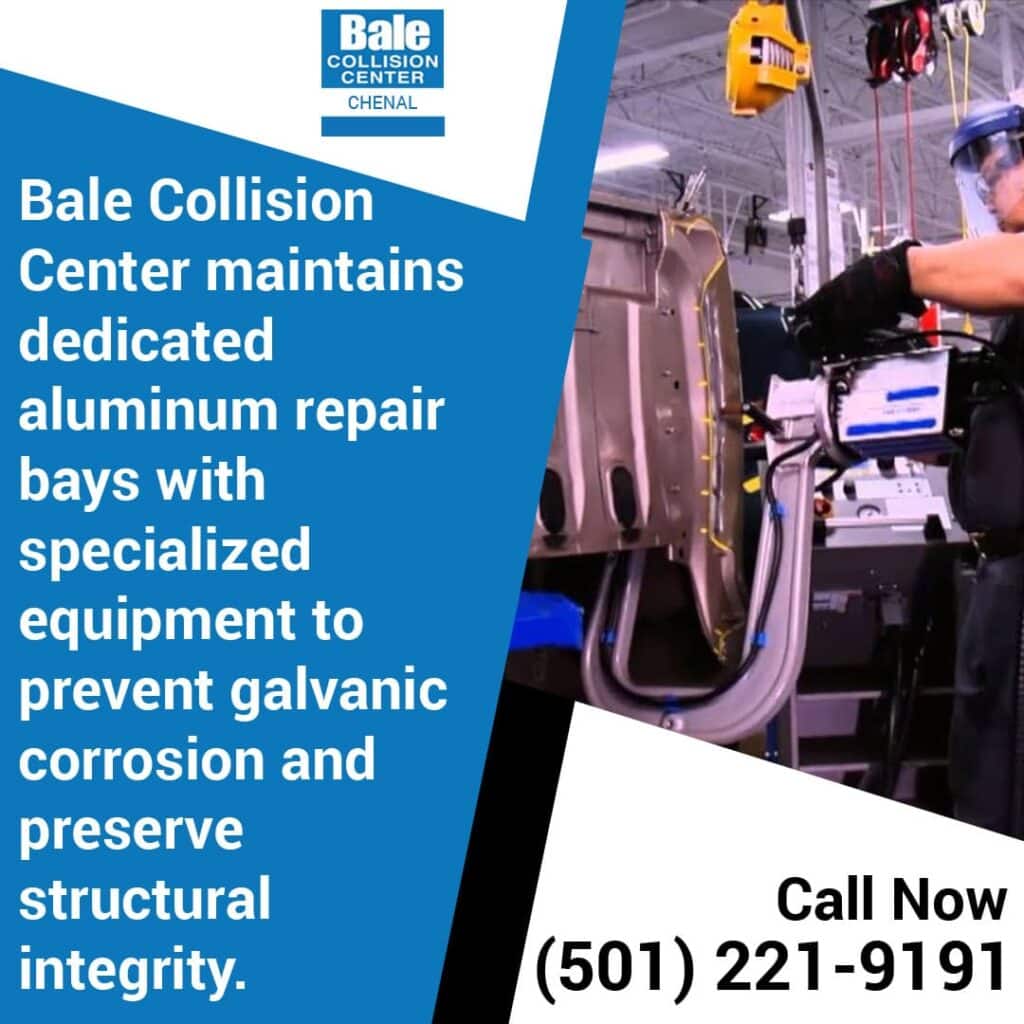
Steel particles and aluminum cannot mix, or they create corrosion that spreads beneath your paint and weakens structural components over time. This is perhaps the most important difference between steel and aluminum repairs.
When microscopic steel particles contact aluminum in the presence of moisture, a chemical reaction called galvanic corrosion can occur. This corrosion may spread under paint and weaken structural areas. Steel dust from grinding or welding on other vehicles can initiate this process if moisture is present.
Dedicated Work Spaces
Professional auto collision repair shops handling aluminum maintain completely separated work areas. These dedicated spaces have separate ventilation systems preventing dust transfer, different tools used only on aluminum, specialized vacuum systems for aluminum dust, and storage areas keeping aluminum parts away from steel work.
This separation isn’t optional. It’s required for safe aluminum repairs. A collision center without dedicated aluminum space cannot properly repair your vehicle, regardless of its technician’s skill level.
Corrosion Consequences
The corrosion from steel contamination weakens seat belt mounting points, airbag attachment locations, and structural components designed to protect you during crashes. This hidden damage accelerates in environments with road salt, making proper contamination prevention even more important for vehicles in areas with winter weather.
Required Specialized Equipment
Proper aluminum collision repair requires specialized welding machines, dedicated hand tools, and explosion-proof dust collection systems that most shops don’t possess.
Aluminum-Specific Welding Equipment
Aluminum welding machines work differently from the equipment used for steel. These specialized welders must manage heat with extreme precision. They use different welding wires and pure argon gas, whereas steel welding uses mixed gases. If a shop uses the wrong welding wire for your specific aluminum type, the welds may look fine but could break apart in a future collision.
Complete Tool Duplication
Here’s something most vehicle owners don’t realize: shops properly equipped for aluminum work need two complete sets of every tool. One set for steel, one set for aluminum.
Hammers, measuring tapes, work carts, and even the benches where parts sit must be kept separate. Why? Because any tool that touches a steel vehicle picks up microscopic steel particles. Those particles transfer to your aluminum vehicle and start the corrosion process we discussed earlier.
Safety Systems
Aluminum creates fine dust during grinding and sanding. Unlike steel dust, aluminum dust is combustible under certain conditions. Shops handling aluminum use specialized explosion-proof vacuum systems to prevent sparks or ignition. Standard shop vacuums are not suitable for this work. These specialized systems are necessary to protect technicians and your vehicle.
Identifying Qualified Repair Facilities
Look for a certified collision repair center with manufacturer approvals and physical evidence of dedicated aluminum work areas.
Understanding Certifications
I-CAR provides the collision repair industry’s primary training standards. Two certification levels matter for aluminum work:
- I-CAR Gold Class certification applies to the facility and indicates that the collision center meets ongoing training standards across its repair programs. Maintaining this certification requires continuous training to uphold high safety and repair quality standards.
- I-CAR Platinum certifies individual technicians who complete extensive aluminum-specific training covering material properties, repair techniques, and safety procedures. These technicians understand how different aluminum alloys respond to repair processes.
At Bale Collision Center, we maintain I-CAR Gold Class certification with multiple Platinum-certified technicians on staff. This combination provides confidence that both our facility and team members meet the highest standards for car collision repair in Chenal, Little Rock, AR.
Questions To Ask Potential Shops
When selecting a certified collision repair facility, ask direct questions about their aluminum capabilities:
Do you have a dedicated aluminum work area physically separated from steel repairs?
Proper facilities will have walls or barriers preventing dust transfer between work zones. The separation should be physical, not just organizational, to prevent cross-contamination.
Which technicians hold I-CAR Platinum certification for aluminum repair?
Shops should be able to name specific certified technicians who will work on your vehicle. Ask to see certification documentation if needed.
How do you prevent steel contamination during aluminum repairs?
Listen for specific answers about dedicated workspaces, separate ventilation systems, and tool management procedures. Vague responses indicate potential problems.
Do you follow OEM repair procedures for aluminum vehicles?
Shops should have access to manufacturer repair information systems and follow brand-specific procedures. Ask how they stay updated on the latest repair methods.
What types of aluminum vehicles have you repaired recently?
Experience matters. Shops regularly handling aluminum repairs can provide examples of similar vehicles they’ve worked on, from trucks to luxury cars.
Shops that provide unclear answers or can’t describe specific aluminum equipment likely lack proper resources for safe repairs.
Risks From Improper Aluminum Repairs
Incorrect aluminum repairs create hidden corrosion, weak welds, and improper crash protection that may not become apparent until another accident occurs.
Hidden Corrosion Development
Steel contamination creates corrosion that spreads beneath paint where you cannot see it. This hidden damage weakens structural components, seat belt mounting points, and airbag attachment locations over time.
The corrosion accelerates in environments with road salt. By the time surface rust appears at repair locations, the underlying damage has already reduced the metal’s load-bearing capacity. The corrosion products occupy more volume than the original metal, creating internal stress that causes further cracking.
Structural Weakness From Poor Welding
Aluminum welds using wrong techniques, incorrect filler wire, or poor heat control look acceptable on the surface but fail under crash loads. These defective welds could separate during a future collision, directing impact forces toward the passenger compartment instead of through the designed crush zones.
Excessive heat during welding permanently weakens aluminum adjacent to the weld. This weakened zone extends outward from the weld and loses strength even though the weld itself may appear sound. When crash forces reach these poorly executed welds, joints separate instead of transferring energy through the vehicle’s protective structure.
Compromised Crash Protection
When replacement panels are attached using incorrect adhesives or improper rivets, the joints won’t manage crash energy properly. During a collision, these panels may separate from the vehicle structure instead of working together to absorb impact forces.
Manufacturer specifications exist because engineers tested how different joining methods affect crash protection through computer simulation and physical crash testing. Deviating from these specifications reduces your vehicle’s protective capabilities in specific crash scenarios.
Bale Collision Center’s Aluminum Expertise
When you need car collision repair in Chenal, Little Rock, AR, you deserve access to a properly equipped facility with the training and tools to handle modern aluminum vehicles safely. That’s why Bale Collision Center has invested in complete aluminum repair capabilities.
Proper Equipment and Training
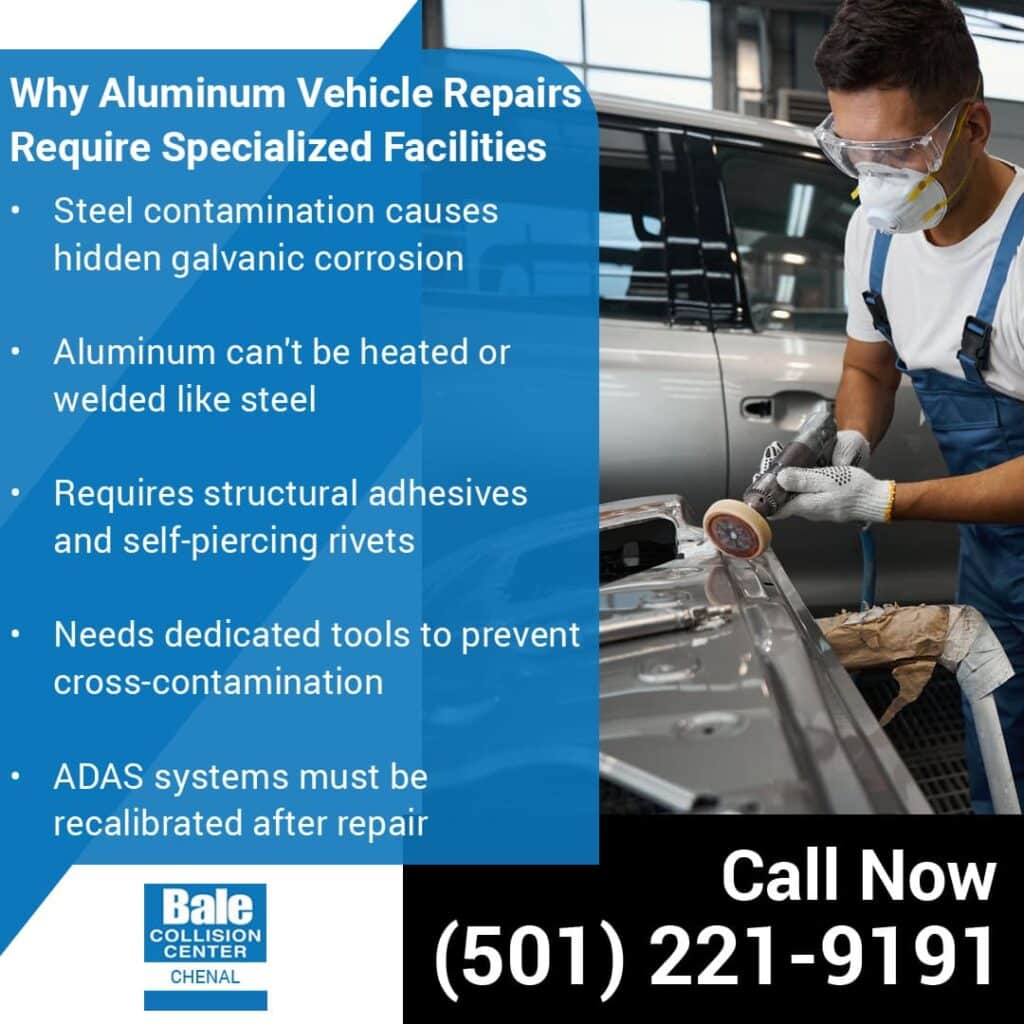
Our I-CAR Platinum-certified technicians complete ongoing training as vehicle technology evolves. We use Pro-Spot welding equipment, providing precise heat control for aluminum work. We use frame systems that handle both steel and aluminum structural repairs with laser measuring accuracy.
We designed our facility with dedicated aluminum work areas, separate tool storage, and aluminum-specific material handling from the beginning.
Manufacturer Procedure Compliance
At Bale Collision Center, we follow Original Equipment Manufacturer specifications exactly for repairs. We stay updated with manufacturer repair information for various brands, accessing vehicle-specific procedures as manufacturers refine techniques based on field experience and emerging best practices.
Our repair documentation includes detailed records of procedures followed, materials used, and quality checks performed. This documentation proves your aluminum vehicle received proper repairs meeting manufacturer standards rather than shortcuts creating hidden risks.
Complete System Verification
Modern aluminum vehicles have integrated electronic safety systems that require verification after auto collision repairs. Our technicians use manufacturer-recommended diagnostic tools, such as VSSTA, where applicable, to confirm that all systems function correctly.
This verification process confirms that ADAS (Advanced Driver Assistance Systems) sensors, airbag systems, and other electronic components function properly with the restored structure. Your safety systems must work correctly when needed, making this testing a critical final step.
Trust Your Aluminum Vehicle to Certified Professionals in Little Rock
Aluminum vehicle technology delivers better fuel efficiency and improved performance when repairs maintain the engineering, providing these benefits. Choosing a certified collision repair facility with proper equipment and training protects both your investment and your safety.
Don’t risk your vehicle with shops lacking dedicated aluminum repair capabilities. Improper repairs create problems that may not become apparent for months or years but could compromise your protection during a future collision.
Contact Bale Collision Center at (501) 221-9191 or bccwlr@baleautomotive.com to schedule your repair estimate. With over 70 years of experience providing car collision repair in Chenal, Little Rock, AR, and surrounding areas, we understand proper aluminum repairs and deliver the quality your vehicle deserves.