A cracked windshield creates immediate questions about legality and safety for Arkansas drivers. Many people wonder whether they can legally drive with windshield damage or if they risk receiving a traffic citation. Understanding state regulations helps you make informed decisions about when repairs become necessary.
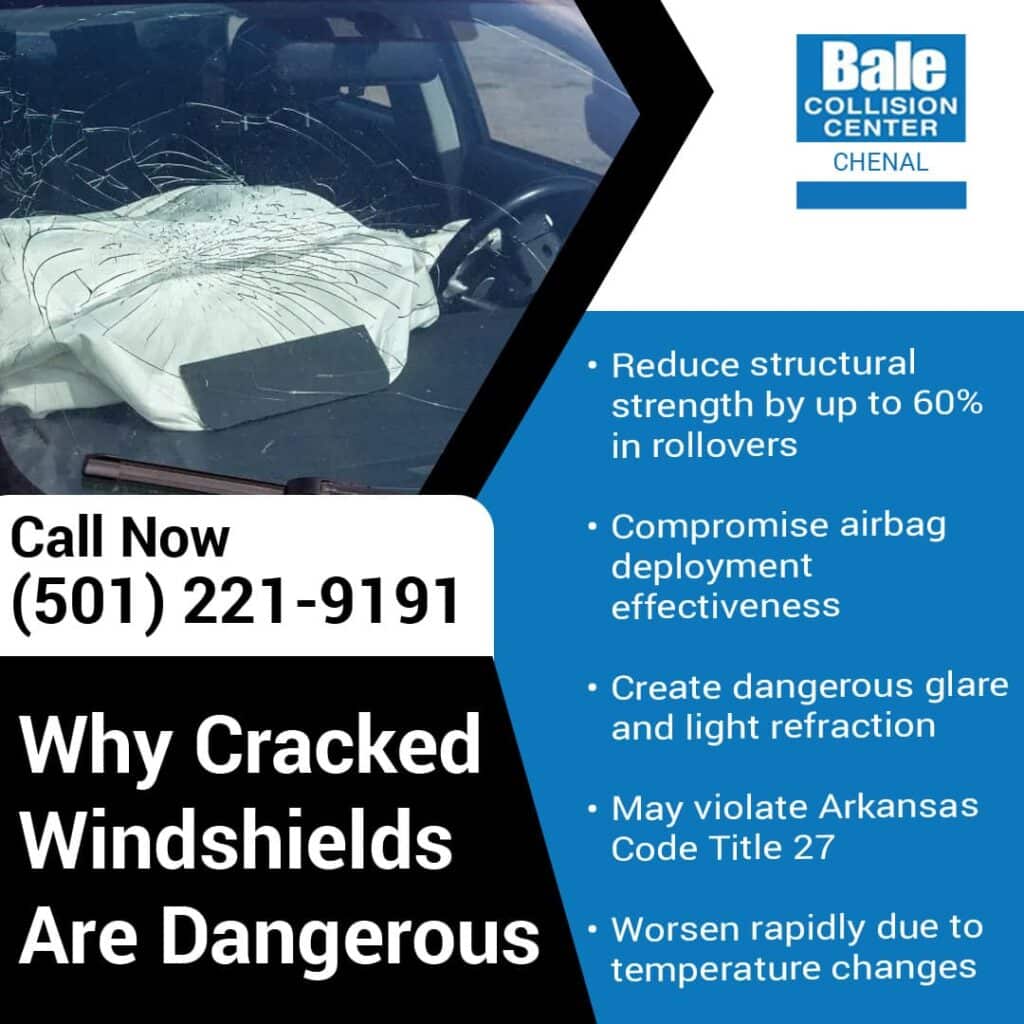
Windshield damage affects more than just appearance. Modern windshields provide cabin strength during rollover accidents and support passenger airbag deployment during collisions. Cracks compromise these critical safety functions while also creating visibility problems that make driving more dangerous.
Bale Collision Center (Chenal) has served drivers with professional auto body services in Chenal Parkway, Little Rock, since 1952. When windshield damage exceeds repairable limits, we handle the entire glass replacement process to restore your vehicle to a safe operating condition.
Arkansas State Law Requirements
Arkansas vehicle‑equipment laws, such as Arkansas Code Title 27, address windshield obstructions such as stickers, tinting, or other materials placed on the glass. For example, it is unlawful under Arkansas Code § 27‑37‑304 to drive with nontransparent material attached to the windshield more than 4.5 inches above the bottom if it obstructs the driver’s view. The statute does not explicitly mention cracks or chips in the glass.
The law focuses on whether the windshield condition, including any damage, obstructs the driver’s view rather than establishing specific crack‑size thresholds. Whether a crack leads to a citation is ultimately up to the enforcing officer’s judgment: damage in the driver’s line of sight may lead to a citation, but edge damage that does not impair visibility may be overlooked.
Arkansas law requires that the equipment on a vehicle, such as windshield wipers, be in good working order to ensure safe operation. While many auto‑glass professionals recommend using replacement glass that matches the original specifications for safety, there is no explicit statutory requirement in Arkansas that mandates OEM‑quality glass when replacing a damaged windshield.
The absence of specific crack measurements doesn’t mean all damage is acceptable. Officers evaluate each situation individually when deciding whether cracks obstruct clear road views.
Federal Standards That Apply
Some industry and insurance‑sector guidelines reference crack‑size thresholds such as smaller than ¾ inch in diameter, or require damage to be more than three inches from any other damaged area. However, the official federal safety standard (FMVSS) does not specify exact crack‑size or spacing limits for previously installed windshields, and there is no binding federal regulation that explicitly authorizes or prohibits specific crack sizes.
Some auto‑glass repair guidelines refer to a so‑called ‘critical vision area,’ generally described as the space above the steering wheel and spanning roughly a narrow horizontal and vertical margin. These guidelines advise that any significant damage in that driver‑view zone can impair visibility and should be repaired. However, this ‘critical vision area’ description is not defined in any binding federal statute or regulation, and is therefore used for practical guidance rather than legal compliance.
Federal regulations prohibit intersecting cracks regardless of individual crack size. These rules also require windshields to allow at least 70% light transmission for proper visibility.
Arkansas enforces both state and federal standards simultaneously. Drivers must comply with whichever standard is more restrictive. Some windshield damage technically legal under federal size limits remains citable under Arkansas obstruction standards.
Safety Risks of Windshield Damage
Windshields provide 45% of vehicle structural strength during front-end collisions and 60% during rollovers. Cracks reduce this structural integrity, allowing the roof to collapse during accidents.
Passenger airbags rely on windshields as backstops during deployment. The airbag inflates and bounces off the windshield to cushion occupants. Cracked glass may shatter under airbag force, causing premature deflation or incorrect deployment angles.
Vision Problems
Cracks create visibility issues that worsen under different conditions. Sunlight reflects off crack edges, producing glare that obscures pedestrians and vehicles. Nighttime driving presents greater problems when oncoming headlights strike crack surfaces and create bright flares. The human eye naturally focuses on visual disruptions. Cracks draw driver attention away from road hazards, creating a dangerous distraction.
Progressive Damage
Small chips expand into larger cracks through normal driving stress. Vibrations, temperature fluctuations, and air pressure changes contribute to crack growth. Arkansas temperature variations accelerate this expansion through daily heating and cooling cycles. Chips can develop into cracks requiring full replacement when left unaddressed.
Professional auto body repair facilities can assess windshield damage and recommend appropriate action before minor chips become major safety hazards.
Repair Versus Replacement Guidelines
Chips smaller than a quarter and cracks under three inches typically qualify for repair, while larger damage requires complete windshield replacement.
Size determines repair feasibility. Repair resin effectively fills damage up to specific limits. Beyond these thresholds, resin cannot restore structural integrity or optical clarity.
Edge cracks reaching within two inches of the windshield perimeter always require replacement. These cracks compromise the seal between glass and frame, allowing moisture infiltration. Damage within the driver’s direct sight line mandates replacement regardless of size to prevent visual distortion.
Cracks longer than six inches cannot be reliably repaired. Multiple impacts within close proximity create weakened areas beyond what repair can address. Professional car body repair technicians evaluate each damage situation to determine the safest solution for your vehicle.
Traffic Citations and Penalties
Arkansas traffic citations for obstructed windshields typically result in fix-it tickets requiring proof of repair. Officers issue windshield citations as equipment violations rather than moving violations. This classification means citations don’t add points to driving records. However, unresolved citations can lead to license suspension.
Many jurisdictions issue fix-it tickets for windshield violations. These citations require drivers to repair damaged windshields within a specified timeframe, usually 30 days. Providing proof of completed repairs often reduces or eliminates fines.
Proof typically consists of an invoice from a qualified auto body shop or glass repair facility showing the repair date and work completed. Failure to address fix-it tickets within the timeframe converts them to standard violations with full fines.
Officers determine whether windshield damage constitutes a citable obstruction. This discretion means enforcement varies based on damage severity and location. Damage directly in the sight line receives more consistent citation than edge cracks.
Glass Replacement Services at Bale Collision Center
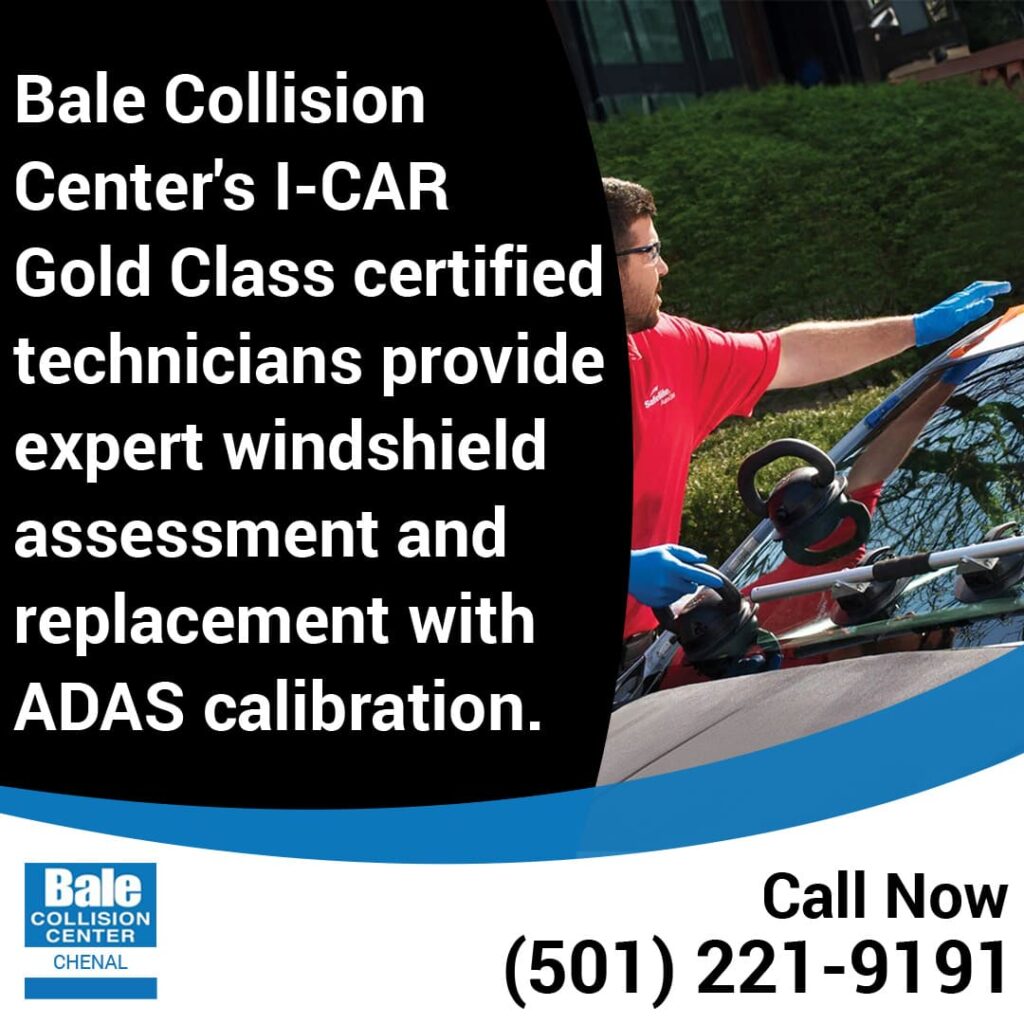
When your windshield damage exceeds repairable limits, professional glass replacement becomes necessary for safety and legal compliance. At our auto body shop, we provide complete glass replacement services that meet the highest industry standards.
Glass Replacement Process
At Bale Collision Center, our certified estimators evaluate crack size, location, and severity to determine whether repair or replacement represents the appropriate solution. When replacement is necessary, we order the correct glass for your specific vehicle make and model. We work exclusively with suppliers who provide Original Equipment Manufacturer (OEM) quality glass that matches your vehicle’s original specifications. This attention to glass quality maintains your vehicle’s structural integrity, warranty coverage, and resale value.
Proper installation techniques that meet Auto Glass Safety Council standards are used throughout the process. The adhesive bonding process follows manufacturer-specified curing times to achieve the strength needed for structural support. We never rush this critical step, even when customers need their vehicles back quickly.
ADAS Calibration Services
Modern vehicles require ADAS (Advanced Driver Assistance Systems) calibration after windshield replacement. These systems include forward collision warning, automatic braking, lane departure alerts, and adaptive cruise control. Cameras and sensors mounted on or near the windshield must be precisely positioned and calibrated for proper function.
ADAS calibration is performed using specialized equipment and training required for accurate recalibration. This service is part of our comprehensive auto body services in Chenal Parkway, Little Rock, that restore complete vehicle functionality after glass replacement. The calibration process restores your vehicle’s safety systems to factory specifications, protecting you and your passengers.
Working With Your Insurance Company
Our team handles the entire insurance claim process for glass replacement. We work directly with all insurance companies to submit documentation, obtain approvals, and coordinate payment. This service removes the stress and confusion from the claims process.
If you have questions about whether your insurance will cover the work, we provide answers before you commit to the service. This transparency ensures no surprises when it’s time to pick up your vehicle.
Complete Auto Body Services
Glass damage often occurs alongside other collision damage that requires professional attention. Our auto body services in Chenal Parkway, Little Rock, address all aspects of accident damage, from minor dents to major structural repairs.
Collision Repair Expertise
Our I-CAR Gold Class certification and Platinum-certified technicians demonstrate our commitment to proper repair procedures. We follow OEM-approved methods for every repair, maintaining your vehicle’s safety features and structural integrity.
When accidents damage both your windshield and body panels, we coordinate all repairs simultaneously. This approach saves you time and ensures all work meets the same quality standards.
Car Body Repair Services
Beyond glass replacement, we offer comprehensive car body repair that addresses all collision-related needs:
- Paintless Dent Repair (PDR): Our PDR technicians remove minor dents without affecting the original paint. This service works well for small door dings or hail damage that occur alongside windshield chips.
- Frame and Structural Repair: We straighten frames and repair structural components using precision measuring equipment. This work often accompanies glass replacement when accidents cause frame misalignment.
Why Choose Bale Collision Center for Expert Auto Glass Replacement in Chenal Parkway
Our 72 years of serving the Little Rock community reflect the trust generations of families have placed in our work. We’ve built our reputation on quality repairs, transparent communication, and customer service that exceeds expectations.
Certified Expertise
Our I-CAR Gold Class facility certification requires ongoing technician training and investment in advanced equipment. This certification means every member of our team maintains current knowledge of repair procedures for modern vehicles. When you bring your vehicle to our auto body shop, certified professionals handle every aspect of your repair.
Communication Throughout Repairs
We keep customers informed with regular updates during the repair process. You receive status reports twice weekly by phone, text, or email based on your preference. This communication includes completion timelines, any additional work discovered during auto body repairs, and answers to your questions.
When your vehicle is ready for pickup, we conduct a thorough walkthrough explaining all completed work. We review the repairs with you to verify your satisfaction before you leave our facility.
Schedule Your Glass Replacement Service
Don’t let windshield damage compromise your safety or result in traffic citations. At Bale Collision Center, we provide professional glass replacement that restores your vehicle to a safe, legal operating condition.
Contact Bale Collision Center today at (501) 221-9191 to schedule a damage assessment. Our certified estimators evaluate your windshield and explain your repair or replacement options. Email us at bccwlr@baleautomotive.com with questions about our auto body repair services or insurance claim processes.