After a collision, many Downtown Little Rock drivers research do-it-yourself repairs. Online tutorials make repairs look easy, and the potential savings seem compelling compared to professional quotes. The appeal is clear: why pay for an auto body shop if you think you can do the work yourself? What begins as a weekend project frequently extends into weeks of frustration, producing outcomes that fall short of manufacturer specifications. Today’s vehicles integrate complex electronics, high-strength materials, and exact engineering tolerances that require specialized expertise to restore correctly.
Our team at Bale Collision Center (Downtown) in Little Rock, AR, sees the aftermath of failed DIY projects regularly. This article reveals the hidden consequences that emerge when drivers tackle auto body repair without access to professional-grade tools, industry training, or technical knowledge.
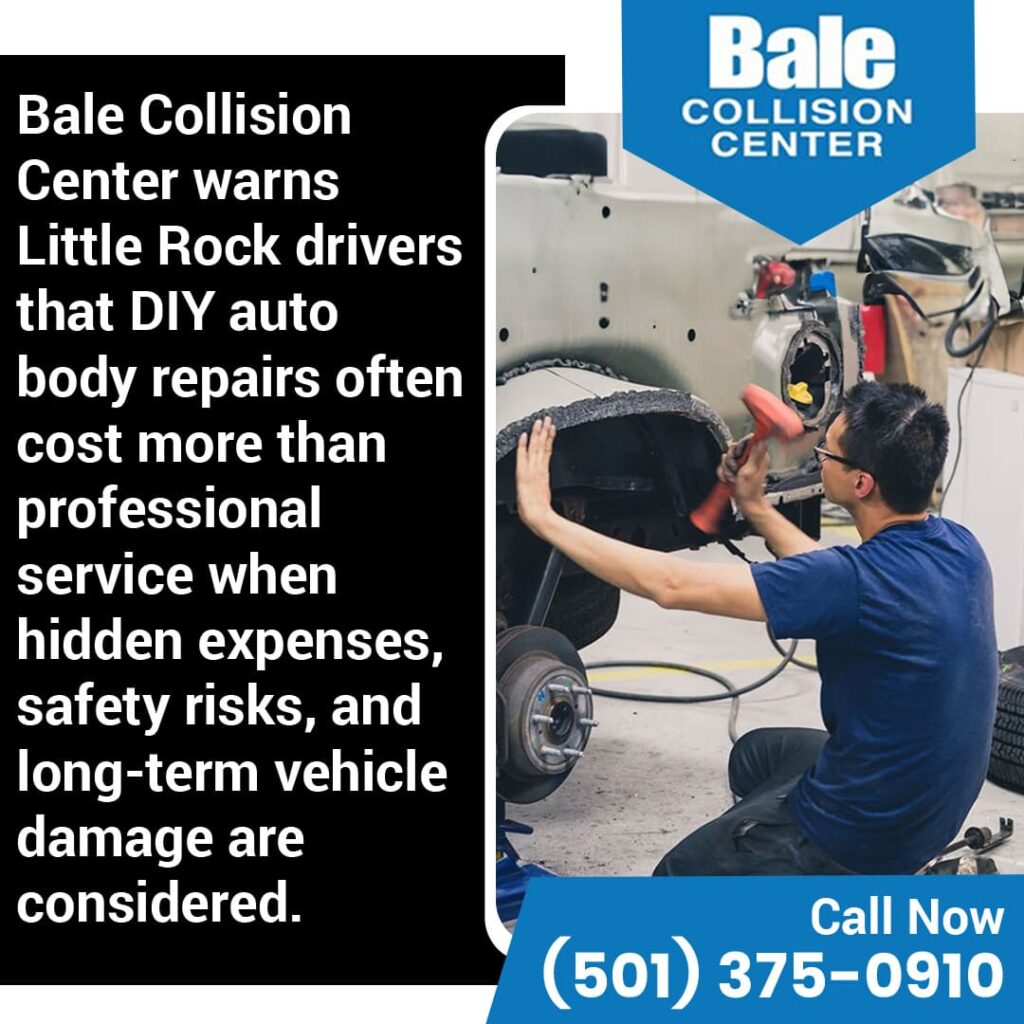
Why DIY Repairs Seem So Appealing
The perceived savings drive most DIY repair decisions. When comparing a professional estimate against the price of tools and materials at an auto parts store, the difference appears substantial. Online video tutorials reinforce this perception by making the process look achievable for anyone with basic mechanical aptitude. These videos rarely show the years of training behind the demonstrated skills or the expensive equipment being used.
The flexibility factor attracts DIY attempts. Professional facilities require scheduling, vehicle drop-off, and working within business hours. Tackling repairs at home offers the freedom to work at your own pace, evenings and weekends, without coordinating with an auto body service provider.
Control over the repair process motivates some vehicle owners. This desire for control, however, assumes that you possess the knowledge to make better decisions than trained professionals.
What DIY Auto Body Repair Usually Involves
Most DIY attempts start with minor visible damage. A small dent, scratch, or scrape seems manageable with basic tools and materials from an auto parts store. The vehicle owner purchases sandpaper, body filler, primer, and spray paint, believing these materials will restore the damaged area.
The reality involves far more complexity than anticipated. Metal preparation, filler application, primer layering, and paint matching each require specific technical knowledge. Body filler demands precise mixing ratios to cure properly. Sanding progression through multiple grits prevents defects that show through the final finish. Primer selection depends on substrate compatibility and the topcoat system being used.
Paint application presents the greatest challenge. Color codes provide starting points, but professional results require controlling spray patterns, maintaining proper distances, and timing between coats. Environmental factors like temperature and humidity directly affect how materials cure and bond.
At Bale Collision Center, our auto body repair technicians have developed these skills through years of training and daily practice. What appears simple in a 10-minute video represents hundreds of hours of skill development and access to professional equipment that most home garages lack.
Upfront Expenses Add Up Faster Than Expected
Tool Purchases vs. One-Time Professional Repairs
Tool purchases can add up quickly and, combined with materials and steep learning curves, may significantly narrow the perceived savings compared to a professional repair. Surface preparation equipment alone represents a substantial investment for entry-level models. Professional-grade units multiply this several times over. When you factor in the various types needed for different stages of the repair process, surface preparation tools accumulate significant expense.
Metalworking requires specialized tools that most homeowners don’t own. Proper dent repair needs multiple varieties of hammers and backing tools, each designed for specific panel shapes and damage types. Shaping tools for body filler add another expense category entirely.
Paint application equipment represents the largest investment. Entry-level spray systems start at one price point, while professional-grade units designed for automotive finishes cost substantially more. The air supply equipment needed to operate these systems adds another significant expense layer.
Rebuying Materials After Mistakes
Material expenses multiply with each mistake. Improper application means stripping away failed work and starting over with fresh supplies. Abrasives wear out quickly and require constant replacement throughout the process. What initially seems like adequate quantities rarely accounts for overspray, mixing waste, and do-overs.
First-time repairs often require rework, which means purchasing additional materials, extending the project timeline, and potentially damaging surrounding areas while correcting mistakes. Each error compounds both material and time investments.
Hidden Time Investment and Learning Curves
Time carries real value even without direct monetary expense. A repair that takes a professional four hours might consume multiple days for an inexperienced person. During these hours, the vehicle remains unusable, potentially requiring rental transportation that quickly eliminates perceived benefits.
Safety Risks Most People Don’t Consider
Structural and Safety System Issues
Surface dents canindicate deeper problems, and without professional frame measurement systems, some structural issues may be missed–especially in moderate to severe collisions. Without proper measuring equipment, these structural problems go undetected. The crumple zones in vehicles are engineered to absorb impact forces during collisions. When these zones sustain damage, they must be precisely restored to function correctly in future impacts.
Frame misalignment creates serious safety compromises. Bent frame rails alter suspension geometry, causing handling problems and premature tire wear. More critically, improper structural repairs reduce crash protection. During subsequent collisions, misaligned frames fail to absorb and distribute impact forces properly.
ADAS, Airbags, and Crumple Zones
Advanced Driver Assistance Systems (ADAS) require precise calibration after auto body services. These electronic systems control automatic emergency braking, lane departure warnings, and adaptive cruise control. Sensors mounted in bumpers, behind windshields, and in side mirrors must align within millimeter tolerances to function correctly.
Airbag systems are integrated throughout the vehicle structure. Side-impact airbags mount inside doors and seats. Curtain airbags hide in the roof rails. Sensors detecting collision forces are mounted in specific locations on the frame. Disturbing these components during auto body repair without proper procedures can prevent deployment or cause unintended deployment while driving.
How Improper Repairs Affect Crash Performance
Welding procedures affect structural integrity. High-strength steel used in modern vehicle construction requires specific welding parameters. Using incorrect settings, wrong filler materials, or improper joint preparation weakens structural repairs. These welds may look acceptable, but fail during crash loading, compromising occupant protection.
At Bale Collision Center, our I-CAR Platinum-certified technicians follow OEM (Original Equipment Manufacturer) repair procedures for each vehicle make and model. These procedures specify exact welding techniques, required equipment, and joint configurations that maintain original structural strength. Choosing certified auto body repair in Downtown Little Rock means your vehicle receives the expert welding and structural work that DIY methods cannot replicate.
Paint and Finish Problems
Color Matching Challenges
Color matching represents one of the most visible DIY failures. Automotive paint includes multiple layers: primer, basecoat, and clearcoat. The basecoat contains the color, which modern vehicles achieve through complex combinations of pigments, metallics, and pearl effects. These combinations vary depending on viewing angle and lighting conditions.
Factory paint codes provide starting formulas, but actual vehicle color drifts from original specifications through years of sun exposure and weathering. Paint on horizontal surfaces fades faster than on vertical panels. Professional color matching accounts for these variations using spectrophotometers that analyze the existing finish.
A professional auto body shop like Bale Collision Center uses advanced color-matching technology that measures the vehicle’s current color and generates custom formulas. This technology eliminates the guesswork inherent in mixing paint from factory codes alone. DIY repairs using aerosol cans or premixed paint often result in obvious color mismatches that reduce vehicle value.
Clear Coat Failures, Peeling, and Fading
Application technique also affects the final appearance. Professional painters control spray pattern, fluid flow, and air pressure based on the product being applied and environmental conditions. Variations create problems like dry spray, orange peel texture, mottling, and metallic striping.
Environmental control during painting prevents contamination. Dust particles settling on wet paint create defects requiring color sanding and buffing to remove. Achieving clean results without a proper paint booth becomes nearly impossible.
How Small Paint Mistakes Stand Out Over Time
Long-term durability problems surface months after DIY paint jobs. Improper surface preparation causes adhesion failure, with paint peeling away from the substrate. Inadequate clear coat thickness leads to premature fading and oxidation. Using incorrect paint systems creates incompatibility issues where layers don’t bond properly.
Long-Term Vehicle Value Loss
Visible Repairs Affecting Resale or Trade-In Value
Visible repair quality directly impacts resale values. Professional vehicle appraisers and potential buyers inspect vehicles carefully for signs of previous repairs. Paint mismatches, uneven panel gaps, overspray on trim pieces, and texture differences signal amateur work. These indicators reduce buyer confidence and provide negotiating leverage for lower purchase offers.
Repair Records vs. Amateur Work
Vehicle history reports document professional car body repair performed at licensed facilities. When damage occurs but no corresponding repair record appears, buyers assume DIY work or undisclosed collision history. This assumption creates valuation problems regardless of actual repair quality. Professional repairs at an auto body shop generate documentation that maintains vehicle value.
How Improper Repairs Raise Red Flags for Buyers
Structural repair documentation matters for resale. Buyers and lenders want assurance that frame damage received proper correction. Professional facilities provide measurement reports showing structural dimensions restored to factory specifications. DIY frame repairs lack this documentation, making the vehicle difficult to sell or finance.
Insurance and Warranty Complications
Repairs That Insurance May Not Cover Later
While improper repairs do not necessarily void entire manufacturer warranties, warranty claims may be denied for components directly affected by substandard repair work. New vehicles include factory warranties covering components and systems for specific mileage and time periods. When DIY repairs affect warranted systems, manufacturers deny claims related to those areas.
Insurance policies include provisions about repair facility selection and procedures. While most policies don’t prevent DIY repairs, they may refuse to cover subsequent damage resulting from improper previous repairs.
Why Insurers Prefer Documented Professional Repairs
Direct Repair Program (DRP) relationships between insurers and collision facilities provide advantages unavailable through DIY approaches. These programs include guaranteed repairs, streamlined claims processing, and rental car coordination.
When DIY Turns Into a Bigger Repair Job
Fixing Failed DIY Work Often Requires More Resources
Failed DIY attempts create additional damage requiring professional correction. For example:
- Surface preparation mistakes like excessive sanding can thin body panels to the point where they flex and oil-can under normal use.
- Over-aggressive grinding creates heat that warps panels. These problems didn’t exist before the DIY repair, but now need addressing.
- Improper body filler application causes problems that worsen over time. Excessive filler thickness lacks structural integrity and cracks under vehicle flex.
When these failures occur, proper correction requires removing all filler, addressing the underlying metal properly, and rebuilding the repair correctly.
Additional Damage Caused During Repairs
Adjacent panel damage occurs frequently during DIY attempts. Prying on stuck fasteners bends surrounding metal, while working with inappropriate tools damages trim pieces and distorts body lines. Forcing misaligned panels during installation stresses mounting points beyond their designed tolerances.
Electrical system damage from bodywork creates diagnostic challenges that extend repair complexity. Modern vehicles route wiring harnesses through body panels and structural components. Disturbing these harnesses without proper care damages connectors, pinches wires, and creates short circuits. These secondary problems add to the repair requirements when professional correction becomes necessary.
When Professional Repair Makes Sense
Modern vehicle complexity requires specialized knowledge and equipment. Vehicles manufactured in the past five years incorporate electronic systems controlling everything from engine operation to collision avoidance. Body panels contain sensors, cameras, and wiring harnesses. Disturbing these systems during car body repairs without a proper understanding creates problems that extend far beyond the original damage.
Structural damage of any type needs professional assessment. Frame rails, rocker panels, and A-pillars form the vehicle’s crash structure, designed through extensive computer modeling and physical testing. These components must meet precise dimensional specifications to protect occupants during collisions.
Safety system integrity requires professional attention. Airbags, ADAS sensors, and structural components protect occupants during crashes. Compromising these systems through amateur repairs creates life-threatening risks. Professional facilities have the equipment, training, and procedures necessary to restore these safety-critical systems properly.
Bale Collision Center has provided certified auto body repair in Downtown Little Rock since 1952, accumulating knowledge that comes from repairing vehicles across seven decades of automotive evolution. Our I-CAR Gold Class shop certification and I-CAR Platinum technician certifications demonstrate commitment to staying current with repair procedures as vehicle technology advances.
Trust Bale Collision Center for Certified Auto Body Repair in Downtown Little Rock, AR
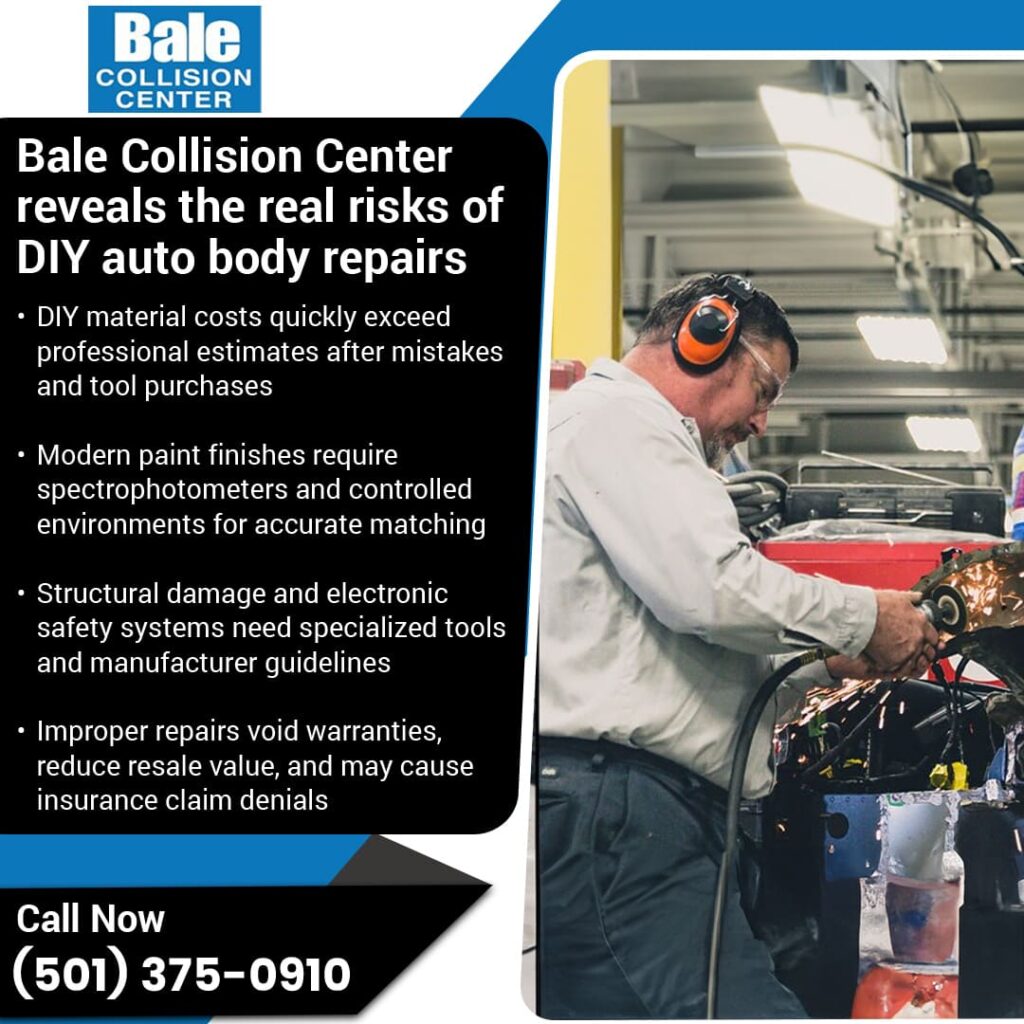
Professional auto body repair protects vehicle safety, value, and appearance in ways DIY attempts cannot match. The perceived savings from amateur repairs disappear quickly when accounting for tool purchases, wasted materials, time investment, reduced resale values, and potential safety compromises.
Bale Collision Center combines over 70 years of experience with current technology and training. Our facility uses Car-o-liner frame equipment for structural repairs, BASF waterborne paint with computerized color matching for finish work, and VSSTA scanning tools for ADAS calibration. Our Blowtherm heated downdraft paint booth produces professional finishes that protect your investment. We work with all insurance companies. Our team coordinates claims processing, parts ordering, and rental arrangements while providing twice-weekly updates throughout the repair process.
For auto body services that protect your family’s safety and your vehicle’s value, contact Bale Collision Center. Call (501) 375-0910 or email bccdowntown@baleautomotive.com to schedule your free repair estimate. Let our certified technicians restore your vehicle to factory specifications using professional equipment and procedures refined through decades of service to the Downtown Little Rock community.