
Modern vehicles contain electronic sensors that monitor surroundings, prevent collisions, and maintain control during driving. When collision damage occurs, these detection systems face potential disruption through physical impact, wiring damage, or position changes. Drivers who depend on automatic braking, lane monitoring, and parking assistance need to understand how auto body repairs affect these systems. Improperly handled sensors can fail when you need them most, putting you and your passengers at risk.
Bale Collision Center(Downtown) provides certified auto body repair in Little Rock following manufacturer protocols for sensor assessment, protection, and recalibration. Our technicians use factory-approved diagnostic equipment to identify hidden electronic damage and perform precise calibration to restore detection accuracy.
How Safety Sensors Work in Your Vehicle
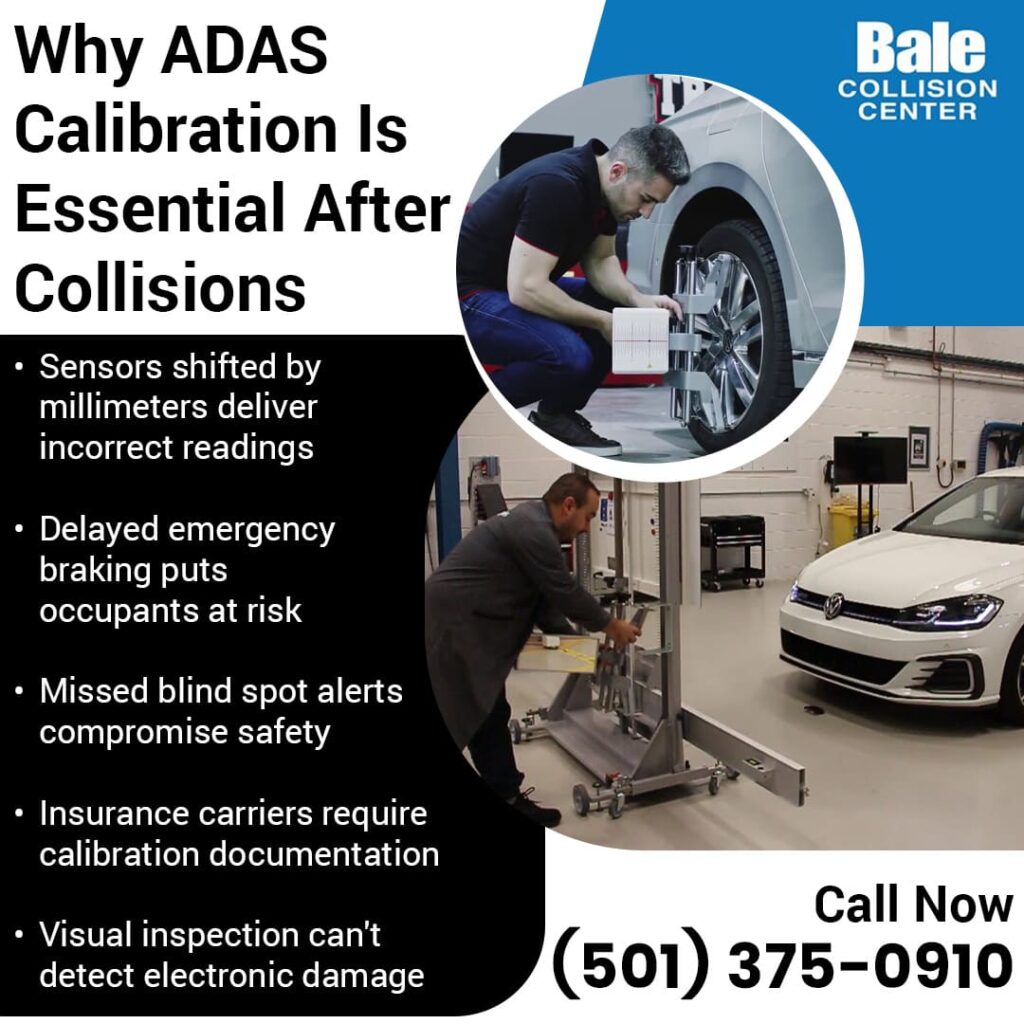
Safety sensors are electronic devices that detect objects, monitor vehicle position, and activate protective features to prevent accidents. These systems work continuously while driving to keep you and your passengers protected.
Common Safety Features in Modern Vehicles
Systems That Prevent Collisions:
Forward collision warning and automatic emergency braking work together. Cameras and radar monitor traffic ahead, alerting you to potential impacts. If a collision becomes likely, your vehicle applies the brakes automatically without driver input.
Systems That Keep You in Your Lane:
Lane departure warning detects when your vehicle drifts unintentionally. Blind spot monitoring tracks cars in adjacent lanes, alerting you before lane changes. These features help you maintain proper positioning on the road.
Systems That Help You Park Safely:
Parking sensors use sound waves to detect nearby objects. Backup cameras provide clear visibility behind your vehicle when reversing. Together, they make parking easier and safer.
Where Sensors Are Located
| Location on Vehicle | Sensors Found Here |
| Front Bumper | • Forward-facing cameras• Radar units• Ultrasonic sensors |
| Front Windshield | • Rain sensors• Light sensors• Forward-facing cameras |
| Side Panels/Mirrors | • Blind spot monitoring sensors• Side cameras (some vehicles) |
| Rear Bumper | • Parking distance sensors• Backup cameras• Rear radar units |
| Under Vehicle/Wheels | • Wheel speed sensors• Tire pressure sensors |
| Interior | • Airbag sensors• Occupant detection sensors• Seatbelt sensors |
These locations make sensors vulnerable during collisions. Even minor accidents can affect sensor positioning or damage the units themselves. A small dent in your bumper might shift a radar sensor just enough to throw off its measurements, even though the sensor looks undamaged. Proper auto body repair must account for sensor protection and recalibration, not just cosmetic fixes.
How Collisions Affect Safety Sensors
Collisions damage safety sensors through direct impact, position changes, and electrical system disruption.
Physical Damage to Sensor Components
Direct impact can crack sensor housings, break camera lenses, or damage mounting brackets. These visible problems clearly require sensor replacement. However, many sensor issues remain hidden from view.
Body panels that absorb impact may flex and return to near-original positions, but this movement loosens sensor mounting hardware. Over subsequent weeks, sensors gradually shift position. A camera displaced by just a few millimeters captures clear images but provides incorrect distance measurements to your vehicle’s computer.
Water can enter through damaged sensor housings, causing corrosion that develops into failures weeks after the collision. A sensor that works immediately after an accident might fail later as moisture corrodes internal circuits.
Electrical and Calibration Problems
Wiring harnesses can stretch during impact, developing intermittent electrical faults. Connectors may loosen, creating sporadic system failures that worsen over time. These electrical issues affect sensor communication with your vehicle’s computer system.
Calibration displacement occurs when body panels move during impact. A camera tilted just a few degrees provides functional images, but calculates wrong distances to detected objects. Lane departure warnings trigger at incorrect positions, or automatic braking activates too late because distance measurements contain errors.
Many modern vehicles, particularly recent models equipped with ADAS, require some form of sensor recalibration or sensor replacement after collisions or glass replacement. Manufacturer guidance increasingly calls for recalibration to restore safety system accuracy.
The Diagnostic Process During Auto Body Repair
Professional collision repair begins with electronic scanning that identifies sensor damage before any bodywork starts. This assessment guides repair planning and verifies proper function after completion.
Pre-Repair Electronic Scanning
Technicians connect diagnostic equipment to your vehicle’s data port, reading stored information from all electronic control modules. This scan identifies sensor failures, calibration errors, and electrical faults that dashboard warning lights might not display.
At Bale Collision Center, we use specialized diagnostic tools and maintain subscriptions to many manufacturer information systems. These tools read manufacturer-specific codes, capture real-time sensor data, and support calibration procedures for most makes and models. Some vehicles or proprietary systems may still require manufacturer-specific tools or dealer assistance, and we follow factory procedures when that is necessary.
A typical pre-repair diagnostic scan often takes 30 to 60 minutes, although comprehensive scans for vehicles with many control modules or live data capture can take longer. The scan documents the vehicle’s electronic condition and identifies fault codes and calibration needs before repairs begin.
Results guide repair planning by identifying which sensors need replacement, which require recalibration, and which need functionality testing. This comprehensive approach to car body repair in Downtown Little Rock prevents overlooked electronic damage that could compromise safety after your vehicle is returned.
Protecting Sensors During Bodywork
Body repair operations create conditions that can damage sensitive electronics. Welding can cause damaging current paths or voltage spikes if vehicle electrical systems are not protected. Industry guidance is to disconnect the battery or affected modules and to ground the welder close to the work area to minimize the risk to control modules. Paint booths can expose electronics to heat and chemicals, and grinding can deposit metal dust on lenses and sensor openings, so technicians protect, cover, or remove sensitive components during these operations.
Our auto body shop implements protection measures during repairs. Technicians disconnect control modules before welding to prevent voltage spikes. Sensors receive protective covering before paint booth entry. Cameras and radar units may be temporarily removed during extensive panel replacement to avoid exposure to harsh repair conditions.
Post-Repair Verification
After bodywork restores proper panel alignment and sensor positioning, verification testing confirms that all electronic systems function correctly. Post-repair diagnostic scanning reads fault codes, checks calibration status, and verifies sensor communication.
The scan compares the post-repair condition against the pre-repair documentation. Any new problems indicate damage during repair or incomplete restoration. This systematic approach prevents premature vehicle delivery with uncalibrated sensors or undetected electronic faults.
Sensor Recalibration Requirements
Recalibration adjusts each sensor’s reference points based on its exact position after repair, restoring accurate detection capabilities. This process represents the final step in returning vehicles to safe operation.
Static Recalibration Methods
Static recalibration occurs in controlled shop environments using precision targets positioned at manufacturer-specified distances. Camera systems typically require targets placed at exact distances and heights from the vehicle. The calibration area needs level floors and proper lighting without direct sunlight.
Technicians use diagnostic software with precision targets to recalibrate sensors. Simple static calibrations may be completed in about 30 minutes, while vehicles requiring multiple static and dynamic procedures often take 30 to 90 minutes or more, depending on the number of systems involved.
Dynamic Recalibration Procedures
Dynamic recalibration involves test drives under specific conditions while diagnostic equipment monitors sensor performance. Lane-keeping systems require driving on straight roads with clear lane markings at certain speeds. Some vehicle manufacturers specify both static and dynamic calibration for complete restoration.
Different manufacturers have unique calibration requirements for identical safety features. Access to manufacturer repair information provides the exact procedures for each vehicle make, model, and year. Generic calibration without manufacturer-specific information results in improperly adjusted sensors.
Consequences of Skipping Calibration
Uncalibrated sensors create detection errors, false warnings, and accident risk. The consequences range from annoying alerts to complete safety system failure during critical situations.
Safety System Performance Issues
Uncalibrated sensors create specific failures in different safety systems:
Forward Collision Detection Problems:
- Fails to detect stopped vehicles ahead
- Calculates incorrect distances to objects
- Activates automatic braking too late or not at all
Improperly calibrated forward collision systems cannot provide the crash protection they were designed to deliver.
Lane Keeping System Failures:
- Provides steering input in the wrong direction
- Pulls the vehicle toward the lane boundaries instead of keeping it centered
Drivers experiencing this behavior typically turn off the feature, eliminating its safety benefits entirely.
Blind Spot Monitoring Issues:
- Misses vehicles in adjacent lanes during lane changes
- Triggers false alerts when no vehicles are present
This reduces driver trust and leads to ignored warnings, even during actual hazard situations.
Insurance and Liability Considerations
Auto body shops that skip calibration procedures face potential liability. If uncalibrated safety systems contribute to subsequent accidents, questions arise about proper restoration. Documentation becomes critical for protecting all parties involved.
Professional facilities providing pre-repair and post-repair diagnostic reports demonstrate proper procedures. This paperwork establishes that safety systems received appropriate attention during auto body services.
Safety Technologies Requiring Special Attention
Different sensor types face specific vulnerabilities during collisions and require distinct handling procedures during restoration.
Camera Systems
Forward-Facing Cameras
Forward-facing cameras mount near rearview mirrors and provide input for multiple safety features. These cameras require aim angles within tight tolerances. Repairs affecting windshields, hoods, or roof structures alter camera positioning enough to require recalibration.
Backup Cameras
Rear-end collisions commonly damage these components. Even when camera lenses appear intact, impact forces can shift mounting angles or damage internal electronics.
Radar and Parking Sensors
Front Radar Units
Front radar units must maintain precise mounting positions. Bumper repairs, even without sensor replacement, typically require radar recalibration due to slight position changes.
Parking Sensors
Individual sensor replacement is common after bumper impacts. Even undamaged sensors in repaired bumpers need recalibration when bumper contours change during repair.
Finding Shops That Handle Safety Sensor Restoration
Informed vehicle owners verify that repair facilities possess the necessary capabilities, equipment, and training for proper electronic system restoration. Asking the right questions helps you choose the right auto body service provider that protects your safety and investment.
Equipment and Technology Questions
Ask whether the facility performs pre-repair and post-repair diagnostic scanning on every vehicle. Shops equipped with manufacturer-approved diagnostic tools identify sensor issues before repairs begin and verify proper function after completion.
Determine whether the facility has dedicated calibration space and equipment. Shops lacking proper calibration capabilities must send this work elsewhere, potentially adding time to your repair.
Technician Training and Certification
Certification indicates technician competency. I-CAR training credentials demonstrate completion of coursework on safety system repair and recalibration procedures. Manufacturer-specific certifications show expertise with particular vehicle brands.
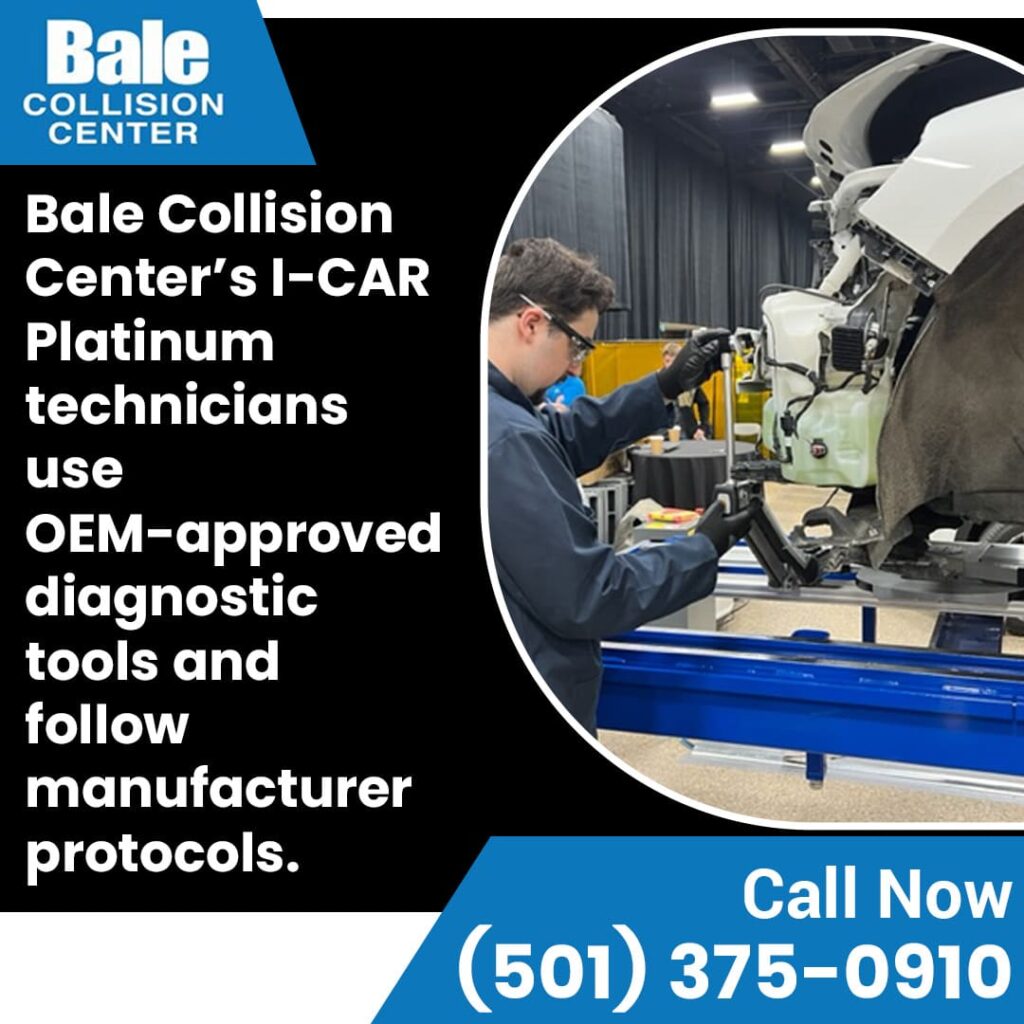
Our technicians hold I-CAR ProLevel 3 Platinum recognition, which demonstrates ongoing individual training on advanced collision repair topics. Our facility also maintains industry training standards and manufacturer repair information so we can follow required calibration procedures. I-CAR Platinum recognition shows an individual technician’s commitment to up-to-date training and contributes to our capacity to perform complex ADAS work.
Ask about ongoing training programs. Automotive technology changes rapidly, requiring continuous education for technicians working with current safety systems.
Parts and Procedure Standards
Confirm whether the facility uses original equipment manufacturer sensors for replacements. OEM sensors are designed to meet manufacturer specifications for fit, function, and calibration compatibility. Where suitable OEM-equivalent parts are used, they should meet manufacturer standards and be compatible with required calibration procedures. Alternative parts may not integrate properly with vehicle safety networks.
Verify that the auto body shop follows manufacturer repair procedures for sensor installation and calibration. Access to factory repair information confirms that work meets specifications designed to maintain safety system integrity.
Bale Collision Center’s Approach to Sensor Restoration
Professional auto body repair requires systematic approaches to sensor management, combining advanced equipment, trained technicians, and manufacturer-approved procedures.
Specialized Calibration Infrastructure
Our facility maintains dedicated calibration areas meeting manufacturer specifications. These controlled spaces provide conditions necessary for accurate sensor calibration across all vehicle makes and models.
Our diagnostic equipment provides direct communication with vehicle control modules, supporting calibration procedures for domestic, Asian, and European manufacturers. This specialized tool set allows proper calibration of safety systems in vehicles from any brand.
Manufacturer Procedure Compliance
Following factory procedures maintains the designed safety standards. We maintain subscriptions to manufacturer repair databases, accessing current technical information for proper sensor handling and calibration requirements.
When sensors require replacement during car body repair in Downtown Little Rock, we use original equipment components, guaranteeing proper fit, function, and integration with existing vehicle systems. Original sensors eliminate compatibility concerns that arise with alternative parts.
Clear Customer Communication
We provide detailed explanations of identified sensor issues, necessary repairs, and calibration requirements before beginning work. Customers understand what repairs involve and why each step matters for vehicle safety.
Progress updates keep customers informed throughout the repair process. When diagnostic scanning reveals unexpected sensor damage or additional calibration needs, we communicate these findings immediately, discussing options before proceeding. Final delivery includes review of all safety system repairs, calibration work performed, and demonstration of proper functionality.
Protecting Your Vehicle’s Safety Technology
Safety sensors represent critical components protecting vehicle occupants and other road users. When collision damage affects these systems, proper handling during auto body services maintains the protection modern vehicles provide.
Professional diagnostic scanning identifies sensor damage and calibration needs. Following manufacturer procedures for repair and recalibration restores safety systems to their designed functionality. Using original equipment parts and specialized equipment provides reliability and long-term performance.
Choosing a certified auto body repair facility with proper equipment, training, and procedures protects your vehicle investment and occupant safety. Inadequate work leaves safety systems compromised, creating risks that become apparent only during emergency situations.
At Bale Collision Center, we combine 72 years of collision repair experience with current diagnostic technology and calibration capabilities. Our I-CAR Platinum-certified technicians follow manufacturer procedures to restore every safety system affected by collision damage. Schedule a car body repair in Downtown Little Rock that properly addresses all safety sensor issues. Contact Bale Collision Center at (501) 375-0910 or bccdowntown@baleautomotive.com today. We deliver the certified expertise modern vehicles demand.