Winter driving conditions in Little Rock, Arkansas, take a serious toll on vehicles. Road salt, potholes, ice impacts, and freezing temperatures create hidden damage that often goes unnoticed until problems escalate. Understanding when your vehicle needs professional attention can save you from expensive repairs down the road.
Bale Collision Center (Chenal) provides expert auto body repair in Chenal Parkway for vehicles affected by harsh winter conditions. From collision damage on icy roads to structural and suspension issues from pothole impacts, we’ve observed how winter conditions affect vehicles throughout Little Rock and surrounding communities. This guide explains the specific warning signs to look for after winter driving, what each symptom indicates about your vehicle’s condition, and when to schedule a professional inspection.
How Winter Conditions Affect Vehicles
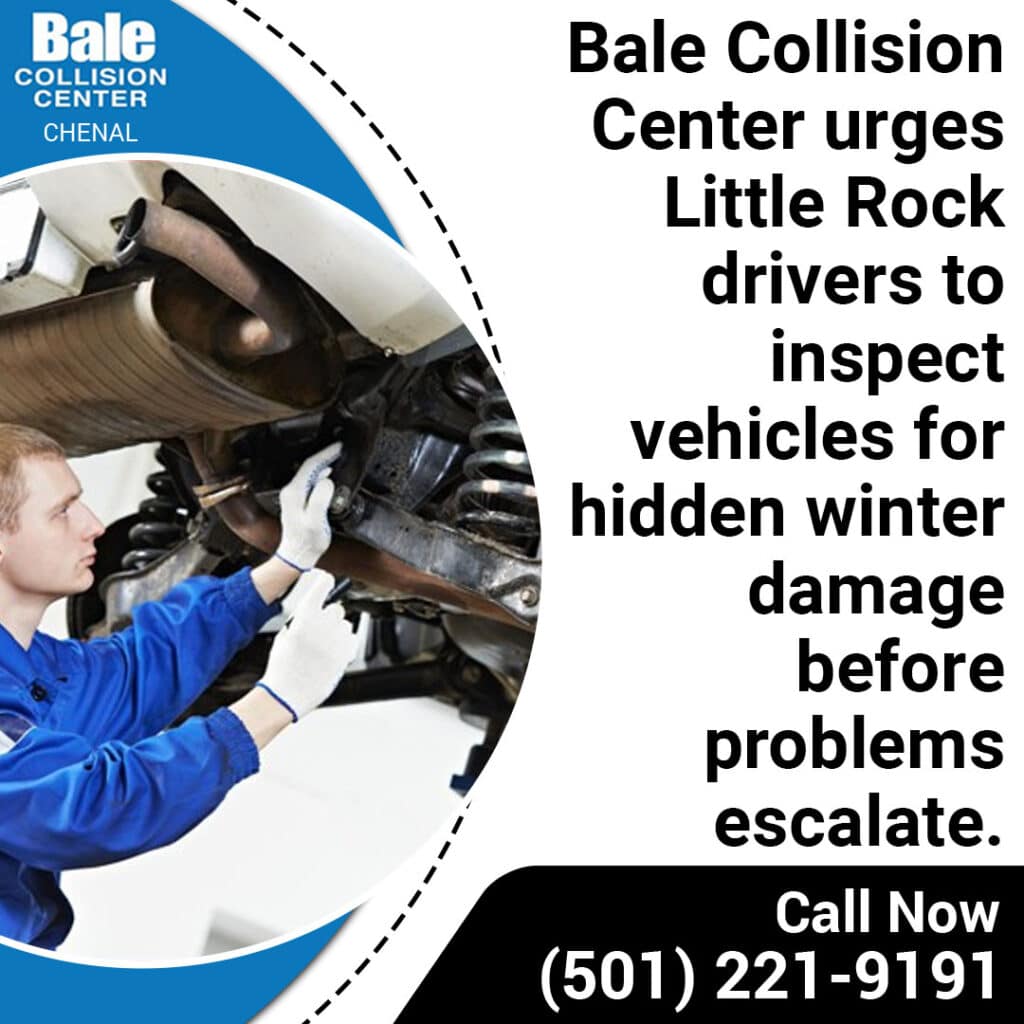
Winter in Little Rock creates conditions that attack your vehicle from multiple angles. Unlike normal wear and tear that develops gradually over the years, winter damage can appear suddenly and progress rapidly if left unaddressed.
While Little Rock experiences milder winters than northern states, the frequent temperature fluctuations between freezing and thawing create particularly damaging conditions. When temperatures hover around the freezing point, roads undergo repeated freeze-thaw cycles that are especially destructive to both pavement and vehicles.
Road treatments designed to keep highways safe introduce corrosive chemicals directly onto vehicle surfaces. Arkansas Department of Transportation uses de-icing compounds, including salt, calcium chloride, and magnesium chloride, on major roadways during winter weather events. These chemicals coat the undercarriage, body panels, and wheel wells with every drive. The chemicals remain active long after roads appear dry, continuing their corrosive work during Little Rock’s characteristic temperature swings.
These same freeze-thaw cycles affect road surfaces throughout the region. Water seeps into pavement cracks during warmer periods, expands when temperatures drop overnight, and creates potholes that emerge throughout winter and early spring. Each pothole impact sends shock waves through your vehicle’s structure, potentially damaging components from tires to frame rails. According to AAA, pothole damage alone costs U.S. drivers approximately $3 billion annually, with winter months accounting for a significant portion of these repairs.
Why Early Detection Matters
Vehicle damage progresses through stages. Surface rust that appears minor today can penetrate completely through metal panels within months if moisture and salt continue their work. A small paint chip becomes an entry point for corrosion that spreads beneath the surface, hidden from view until bubbling paint reveals extensive underlying damage.
Structural issues follow a similar pattern. A pothole impact might initially cause only a slight wheel misalignment, barely noticeable during daily driving. Left uncorrected, this misalignment wears tires unevenly, stresses suspension components, and can eventually affect frame integrity. What starts as a minor vibration becomes a safety concern requiring extensive repair.
The key to managing winter damage lies in systematic inspection and timely intervention with trusted auto body repair near you. Knowing what to look for helps you catch problems early when repairs remain straightforward and less extensive.
Visible Paint and Body Deterioration
Paint damage appears as the first visible sign of winter wear. Road salt and de-icing chemicals create a corrosive environment that breaks down protective clear coats and paint layers.
Bubbling and Flaking Paint
Bubbling or flaking paint typically appears along lower body panels, wheel wells, and undercarriage areas where salt spray accumulates. This damage starts small but spreads rapidly if left untreated. The bubbling occurs when salt penetrates beneath the paint surface, causing the coating to separate from the metal substrate.
Discoloration and dull spots develop when chemicals strip away the paint’s protective layer. White or chalky residue on painted surfaces indicates salt buildup requiring immediate attention. These deposits continue attacking the finish even after roads dry, making prompt removal critical.
Surface Corrosion Development
Rust spots and surface corrosion begin as small brown or orange dots, usually appearing near chips or scratches where metal is exposed. Winter conditions accelerate rust formation, turning minor chips into significant corrosion problems within weeks.
Stone chips and scratches multiply during winter as gravel and debris become embedded in snow and ice. When vehicles kick up this debris, it impacts surrounding cars with greater force than in dry conditions. Each chip creates an entry point for moisture and salt, initiating the corrosion process.
Professional auto body repair services restore your vehicle’s protective coating and prevent further deterioration. Paint restoration involves removing damaged layers, treating exposed metal, and applying new protective coatings that match the original finish.
Undercarriage Corrosion Development
The undercarriage sustains the most direct exposure to road salt and moisture, making it vulnerable to accelerated corrosion. Many drivers overlook this area because it remains hidden during normal vehicle operation.
Salt Residue Accumulation
Salt residue builds up on the undercarriage throughout winter, creating a corrosive layer that remains active even after roads dry. This residue attracts atmospheric moisture and continues damaging metal components for weeks or months following the last winter storm.
Frame rust appears as surface discoloration that progresses to structural weakness. Check areas where components connect, as these joints trap moisture and salt. Frame damage compromises vehicle safety and requires immediate professional assessment using specialized measuring equipment.
Critical System Corrosion
Exhaust system corrosion manifests as rust-through holes, loose brackets, or unusual noises. Winter salt accelerates exhaust deterioration, potentially leading to dangerous fumes entering the cabin or failed emissions tests. Exhaust components operate at high temperatures, which creates a thermal cycling effect that compounds salt damage.
Fuel and brake line corrosion poses serious safety risks. These lines run along the undercarriage where salt exposure remains constant. Look for wet spots, unusual smells, or changes in braking performance.
A thorough inspection by qualified automotive body repair technicians can identify corrosion before it becomes a safety concern and recommend appropriate treatments or replacements based on damage severity.
Suspension and Steering Component Damage
Winter potholes and rough roads place tremendous stress on suspension components. Freeze-thaw cycles create road deterioration that peaks in late winter and early spring, resulting in concentrated pothole-related damage during these months.
Audible Damage Indicators
Unusual noises when driving over bumps indicate worn or damaged suspension parts. Clunking, rattling, or squeaking sounds suggest components have loosened or failed due to impact damage. These noises often start quietly and gradually increase in volume as damage progresses.
A vehicle pulling to one side while driving straight signals alignment problems or uneven suspension wear. Pothole impacts knock wheels out of alignment, causing uneven tire wear and poor handling characteristics.
Ride Quality Changes
Bouncing or excessive body roll when turning or braking indicates worn shock absorbers or struts. These components absorb road impacts, and winter conditions accelerate their deterioration through repeated compression cycles under extreme loads.
Uneven tire wear patterns reveal suspension or alignment issues. Check for excessive wear on the inner or outer edges of tires, indicating alignment problems caused by pothole impacts.
Professional assessment uses advanced frame measuring equipment to check for structural misalignment. These systems compare vehicle measurements to manufacturer specifications with millimeter precision, identifying both obvious damage and subtle changes affecting vehicle handling and safety.
Structural Damage From Impact
Severe potholes cause damage to frame structures, suspension mounts, and body integrity. The force of hitting a pothole at speed transfers through the tire and wheel into structural components, potentially causing misalignment or fractures.
Frame Damage Indicators
Frame damage reveals itself through various symptoms that may not be immediately obvious:
- Misaligned doors and body panels: Doors that suddenly don’t close properly or gaps between body panels that weren’t present before indicate structural shifting from bent or twisted frame components.
- Visible frame deformation: Bends or creases in frame rails show severe impact damage, typically occurring in front suspension mounting areas or along rocker panels where the frame connects to the body structure.
- Glass stress cracks: Cracks in the windshield or side glass that appear after hitting a pothole suggest the frame has shifted enough to stress the glass mounting points. Modern vehicle glass is bonded to the frame as a structural element, and frame movement places this bond under tension.
Alignment and Handling Changes
Professional diagnosis identifies frame damage through multiple indicators:
- Persistent alignment problems: Unusual tire wear patterns or alignment issues that persist after adjustment point to frame damage. When the frame is bent, alignment adjustments cannot fully correct wheel positioning because the mounting points themselves are displaced.
- Precision measurement assessment: Professional frame inspection uses precision measuring equipment to assess structural integrity. These measurements identify deviations measured in millimeters that affect vehicle performance and safety.
- ADAS system malfunction: Advanced Driver Assistance Systems (ADAS) wich are electronic systems that aid drivers in vehicle operation, depend on precise sensor positioning. Frame damage shifts sensor locations, causing ADAS features like lane-keeping assist and automatic braking to malfunction or deactivate.
If you notice any combination of these symptoms after winter driving, schedule an inspection immediately. Seeking auto body repair near you that offers advanced frame measurement capabilities helps diagnose minor structural issues accurately before they become major safety concerns. Professional technicians can detect millimeter-level deviations that compromise vehicle integrity and safety system function.
Post-Winter Inspection Timing
Schedule an inspection as soon as winter weather patterns end and when temperatures consistently stay above freezing. This timing allows addressing damage before spring and summer driving conditions cause additional stress.
When to Schedule Your Inspection
- Early spring window: Early spring provides the ideal opportunity to assess your vehicle before minor issues become major problems. Waiting too long allows corrosion to progress unchecked.
- Corrosion acceleration: Spring moisture and humidity accelerate corrosion that started during winter, especially when salt residue remains on the vehicle. Professional automotive body repair services can identify and treat corrosion before it penetrates deeper into metal components.
- Pre-summer preparation: Addressing winter damage before summer road trips prevents inconvenient breakdowns and maintains vehicle safety during extended travel.
Professional Inspection Components
Comprehensive auto body inspection covers multiple vehicle systems:
- Exterior Assessment: Thorough visual examination covers all exterior surfaces, looking for paint damage, body panel alignment issues, and glass cracks or chips that developed during winter. Trained technicians identify problems that owners might overlook.
- Undercarriage Inspection: Proper lift equipment reveals hidden corrosion, exhaust damage, fluid leaks, and structural concerns not visible from above. This inspection includes checking brake lines, fuel lines, suspension components, and frame condition.
- Suspension and Steering Assessment: Component wear evaluation and alignment problem identification checks for damage from pothole impacts. Technicians test drive vehicles to identify handling issues, indicating underlying problems.
- Electronic Systems Diagnostics: Advanced diagnostic scanning identifies issues with electronic systems, including ADAS sensors that may have been damaged or knocked out of calibration during winter driving.
Scheduling automotive body repair services after winter provides peace of mind and catches problems when repairs remain straightforward and less extensive.
Automotive Body Repair Services at Bale Collision Center
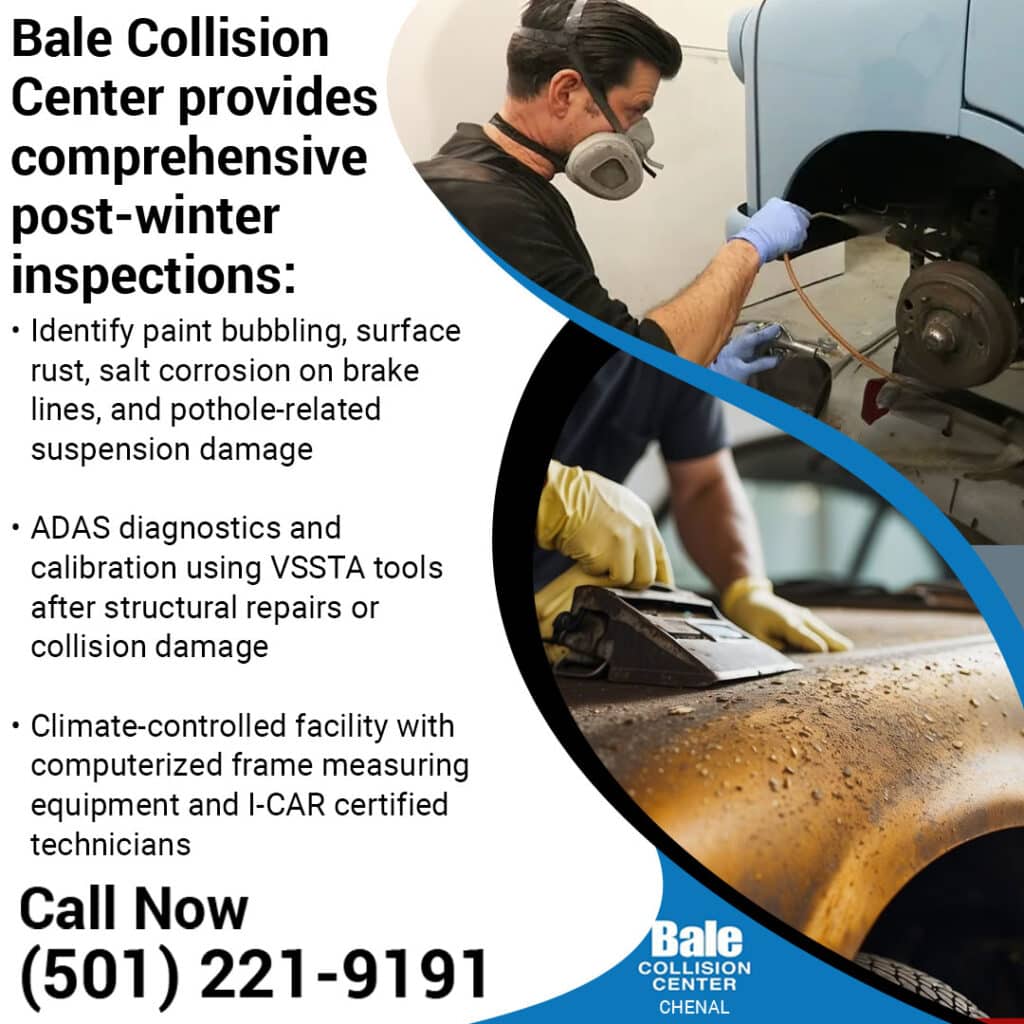
Professional winter damage repair requires specialized equipment and trained technicians. Bale Collision Center provides auto body repair in Chenal Parkway to address winter-related vehicle damage.
Collision and Structural Repair
Our I-CAR Platinum-certified technicians handle everything from minor dent repairs to major structural corrections. We use precision frame measuring systems to restore vehicles to manufacturer specifications. Whether addressing collision damage or frame straightening, our team applies OEM-approved repair procedures for every vehicle.
Paint Services
Winter salt damage often requires professional paint services to prevent ongoing corrosion. We use BASF waterborne paint technology for precise color matching and environmental responsibility. Our Blowtherm heated downdraft paint booths deliver flawless finishes that protect against future winter damage. From minor touch-ups to panel repainting, we restore your vehicle’s appearance and protective coating.
ADAS Calibration and Diagnostics
Modern vehicles with ADAS features require recalibration after collision repairs or when sensors are repositioned. Our facility performs ADAS calibrations using VSSTA diagnostic equipment. We verify that all safety systems function properly before returning your vehicle, maintaining the protection these advanced features provide.
Working With Insurance
We work directly with all insurance companies to simplify the claims process. Our team handles communication with your insurer, provides detailed damage documentation, and processes paperwork efficiently. From claim filing through final repairs, we keep you informed and make the process as smooth as possible.
Insurance Coverage for Winter Damage
Insurance coverage for winter damage depends on the damage type and policy details. Understanding typical coverage helps make informed decisions about filing claims.
Collision coverage typically pays for damage from hitting potholes, sliding into curbs or barriers during icy conditions, and accidents caused by winter weather. This coverage applies regardless of fault determination. Your deductible applies to collision claims, so consider repair expenses compared to your deductible when deciding whether to file.
Comprehensive coverage handles damage from road debris, falling ice or snow, and impacts with animals more common during winter. This coverage doesn’t affect your driving record because the damage wasn’t caused by a collision you could have avoided. Comprehensive coverage often carries a lower deductible than collision coverage, making it more practical for winter damage claims.
Documentation remains critical for insurance claims. Take photos of damage immediately after it occurs, if possible. Professional inspection provides additional documentation supporting your claim with detailed reports and photographs.
Schedule an Auto Body Inspection in Chenal Parkway
Don’t let winter damage compromise your vehicle’s safety, appearance, or value. Bale Collision Center offers trusted auto body repair near you, backed by over 70 years of experience and I-CAR certified expertise.
Our certified technicians perform thorough inspections, identifying all winter-related damage, from paint deterioration to frame issues and suspension problems. We provide detailed estimates and work with your insurance company to make the repair process as smooth as possible.
Contact us today to schedule your post-winter inspection and experience professional auto body repair in Chenal Parkway. Call (501) 221-9191 or email bccwlr@baleautomotive.com to learn more about our auto body repair services.