Vehicle accidents create immediate stress about damage assessment, repair procedures, and insurance coordination. Drivers face questions about filing requirements, facility selection, and claim approval processes.
The collision claim process involves three parties with distinct priorities. Insurance carriers evaluate damage extent and coverage obligations. An auto body shop assesses actual damage and determines proper correction methods. Vehicle owners need quality repairs completed efficiently while managing expenses. When these parties work together effectively, claims proceed smoothly, and vehicles return to pre-accident condition without unnecessary delays.
Bale Collision Center (Chenal) is a family-owned collision repair facility in Little Rock that has been in operation since 1952 and has developed deep experience in managing insurance claim coordination for customers. We work directly with all major carriers to streamline the repair process from initial damage assessment through final vehicle delivery. Our experience navigating claim procedures, damage evaluations, and coverage disputes helps customers receive necessary repairs without prolonged negotiations.
How Auto Body Shops Initiate the Insurance Process
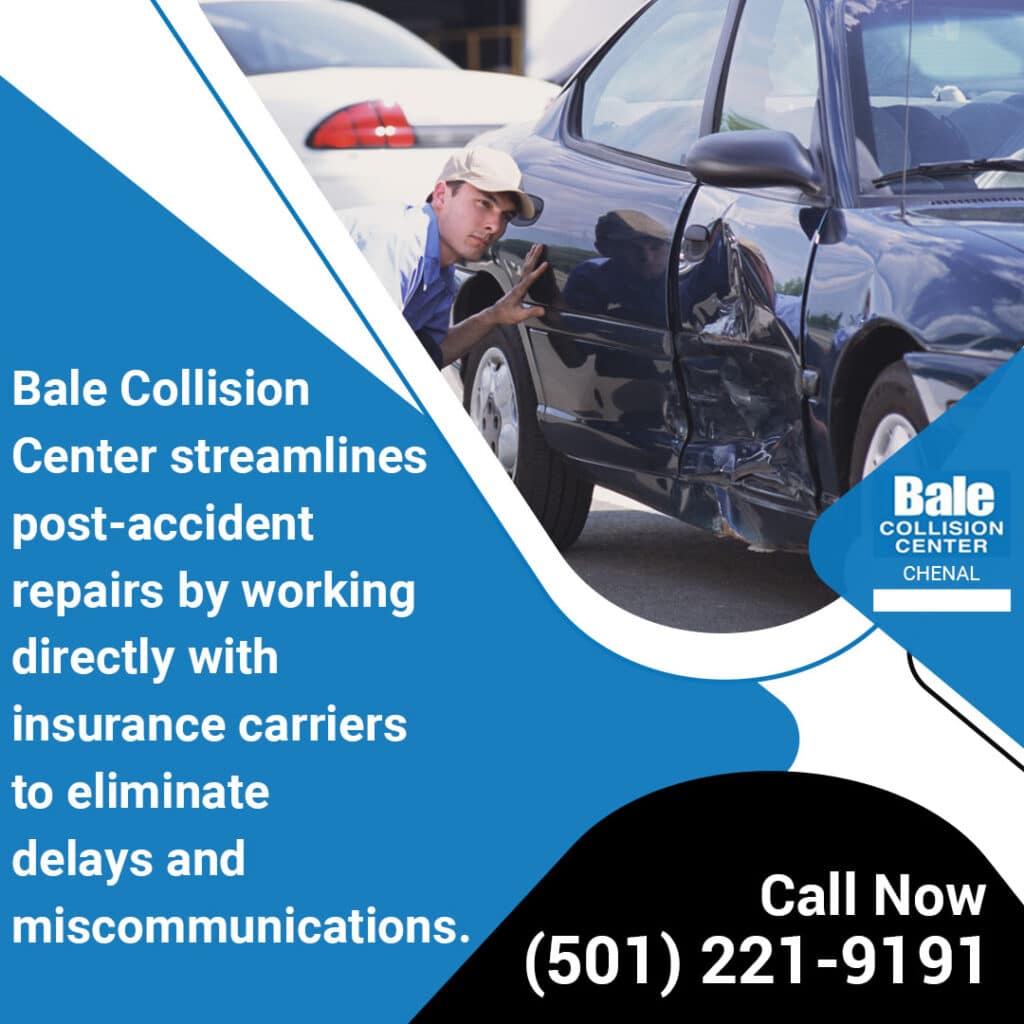
Professional repair facilities begin working with your insurance carrier immediately after you contact them about accident damage.
Initial Damage Documentation
The body shop photographs all visible damage before any work begins. These photos become critical documentation that supports your insurance claim. Technicians capture multiple angles of each damaged area, including close-ups of scratches, dents, and broken components.
This photographic record serves several purposes during the claim process. It provides visual evidence of the extent of damage for insurance adjusters who may not inspect the vehicle in person. It documents the pre-repair condition in case disputes later arise over which damage occurred in the accident versus pre-existing issues. It also creates a baseline for comparison when additional hidden damage is discovered during disassembly.
Creating the Initial Estimate
The shop prepares a detailed repair estimate using industry-standard software systems. This estimate lists every damaged component, specifies repair or replacement needs, calculates required labor hours, and identifies necessary materials and supplies.
Repair facilities use the same estimating databases that insurance companies reference. Common systems include CCC ONE and Mitchell platforms. This standardization helps both parties communicate using consistent terminology and reference points during claim discussions.
The initial estimate represents the shop’s professional assessment based on visible damage. Hidden problems that become apparent only after disassembly will require supplemental estimates later in the process.
Direct Communication Between Shops and Insurance Carriers
Once the initial estimate is complete, the body shop submits it directly to your insurance company for review and approval.
Estimate Submission and Review
The shop sends the repair estimate to your insurance carrier through electronic systems or direct adjuster contact. This submission includes the detailed damage assessment, repair plan, and photographic documentation captured during the initial inspection.
Insurance adjusters review submitted estimates to verify that damage claims align with accident reports and policy coverage. They compare the shop’s assessment against their own damage evaluation guidelines and determine which repairs will receive approval for payment.
Response times vary by insurance carrier and claim complexity. The adjuster either approves the estimate as submitted, requests additional information or photos, or proposes modifications to the repair plan.
Negotiating Repair Approaches
Disagreements sometimes occur between what the auto body shop recommends and what the insurance company initially approves. These discussions focus on repair methodology, parts selection, and safety system requirements.
For example, a structural component may show damage that the shop recommends replacing according to the manufacturer’s specifications. The insurance adjuster might initially approve a repair rather than replacement to manage claim expenses. The facility then provides supporting documentation from the vehicle manufacturer’s repair procedures showing why replacement is necessary for safety and structural integrity.
Professional facilities advocate for proper repairs during these negotiations. They reference manufacturer guidelines, industry standards, and safety requirements to support their recommendations. This advocacy protects vehicle owners who may not understand technical repair requirements.
Parts Approval Process
The shop discusses parts selection with the insurance carrier during estimate approval. Original Equipment Manufacturer parts come directly from vehicle manufacturers and match original specifications exactly. Aftermarket parts are manufactured by third-party companies as alternatives to OEM components.
Insurance companies often prefer aftermarket parts to manage claim expenses. Your policy language determines whether carriers can require non-OEM components. Some policies guarantee OEM parts for newer vehicles or in specific circumstances.
Quality shops explain parts options and their implications for vehicle safety, longevity, and resale value. They help you understand your policy provisions and advocate for appropriate components that restore your vehicle properly.
Managing Supplemental Claims During Repairs
Hidden damage frequently appears once technicians begin disassembling damaged areas. This discovery triggers the supplemental claim process.
Identifying Hidden Damage
Supplemental damage becomes visible only after technicians remove exterior panels and components. What appeared as minor bumper damage may conceal frame misalignment, sensor failures, or mounting bracket damage underneath.
When technicians discover additional problems, they immediately document these findings with photographs and detailed descriptions. This documentation shows the damage location, extent, and relationship to the original accident impact.
The shop then pauses work on affected areas until supplemental approval is received. This prevents disputes about whether additional damage existed or occurred during the repair process.
Submitting Supplement Requests
The facility prepares a supplemental estimate for newly discovered damage using the same process as the original estimate. This supplement includes photos of hidden damage, measurements showing structural misalignment, diagnostic scan results revealing sensor failures, and manufacturer repair procedure references.
The shop submits this supplemental documentation to your insurance adjuster for review and approval. Most carriers respond to supplement requests within 24 to 48 hours, though complex structural issues may require additional review time.
Supplement requests are common in collision repairs. Most accidents involve some hidden damage that initial visual assessments cannot detect until disassembly occurs.
Resolving Supplement Disputes
Insurance adjusters sometimes question whether supplemental damage resulted from the current accident or existed previously. They may also dispute whether the recommended repair approach is necessary.
The shop provides additional documentation to support the necessity of the supplement. This may include computerized frame measurements showing deviations from factory specifications, diagnostic scan reports documenting safety system malfunctions, or manufacturer technical bulletins requiring specific repair procedures.
Professional repair facilities maintain detailed records throughout this process. They document each discovery, the supporting evidence, and the adjuster communications. This thoroughness typically resolves disputes efficiently and keeps repairs progressing.
Coordinating Rental Vehicles and Repair Timelines
The repair facility works with your insurance company to manage rental car coverage and repair scheduling.
Rental Authorization
Many insurance policies include rental car coverage while your vehicle undergoes repairs. The facility can initiate rental authorization requests with your carrier once the repair timeline is established.
Rental coverage provisions vary by policy. Some provide daily reimbursement amounts up to specific limits. Others cover actual rental expenses for defined time periods. Your policy documents or insurance agent can clarify your specific rental benefits.
The shop coordinates with your insurance adjuster to authorize rental coverage for the expected repair duration. If repairs extend beyond initial estimates due to parts delays or supplemental work, the shop requests rental extensions through the carrier.
Communicating Timeline Updates
Professional facilities provide regular updates about repair progress to both you and your insurance company. These communications keep all parties informed about parts arrival, repair milestones, and any delays affecting completion timing.
When unexpected delays occur, the shop notifies your insurance adjuster immediately. Parts availability issues, additional damage discoveries, or calibration equipment scheduling may extend original timelines. Early communication helps manage expectations and rental coverage adjustments. This proactive communication is what you should expect from a trusted auto body shop near you.
At Bale Collision Center, we contact customers twice weekly during repairs with progress updates. We also maintain direct communication with insurance adjusters to address questions or concerns promptly throughout the process. This level of coordination has made us a trusted auto body shop in Chenal Parkway for drivers who value transparency and professional insurance claim management.
Final Inspection and Payment Processing
Once repairs are complete, the facility coordinates final approval and payment with your insurance carrier.
Completion Documentation
The body shop documents completed repairs with photographs showing finished work from multiple angles. These images demonstrate that all approved repairs were completed properly and that paint finishes match surrounding panels.
Quality facilities also provide copies of calibration reports for Advanced Driver Assistance Systems. These documents verify that safety features like automatic braking, lane departure warnings, and collision avoidance systems function correctly after repairs.
This documentation package goes to your insurance adjuster for final review before payment authorization. Most carriers require photographic evidence that repairs match approved estimates before releasing final payments.
Insurance Payment Coordination
The shop submits final invoices directly to your insurance company for payment. These invoices include the original estimate amount, approved supplemental charges, and any other authorized expenses incurred during repairs.
You remain responsible for your policy deductible amount. The shop collects this portion from you at vehicle pickup. The insurance company pays the remaining approved repair expenses directly to the facility.
Some carriers issue payment directly to vehicle owners rather than repair facilities. In these cases, the shop provides you with the completed invoice to submit to your carrier for reimbursement. You then pay the facility upon receiving the insurance payment.
Addressing Final Concerns
If your insurance adjuster has questions about final invoices or completed work, the shop works directly with them to resolve these issues. This may involve providing additional documentation, explaining repair procedures, or clarifying estimate line items.
Professional facilities handle these administrative details so you can focus on getting back to normal life. They understand insurance company requirements and processes, which streamlines payment coordination and reduces delays in final settlement.
Working With Multiple Insurance Companies
When accidents involve multiple vehicles, the shop may coordinate with several insurance carriers simultaneously.
Liability Determination Impact
If another driver caused your accident, their liability insurance covers your vehicle repairs. The facility submits estimates and communicates with the at-fault driver’s insurance company rather than your own carrier.
Liability claims sometimes involve disputes about fault determination. The shop may need to work with both insurance companies while carriers negotiate responsibility. Professional facilities manage these complex situations by maintaining clear documentation and communicating with all relevant parties.
Subrogation Coordination
If you file a claim with your own insurance company, but another driver was at fault, your carrier may pursue subrogation. This process involves your insurance company seeking reimbursement from the at-fault driver’s carrier after paying your claim.
The shop provides the necessary documentation to both insurance companies during subrogation. This includes repair estimates, invoices, and damage photos that support claim amounts. This cooperation helps your carrier recover expenses and potentially reimburse your deductible.
Your Role in the Insurance Process
While the shop manages most insurance coordination, you have important responsibilities throughout the claim.
Providing Accurate Information
You must provide complete and accurate accident information to both your insurance company and the repair facility. This includes details about how the accident occurred, what damage resulted, and any injuries involved.
Inconsistent information between your insurance claim and the damage observed at the shop can create complications. Professional facilities may ask clarifying questions to understand damage patterns and accident circumstances fully.
Authorizing Repairs
Insurance approval does not automatically authorize the shop to begin work. You must sign repair authorization documents before work commences. These authorizations confirm that you approve the repair plan and accept financial responsibility for any expenses not covered by insurance.
Read these authorization documents carefully. They explain your obligations regarding deductible payment, rental vehicle arrangements, and timelines for completing repairs. Ask questions about any provisions you do not understand before signing.
Responding to Shop Communications
The body shop will contact you when additional approvals are needed, parts arrive, supplements are discovered, or repairs are complete. Prompt responses to these communications keep the repair process moving efficiently.
Delays in responding to shop inquiries can extend repair timelines. If additional damage requires your insurance approval, work cannot proceed until the carrier reviews and approves the supplement. Your authorization may be needed to facilitate this communication.
Choosing a responsive auto body shop near you makes this coordination process smoother and helps prevent unnecessary delays in getting your vehicle back.
Why Choose Bale Collision Center for Insurance Coordination
Our experience managing insurance claims produces efficient, stress-free repairs for Little Rock drivers.
Established Carrier Relationships
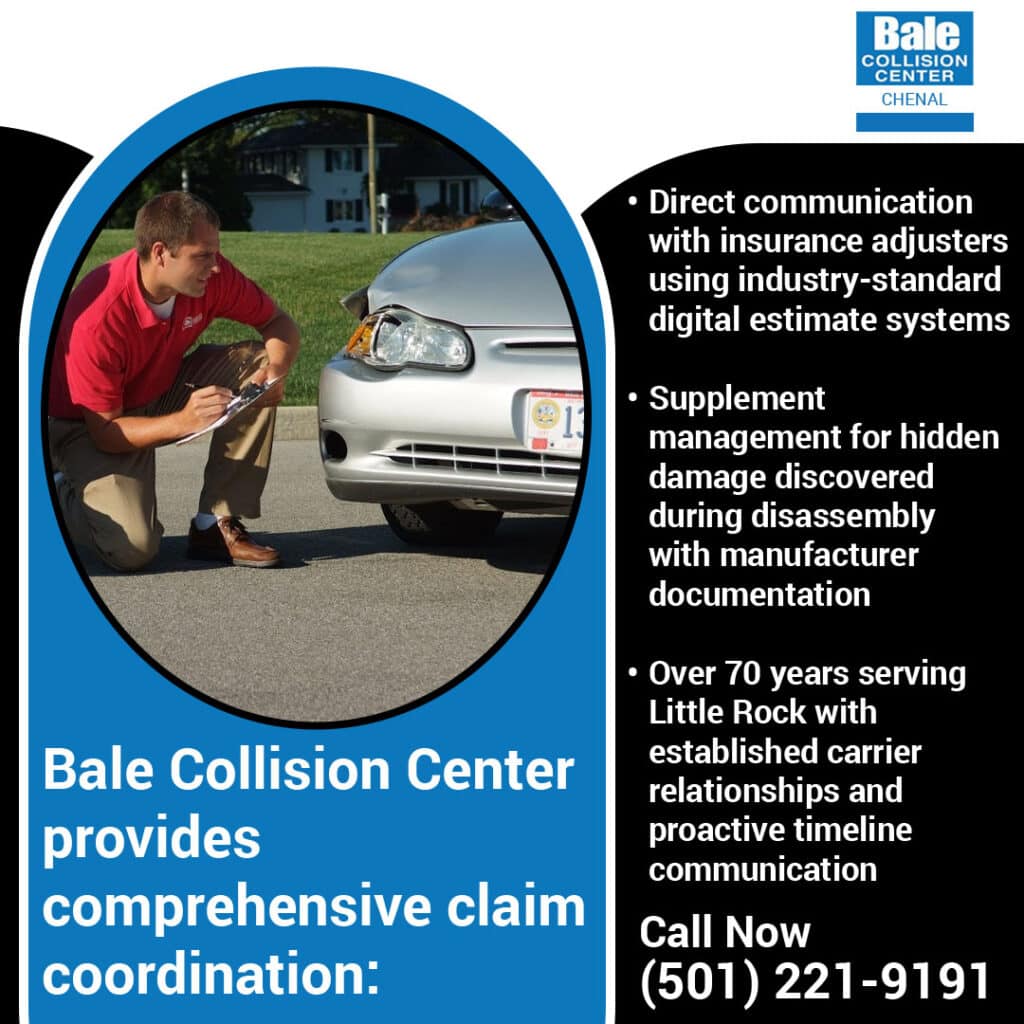
We maintain working relationships with all major insurance companies, including State Farm, Allstate, Liberty Mutual, Hanover, USAA, Nationwide, Safeco, and AAA. These established connections make our auto body shop in Chenal Parkway a preferred choice for efficient claim processing and payment coordination throughout the repair process.
Our team understands each carrier’s specific procedures, documentation requirements, and approval processes. This knowledge helps us submit complete, accurate estimates that receive faster approvals and fewer revision requests.
Professional Advocacy
At Bale Collision Center, we advocate for proper repairs that meet manufacturer specifications. When insurance companies question necessary procedures or parts, our technicians provide supporting documentation demonstrating repair necessity.
Our I-CAR Gold Class certification and Platinum-certified technicians give us technical credibility during negotiations with insurance adjusters. We reference specific manufacturer repair procedures and industry standards to support our recommendations.
This advocacy protects your safety and vehicle value. We do not compromise repair quality to satisfy insurance company preferences when those preferences conflict with proper repair methods.
Complete Claim Management
At Bale Collision Center, we handle all insurance communications on your behalf from initial estimate submission through final payment processing. This service eliminates your need to navigate complex procedures or negotiate with adjusters directly.
You receive regular updates about repair progress, supplemental approvals, and completion timing. We coordinate rental authorizations, parts approvals, and payment processing so you can focus on other priorities during this stressful time.
Our 72 years of experience managing insurance claims means we have seen virtually every claim complication and know how to resolve issues efficiently.
Experience Stress-Free Insurance Coordination for Your Auto Body Needs in Chenal Parkway
Understanding how repair facilities work with insurance companies helps you navigate the repair process confidently. Professional facilities handle complex claim procedures, negotiate proper repairs, and manage administrative details so you receive quality repairs without unnecessary stress.
For an auto body shop in Chenal Parkway that manages insurance claims professionally while delivering certified repairs, contact Bale Collision Center today. Call (501) 221-9191 or email bccwlr@baleautomotive.com to discuss your repair needs.
Our convenient location provides accessible service for drivers seeking an auto body shop near you that combines insurance claim expertise with quality workmanship and manufacturer-approved procedures.

