When you drop off your vehicle for auto body repairs, the estimate offers a timeline based on what technicians can see. However, auto body repair often takes longer than originally projected once work begins. The reason is straightforward: initial assessments can only account for visible damage, not what lies beneath panels and components.
Bale Collision Center (Downtown) has earned trust as the go-to facility for auto body repair in Downtown Little Rock. We serve families by maintaining honest communication throughout the repair process. Our team provides regular progress updates throughout the repair process and communicates promptly when timeline changes occur. We recognize that timeline changes affect your daily routine, which is why transparency is a priority throughout every repair.
The Scope of Initial Damage Assessments
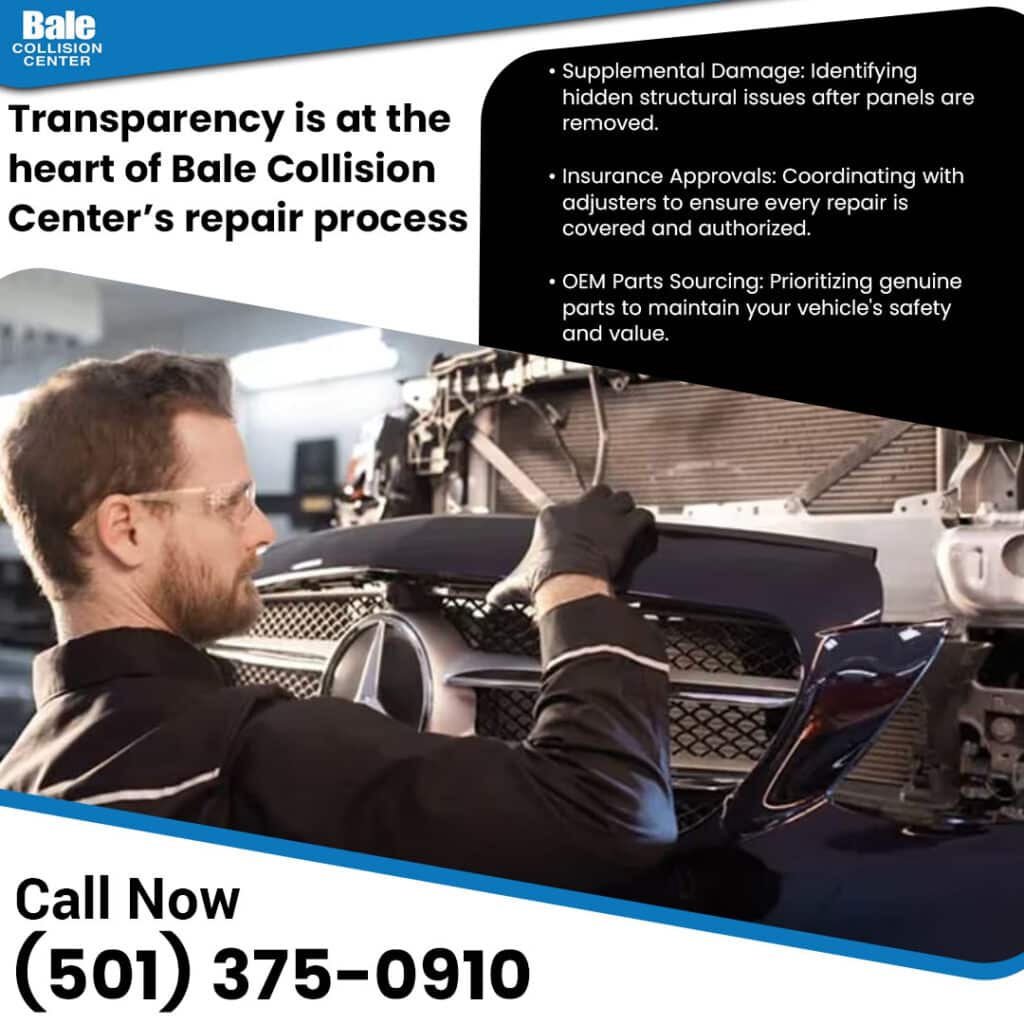
Initial estimates provide a baseline calculation based on visible exterior damage. Technicians can only assess what they observe during the first inspection, which limits accuracy until disassembly occurs.
Repair facilities use computerized estimating systems that calculate labor hours and materials based on observable damage. At Bale Collision Center, we use advanced estimating systems to generate detailed preliminary assessments. These documents include labor requirements, replacement parts, and materials needed for visible repairs.
The limitation lies in what remains hidden. A damaged door may conceal bent frame rails underneath. A bent fender might hide crushed wiring harnesses or damaged sensors. Paint scratches on quarter panels sometimes indicate structural compromise underneath the surface.
Modern vehicle construction compounds this challenge. Manufacturers design cars with overlapping panels, integrated systems, and components that nest within other structures. These design features improve safety and performance, but make a complete damage assessment impossible without partial disassembly.
Common Causes of Extended Repair Timelines
Multiple factors contribute to repair schedules that exceed original estimates. Understanding these elements helps vehicle owners set realistic expectations.
Discovery of Hidden Damage
Hidden damage represents the primary reason repair timelines extend beyond initial projections. Surface inspections cannot reveal internal structural issues, electrical system damage, or mechanical component failure.
Disassembly reveals problems that initial assessments miss. What appears as superficial paint damage frequently indicates cracked structural components once technicians remove outer layers.
Impact forces travel through vehicle structures in ways that aren’t immediately apparent. A front-end collision transfers energy through frame rails, potentially damaging components far from the visible impact point. Side collisions affect door beams, B-pillars (the structural posts between front and rear doors), and rocker panels.
At Bale Collision Center, we perform pre-repair diagnostic scans using professional OEM-compatible scanning tools to identify electronic system and safety feature issues that may not be visible during visual inspections. These devices detect electronic system malfunctions and safety feature problems that visual inspections miss.
Parts Procurement Challenges
Obtaining replacement components affects repair schedules more than most vehicle owners realize. Parts availability varies based on vehicle make, model year, and component complexity.
Standard parts typically arrive quickly:
- Common components for popular vehicle models ship within several days.
- Dealerships and suppliers stock frequently replaced items like bumper covers, headlights, and minor trim pieces, which rarely cause timeline delays.
Specialty components require more time:
- Luxury vehicle parts, imported model components, and older vehicle pieces often need special orders.
- Some manufacturers maintain a limited inventory of low-demand items, while others source components from overseas facilities.
- International shipping adds days or weeks to procurement schedules.
OEM parts ensure quality but may extend timelines:
- OEM (Original Equipment Manufacturer) parts provide an exact fit and quality matching original production specifications.
- Many reputable shops recommend OEM components for structural and safety-critical repairs because they are engineered to meet manufacturer specifications, subject to vehicle requirements and insurance approval.
Incorrect parts create reordering delays:
- The automotive industry produces thousands of vehicle configurations with subtle specification differences.
- Suppliers occasionally ship components that don’t match due to color variations, mounting point differences, or specification changes between model years.
- Returns and reorders add several days to repair schedules.
Insurance Approval Requirements
Insurance company processes add structured timeframes to most collision repairs. Most repairs cannot continue without insurer authorization, which follows specific review protocols.
Initial estimate review takes time:
- Insurance adjusters must review and approve proposed repairs, which typically requires several business days for straightforward cases.
- Complex claims involving major structural work may need multiple review levels or management approval.
Supplemental estimates add additional delays:
- Hidden damage discovered during repairs requires new supplemental estimates detailing newly identified problems and additional repair requirements.
- Insurance companies review supplements with the same scrutiny as initial estimates, sometimes dispatching adjusters to verify findings in person before authorizing extra work.
We work directly with all major insurance companies, streamlining the claims process for auto body repair in Downtown Little Rock. Our established relationships with insurers help facilitate communication and approval processes. Our team handles documentation, communicates with adjusters, and advocates for necessary repairs on your behalf.
Technical Factors Affecting Repair Duration
Beyond damage discovery and parts availability, various technical requirements influence how long car body repair takes to complete properly.
Proper Vehicle Disassembly Procedures
Methodical disassembly takes time but provides the only accurate view of total damage. Modern vehicle construction requires careful component removal to prevent additional damage and identify all collision effects.
Complex Assembly Methods
Vehicles use complex assembly methods where panels overlap, components nest together, and systems integrate across multiple areas. Technicians must document each disassembly step, photograph hidden areas, and inspect every removed component for damage indicators.
Protecting Vehicle Integrity
This systematic approach protects vehicle integrity during body repair services. Forcing panels apart or skipping proper removal sequences can cause new damage. Taking time to disassemble correctly prevents missed damage and allows proper reassembly.
Structural Repair Requirements
Frame straightening needs precision equipment and cannot be rushed without compromising vehicle safety. Structural work directly affects how your vehicle handles and protects occupants in future collisions.
Precision Frame Straightening
Modern repair shops use precision frame racks paired with computerized measuring systems to restore vehicles to factory specifications. This process involves multiple pulls, measurements between reference points, and adjustments to return frames to their exact original positions. Minor misalignment affects vehicle handling, tire wear patterns, and crash protection capabilities.
Hidden Damage Discovery
Structural repairs often reveal additional damage during the correction process. A bent frame rail might hide cracked welds at stress points. Twisted rocker panels could indicate subframe damage underneath. Each discovery requires additional repair time to restore the vehicle properly.
Manufacturer-Specific Procedures
The process follows strict manufacturer procedures. Each vehicle model has specific pull points, attachment locations, and measurement tolerances. Technicians must reference manufacturer repair procedures for each make and model to perform structural corrections correctly.
Safety System Recalibration
Modern vehicles contain ADAS (Advanced Driver Assistance Systems) requiring recalibration after body repairs. These electronic systems won’t function correctly without precise adjustment following panel replacement or realignment.
ADAS Components
ADAS includes cameras, radar sensors, and ultrasonic sensors that enable lane-keeping assistance, adaptive cruise control, automatic emergency braking, blind-spot monitoring, and parking assistance. When body panels are replaced, repainted, or realigned, these systems lose their calibration reference points.
Calibration Requirements
Recalibration needs specialized equipment specific to each vehicle manufacturer. Some systems need static calibration performed in the shop. Others require dynamic calibration through test drives on particular road types. Both processes take time and cannot be skipped without leaving safety systems non-functional.
Paint Application and Curing Time
Quality paintwork requires multiple steps, each with specific timing requirements. Proper paint application cannot be rushed without compromising appearance and durability.
Multi-Layer Application Process
Many modern repair facilities use waterborne paint systems designed to meet environmental regulations and achieve factory-quality finishes. The complete process includes surface preparation, primer application, base coat layers, and clear coat protection. Each layer requires proper drying time in controlled environments.
Proper Curing Conditions
Climate-controlled paint booths maintain precise temperature and airflow conditions for optimal curing. Paint that doesn’t cure properly may peel, bubble, or fail prematurely. Adequate curing time between coats prevents these problems.
Color Matching Complexity
Color matching adds complexity to paint work. Paint formulas vary between manufacturers and sometimes differ within the same model year due to production changes. Professional shops use specialized paint-matching technology that analyzes existing paint and generates custom formulas for invisible repairs.
These technical requirements explain why quality auto body repair near you takes longer than initial estimates suggest. Each step demands precision and adequate time to protect your vehicle’s safety and value.
Managing Extended Repair Timelines
Clear communication and realistic expectations help vehicle owners navigate repair timelines that extend beyond initial estimates. Professional shops use specific protocols to keep customers informed throughout the body repair services process.
Regular Communication Protocols
Reputable repair facilities maintain consistent contact with customers throughout repairs. Regular progress updates explain completed work, remaining tasks, and any timeline adjustments.
Quality shops provide plain-language explanations of delay causes. If parts are backordered, customers receive expected arrival dates and information about alternative options if available. When hidden damage is discovered, detailed findings explain why additional repairs are necessary.
This proactive communication approach reduces uncertainty. Vehicle owners stay informed about repair status and completion dates without needing to follow up repeatedly. Professional shops respond promptly to questions and maintain open communication channels throughout the entire car body repair process.
When disassembly reveals frame damage that wasn’t initially visible, proper procedure includes photographing the damage, creating a supplemental estimate, contacting the insurance company, and informing the vehicle owner immediately. This transparency allows everyone to adjust expectations based on actual conditions.
Timeline Revision Procedures
When timelines change, professional shops provide clear explanations and revised completion dates. These updates account for all known factors, including parts arrival schedules, repair complexity, and remaining insurance approvals.
Quality facilities minimize revisions through thorough initial assessments and conservative estimating. When changes become necessary, immediate communication occurs rather than waiting until original deadlines approach.
Revised estimates include specific reasons for extensions and new completion dates based on current information. Quality auto body repair near you provides this specificity to help you plan alternative transportation and manage schedules accordingly.
Quality Standards Priority
Reputable shops prioritize repair quality over speed in every case. Rushing repairs compromises safety, appearance, and long-term vehicle integrity.
I-CAR Platinum-certified and ASE (Automotive Service Excellence) certified technicians follow manufacturer repair procedures exactly. I-CAR (Inter-Industry Conference on Auto Collision Repair) Gold Class certification means facilities meet the highest industry standards for training, equipment, and procedures.
Every vehicle undergoes a thorough final inspection before delivery. Technicians verify that all repairs meet OEM specifications, all systems function correctly, and paint matches perfectly. This quality control process takes time, but it provides the only way to deliver properly repaired vehicles.
Bale Collision Center’s Approach to Timeline Management
We balance efficiency with quality through systematic procedures and advanced equipment for auto body repair in Downtown Little Rock.
Thorough Initial Assessment Methods
At Bale Collision Center, we perform detailed damage assessments using advanced diagnostic equipment before creating estimates. These tools reveal issues that visual inspections miss, including electronic system problems, safety feature malfunctions, and structural misalignment before disassembly begins. More accurate initial assessments reduce timeline surprises.
Our estimators document all visible damage thoroughly with detailed photographs from multiple angles. This documentation helps insurance companies understand repair requirements and provides clear records of vehicle condition at intake.
Certified Technician Expertise
Our I-CAR Gold Class facility certification demonstrates a commitment to proper repair procedures. Our technicians maintain I-CAR Platinum and ASE certifications, proving they meet rigorous industry standards.
This expertise helps identify potential issues early, estimate repairs accurately, and complete work efficiently without sacrificing quality. Certified technicians work more efficiently because they understand correct procedures and have experience with complex repair scenarios.
Ongoing training keeps our team current with evolving vehicle technology, new repair methods, and updated manufacturer procedures. This continuous education investment ensures accurate estimates and efficient repair execution.
Advanced Equipment Investment
We invest in industry-leading repair equipment that enables precise, efficient work. Our facility uses precision frame straightening systems, factory-quality paint systems, and controlled curing environments to deliver body repair services that meet manufacturer standards.
This equipment enables accurate and efficient repairs. Computerized measuring systems provide real-time feedback during structural work, allowing technicians to make precise corrections. Controlled paint application environments ensure proper curing and factory-quality finishes.
Trust Experienced Professionals for Car Body Repair
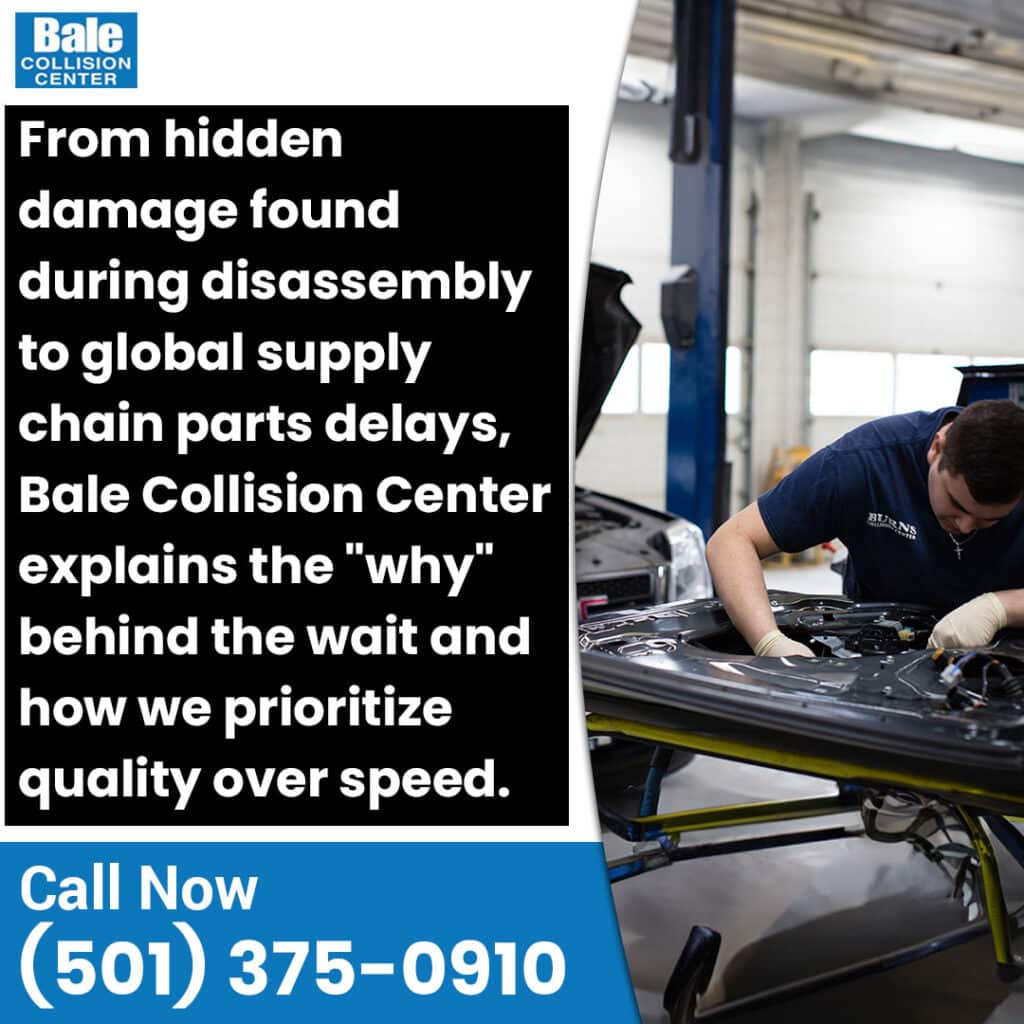
Repair timelines sometimes extend beyond initial estimates due to hidden damage, parts availability, insurance processes, and quality repair procedures. Understanding these factors helps vehicle owners maintain realistic expectations.
Bale Collision Center has served Little Rock for over 70 years through transparent communication, quality workmanship, and customer-focused service. Our certified technicians use advanced equipment and follow OEM repair procedures to restore vehicles safely. We provide regular progress updates and explain any timeline changes clearly.
When you need reliable auto body repair near you, choose a facility that values proper procedures over rushed work. Our commitment to quality body repair services protects your safety and vehicle value.
Contact Bale Collision Center today at (501) 375-0910 or email bccdowntown@baleautomotive.com to schedule your damage assessment. Our team will evaluate your vehicle thoroughly, provide an accurate timeline based on visible damage, and keep you informed as repairs progress. Trust our seven decades of experience to deliver the quality your vehicle requires.