
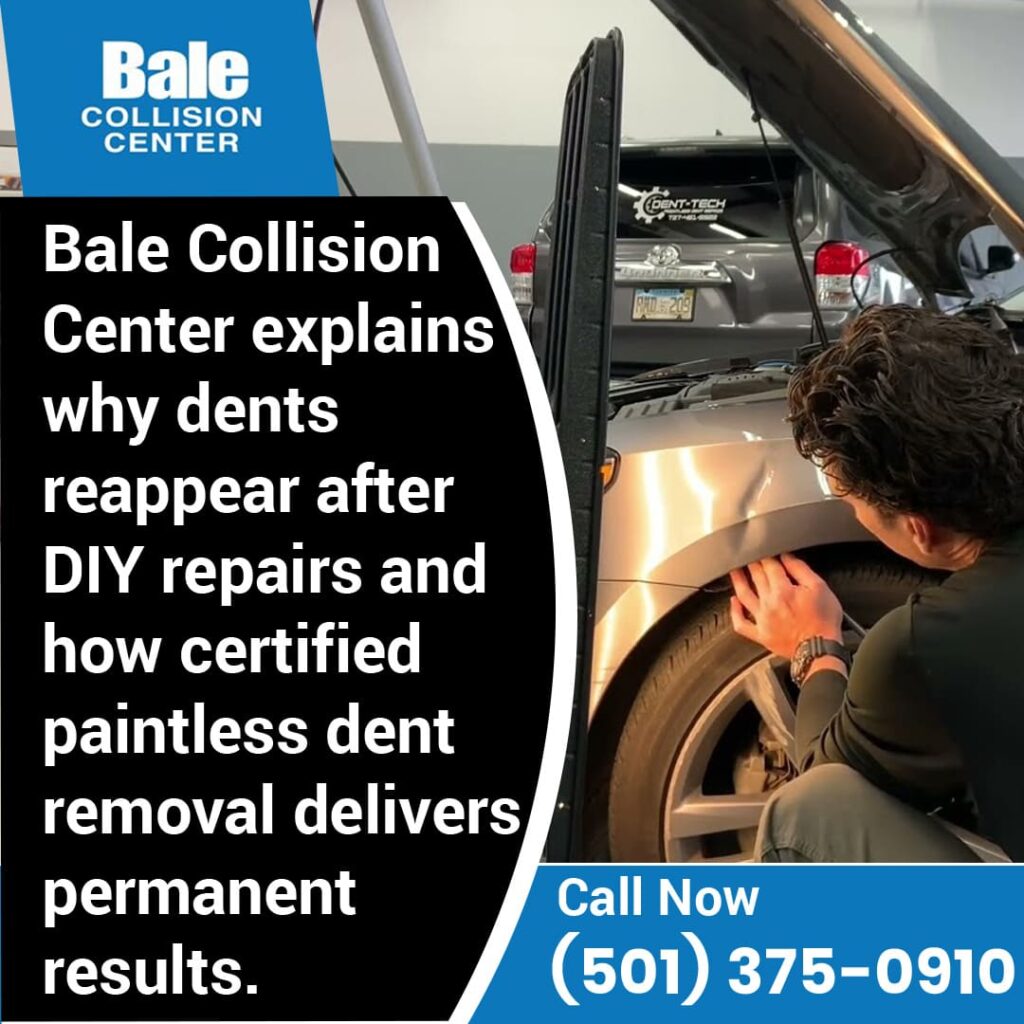
Vehicle owners sometimes notice a perplexing issue after attempting dent repairs: the damage reappears days or weeks later. This frustrating situation stems from improper repair techniques that fail to address the metal’s structural changes. Dents that seem to disappear and then return indicate incomplete repairs rather than spontaneous metal failure. Understanding why this happens helps vehicle owners make informed decisions about repair methods and avoid wasting time and money on temporary solutions.
At Bale Collision Center (Downtown), our certified technicians address dents using proven methods that create permanent results. With over seven decades of experience serving Arkansas families, we’ve witnessed countless cases where amateur repair attempts create long-term problems. Professional paintless dent repair creates lasting results by working with metal’s natural properties rather than against them. This article explains the science behind dent formation, why some repairs fail, and how proper technique prevents recurrence.
Metal Behavior After Dent Formation
Metal panels exhibit elastic deformation up to a point–meaning minor dents may appear to ‘spring back’ slightly. However, once the metal has been dented beyond its yield point, it doesn’t naturally return to its factory shape. The metal’s internal structure determines how well it recovers from damage. Skilled repair requires controlled manipulation to restore the original contours.
When an object strikes your vehicle and creates a dent, the metal gets pushed out of its original position. Steel and aluminum panels both possess this recovery ability, though they respond differently to damage. Steel panels return to their factory shape more readily than aluminum when properly repaired by a trained technician. Professional technicians understand these material properties and apply the appropriate force and methods for permanent correction.
Temperature Effects on Dent Behavior
Environmental temperature cycling creates stress that affects improperly repaired panels. Repeated heating and cooling cause metal expansion and contraction that can reveal incomplete repairs. Little Rock’s climate presents challenges, as there are significant temperature variations between seasons.
Summer heat causes metal expansion. A dent that was superficially ‘popped out’ may flatten further as the panel expands. The surrounding metal, which experienced stress during the original impact, may lack the structural integrity to maintain the panel’s proper shape under thermal stress.
Winter cold creates the opposite effect. Metal contracts when temperatures drop. This can pull the improperly repaired area back. The dent reappears because the amateur repair never corrected the metal’s internal structure. This temperature cycling continues throughout the vehicle’s life. Each seasonal change applies stress to weakened areas. Professional car dent removal addresses these structural weaknesses, creating repairs that withstand thermal cycling without failure.
Extreme temperature changes cause slight expansion and contraction in metal panels, but this alone is unlikely to reverse a properly repaired dent. Most ‘returning dents’ after repair are caused by residual stress in the metal or improper repair technique, rather than normal temperature cycling.
Common DIY Methods That Create Temporary Results
Amateur repair techniques found online promise quick fixes but rarely deliver permanent solutions. These methods may temporarily mask damage without correcting the underlying structural problems.
Hot Water and Plunger Techniques
Pouring boiling water on plastic bumpers softens the material temporarily. Pushing from behind while the plastic is hot can reshape the surface, but the repair fails when the material cools and contracts. The plastic never fully returns to its original form.
Hot water and plunger techniques may slightly reshape plastic bumpers, but on metal panels, this DIY method generally lacks the controlled force needed for lasting results. Metal requires sustained, controlled pressure applied from multiple angles to properly restore its shape. A simple push from behind lacks the precision and force distribution needed for permanent repair.
Heat and Compressed Air Methods
Hair dryers or heat guns, followed by compressed air spray, create rapid temperature changes. The theory suggests thermal shock will cause the metal to contract and pop the dent outward. In practice, this approach rarely works on anything beyond the shallowest surface depressions.
The rapid temperature change doesn’t give the metal enough time to settle back into place properly. The metal may shift slightly, creating the appearance of improvement. Within days or weeks, the dent returns to its previous state because the underlying damage was never properly corrected.
Dry Ice Application
Rubbing dry ice on dented surfaces creates extreme localized cooling. Some sources claim this causes metal contraction sufficient to reverse dents. This method provides minimal results on automotive panels due to metal thickness and structural reinforcement.
The technique works on thin metal films in laboratory conditions but fails on vehicle panels. The panel’s weight and thickness prevent the rapid temperature change needed for the metal to spring back into shape properly.
Professional dent removal services use proven techniques designed specifically for automotive panel repair rather than experimental methods. These certified approaches permanently correct metal deformation without risking the paint damage or incomplete repairs that DIY attempts often create.
Why Amateur Repairs Fail and Dents Return
Understanding how metal and paint respond to damage explains why some repairs last while others fail within weeks. Multiple factors determine whether a dent stays fixed or reappears over time.
Metal Damage Severity
When metal bends lightly, it can spring back to its original shape. When metal stretches too far, it stays permanently changed. Minor dents from shopping cart impacts or door dings often involve light bending without stretching. The metal maintains its internal structure. If addressed promptly with proper technique, these dents respond well to PDR (Paintless Dent Repair) because the metal hasn’t been permanently altered.
Deeper impacts or sharp object strikes stretch the metal beyond its recovery point. The metal doesn’t just bend; it permanently changes shape. Amateur techniques cannot reverse the stretched metal. Professional car dent removal technicians apply controlled force gradually from multiple directions to reshape the stretched areas properly.
Progressive Metal Weakening
Repeated stress on improperly repaired panels accelerates failure through metal fatigue. Each stress cycle weakens the material’s structure, making subsequent damage more likely and repair more difficult.
When amateur repairs fail to fully correct the damage, everyday vehicle use keeps weakening the affected area. Highway vibration, door opening and closing cycles, and minor impacts all contribute to progressive weakening. The dent may appear fixed initially, but the stressed metal gradually returns to its deformed state.
Work hardening compounds these problems. Aluminum panels particularly suffer from this phenomenon, where repeated manipulation makes the metal increasingly rigid and resistant to reshaping. Each failed amateur repair attempt work-hardens the panel further, eventually requiring complete panel replacement rather than repair.
Professional technicians understand work hardening risks. They assess the panel condition before beginning repairs and adjust techniques to minimize stress concentration. This expertise prevents the progressive damage that accompanies amateur repair attempts.
Paint Damage and Separation
Paint condition affects whether repairs remain permanent or fail over time. Factory paint contains elastic properties that allow flexing during proper PDR without cracking, while older or damaged paint may crack under repair pressure.
When DIY methods stress paint beyond its elastic limits, microcracks form in the clear coat and base layers. These cracks may not be immediately visible, but compromise the repair’s integrity. Moisture penetrates through microcracks, reaching the bare metal beneath. Corrosion begins, creating pressure beneath the paint that pushes the repaired area back outward.
Temperature cycling exacerbates paint flexibility issues. Summer heat makes paint more pliable, while winter cold makes it brittle. A dent “repair” that stressed the paint creates weak points that fail under thermal cycling. The paint separates from the metal, allowing the dent to reappear.
Professional paintless dent repair preserves paint integrity. Technicians apply controlled, gradual pressure that allows paint to flex without exceeding its elastic limits. This approach maintains the factory finish’s protective properties while permanently correcting the metal deformation.
At Bale Collision Center, our technicians provide certified PDR in Downtown Little Rock, Arkansas, with thorough assessments of metal damage, stress patterns, and paint condition before any repair begins. This professional evaluation prevents the repeat failures common with amateur attempts.
Why Professional PDR Creates Permanent Results
Certified technicians follow systematic processes that address metal’s structural properties rather than simply masking surface appearance. Professional PDR manipulates the metal at the molecular level, redistributing stresses and restoring factory contours permanently.
Assessment and Access
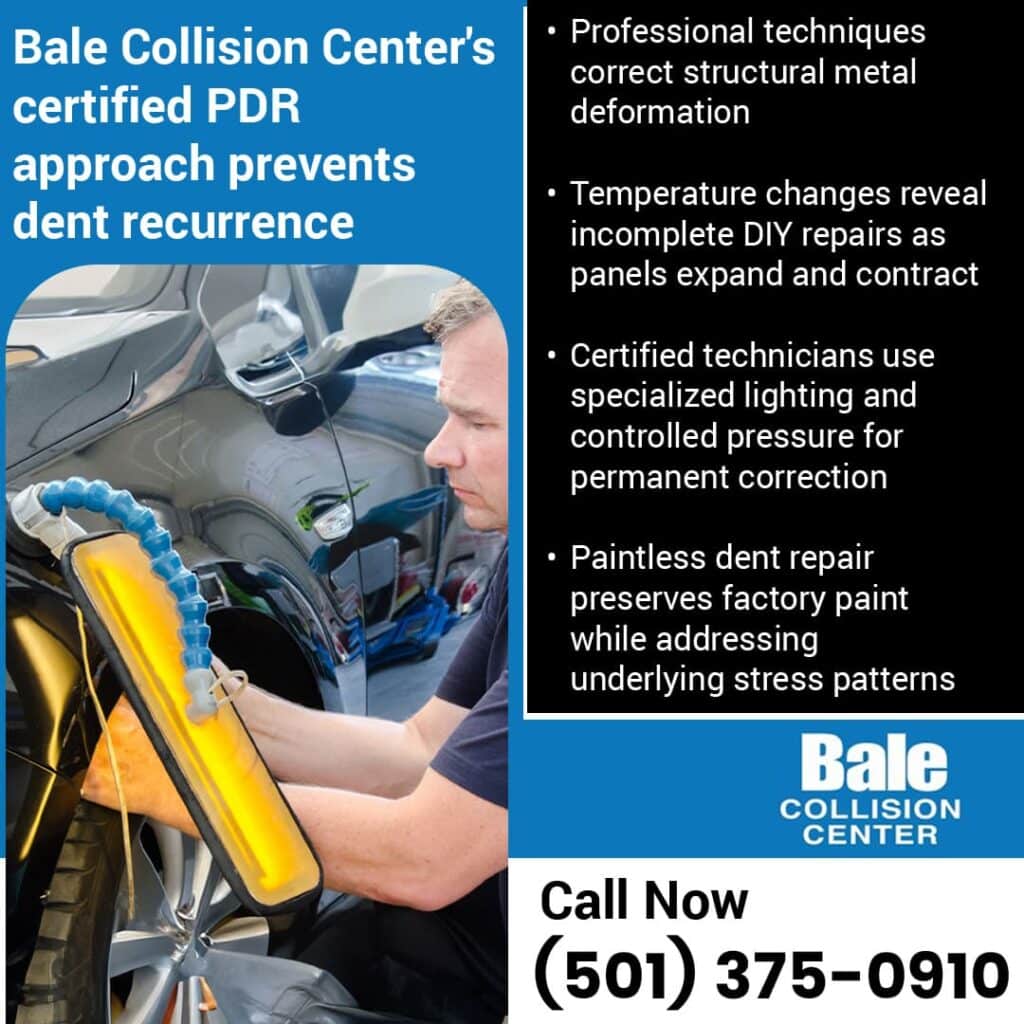
The repair process begins with damage assessment using specialized lighting. These lights reveal subtle contours invisible under normal lighting conditions. Technicians identify high points, low points, and stress concentrations that must be addressed for permanent repair.
Access to the dent’s backside is established through door panels, trunk access, or other factory openings. Professional tools are then used to apply controlled pressure gradually across the entire affected area. This redistribution of force coaxes metal molecules back to their original positions without creating new stress concentrations.
Incremental Repair Process
The technique relies on incremental progress. Technicians check their work constantly, adjusting pressure direction and intensity as the panel responds. This methodical approach respects metal’s physical limitations while achieving complete structural restoration.
Professional dent removal services address both visible damage and underlying structural issues. The result withstands thermal cycling, normal vehicle use, and environmental exposure without failure because the metal’s molecular structure has been properly restored.
Timing and Location Factors in Repair Success
Repair Timing Affects Long-Term Results
Prompt professional attention produces better results than delayed repairs. Fresh dents respond more readily to repair techniques because the metal hasn’t adapted to the deformed state. Professional intervention within the first few weeks after impact achieves better results with minimal risk of permanent changes in the metal.
Waiting months before addressing dents allows the metal to stabilize in the damaged configuration. While professional repair remains possible, the process requires more time and careful technique. Delayed repairs also increase paint damage risks as moisture accumulation accelerates corrosion beneath the surface.
Panel Location Influences Repair Permanence
Panel location equally influences repair permanence. Horizontal surfaces like roofs and hoods experience greater stress from temperature exposure and moisture accumulation than vertical panels. Roof dents collect standing water during rain, creating corrosion pressure that can push superficially repaired dents back outward.
Areas near body lines or reinforcement structures experience concentrated stress during normal vehicle use. A door dent near the hinge mounting point flexes thousands of times during everyday driving. Amateur repairs in these locations fail rapidly because they don’t account for ongoing mechanical stress.
Professional Assessment and Technique Selection
Certified technicians evaluate multiple factors when determining repair approaches. Panel material, dent depth, paint condition, and access points all influence whether car dent removal through paintless techniques remains viable or traditional methods become necessary.
Expert technicians understand when paintless dent repair will create permanent results versus when traditional bodywork better serves the vehicle’s long-term integrity. This assessment protects customers from inadequate repairs that will fail.
Modern diagnostic equipment reveals damage characteristics invisible to untrained eyes. These tools enable accurate repair method selection before work begins. Experience matters substantially in success rates. It allows them to predict how specific metals will respond to manipulation and adjust techniques accordingly for permanent results.
Bale Collision Center’s Approach to Dent Repair in Downtown Little Rock
Our facility combines advanced equipment with certified expertise to deliver lasting results. We follow OEM (Original Equipment Manufacturer) procedures for all repair work, maintaining the vehicle’s factory specifications throughout the process.
Complete Damage Documentation
The repair begins with complete damage documentation. This assessment identifies all affected areas, not just the primary visible damage. Hidden stresses and secondary deformations are located and addressed to prevent future failures.
Our certified technicians access damage through factory openings whenever possible. This approach preserves panel integrity and waterproofing seals. Specialized tools manipulate the metal gradually, respecting material properties while achieving complete structural restoration.
Quality Inspection Standards
Quality inspection follows every repair. We verify panel contours match factory specifications using precision measuring equipment. The paint is examined under multiple lighting conditions to confirm that no stress damage occurred during repair. Only after passing all quality checks is the vehicle approved for customer delivery.
Bale Collision Center offers certified PDR in Downtown Little Rock, Arkansas, for vehicle owners seeking dent removal services that deliver permanent results rather than temporary cosmetic improvements. With 72 years of service to Arkansas families, we understand what separates lasting repairs from quick fixes that fail.
Trust Professional Expertise for Lasting Results
Amateur dent repair attempts appear cost-effective initially, but temporary improvements inevitably fail. The science behind metal behavior, paint properties, and structural stress demands professional knowledge and specialized equipment for permanent correction.
Bale Collision Center has served Arkansas families since 1952. Our generational experience means we understand what makes repairs last. We provide certified PDR in Downtown Little Rock, Arkansas, that protects your investment through proper technique and complete damage correction.
Call us at (501) 375-0910 or email bccdowntown@baleautomotive.com to schedule your damage evaluation. Experience the difference that professional expertise and certified training make in repair quality.
