The type of damage your vehicle sustained after a collision determines how long repairs will take, what your insurance will cover, and most importantly, whether your vehicle can still protect you safely on the road. Structural damage involves the frame and components that hold your vehicle together and protect you during crashes. Cosmetic damage affects only the exterior appearance without compromising how your vehicle protects you. The distinction between these two categories determines everything from repair complexity to long-term vehicle safety.
At Bale Collision Center (Downtown), our certified technicians have provided trusted collision repair for Little Rock families since 1952. We use advanced equipment and follow manufacturer specifications to identify all damage types accurately. This guide explains how structural and cosmetic damage differ, why the distinction matters for your safety, and how professional assessment protects you from hidden problems that can compromise your vehicle’s performance.
What Structural Damage Means
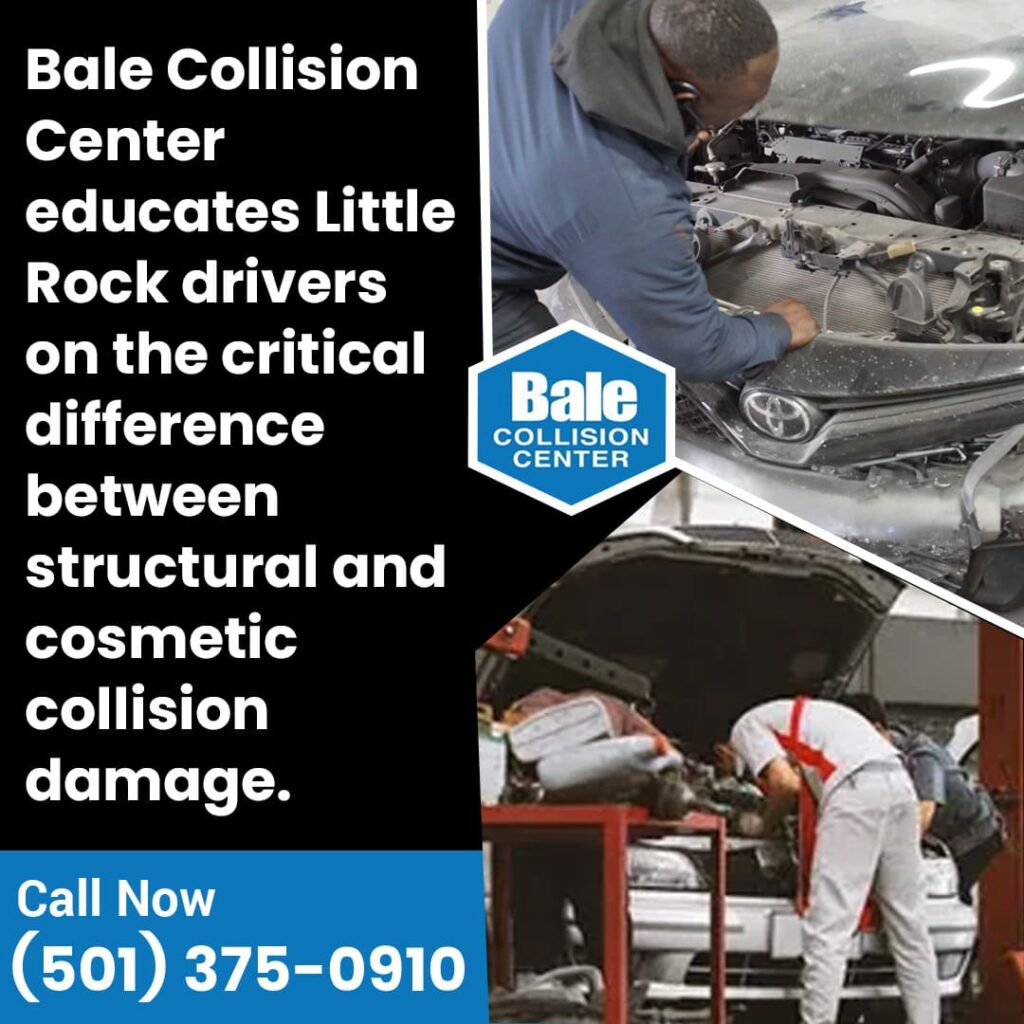
Structural damage affects the frame and supporting parts that form your vehicle’s foundation. These parts work together to maintain your vehicle’s shape, absorb crash energy, and protect you during collisions.
The vehicle’s structure holds everything together. The frame runs underneath your vehicle and supports all the mechanical parts. Modern vehicles use unibody construction, where the body and frame are built as one piece rather than separate parts. Key structural components include:
- Frame rails that run from front to back, carrying the weight of your engine and other parts while directing crash forces away from where you sit.
- Crumple zones that are designed to crush in a controlled way during an impact, absorbing energy before it reaches you inside the vehicle.
- A-pillars, B-pillars, and C-pillars (the vertical posts between windows) that keep your roof from collapsing during a rollover.
- Core support at the front that holds the radiator and cooling parts, while adding strength to the front end.
- Rocker panels running beneath the doors that connect the front and back of your vehicle’s structure and protect you during side impacts.
When these structural parts bend, twist, or weaken during a collision, your vehicle cannot protect you properly in future accidents. This makes accurate identification and proper auto collision repair of structural damage critical for your safety.
What Cosmetic Damage Includes
Cosmetic damage affects only the parts you see on the outside without compromising the structure underneath. Body panels like doors, fenders, hoods, and quarter panels can be dented or scratched without affecting the frame below. Common cosmetic parts include:
- Bumper covers that provide styling and protect the impact absorber behind them, but don’t add structural strength.
- Body panel paint and finish that protects the metal from rust but doesn’t contribute to structural integrity.
- Trim pieces, emblems, and decorative elements that enhance appearance without affecting how your vehicle functions.
- Mirror housings and grilles that are purely exterior styling components.
- Weather stripping around doors that creates a watertight seal but doesn’t support the vehicle’s frame.
- Side and rear windows typically do not contribute to structural crash performance, but windshield damage often requires special consideration because modern safety systems (cameras and sensors) mount there, and glass integrity contributes to roof strength in a rollover.
These parts can be dented, scratched, cracked, broken, or torn without compromising your vehicle’s ability to protect you. Paint damage can range from minor scratches to major scrapes without weakening the metal underneath. Cosmetic damage affects how your vehicle looks and its resale value, but it doesn’t compromise safety when it’s truly separate from structural parts. The problem comes when cosmetic damage hides structural problems underneath that aren’t visible at first glance.
Why Structural Damage Affects Your Safety
Structural damage creates serious safety concerns beyond appearance. Your vehicle’s frame forms the foundation for all safety systems and crash protection features.
How Your Frame Protects You
The frame channels crash forces around where you sit. Energy from impacts flows through designed paths that absorb and redirect forces away from you. When structural parts bend or weaken, these protection systems fail to work as designed.
Frame rails that get bent may look straight after basic repairs, but have weak spots that get worse over time. Vehicles with unrepaired or poorly repaired structural damage show faster wear on suspension parts, uneven tire wear, and handling problems. More concerning, weakened structural parts provide less protection during future collisions.
Effects on Safety Features
Today’s vehicles build safety systems into structural parts in ways that require precise alignment. Airbag sensors attach to structural points and need proper frame geometry to detect crashes accurately. Safety cameras and sensors require exact mounting angles that change when structural parts shift.
Side airbags deploy based on sensors that detect structural movement, and even minor misalignment of these sensors can prevent proper deployment or cause false activations that put you at risk.
How Insurance Handles Different Damage Types
Insurance adjusters classify damage types to determine proper repair procedures and estimate accuracy. This classification directly affects your claim settlement and repair authorization for vehicle collision repair in Downtown Little Rock, AR.
Most insurance policies cover both structural and cosmetic damage, but the assessment process differs. Adjusters use damage severity to determine whether repairs make sense financially or if the vehicle should be declared a total loss.
Initial Assessment Challenges
Insurance adjusters often perform first assessments based on visible damage without taking parts apart. This approach can miss structural problems hidden beneath outer panels. Initial estimates may approve only cosmetic repairs, requiring additional estimates once hidden structural damage appears during disassembly.
Bale Collision Center works with all major insurance companies and understands their assessment procedures. Our technicians document all damage thoroughly, providing detailed photos and measurements that help adjusters understand the full scope of structural issues requiring repair.
When Additional Damage Is Found
Additional estimates happen frequently in auto collision repair when technicians discover hidden structural damage during disassembly. Insurance companies expect professional shops to identify and document these issues rather than proceeding with inadequate repairs.
Our relationship with State Farm, Allstate, Liberty Mutual, USAA, Nationwide, and other carriers streamlines this process. We communicate damage findings clearly and provide the documentation adjusters need to approve necessary structural repairs promptly for insurance-approved collision repair.
The Risk of Missing Hidden Damage
The most serious problem in collision repair occurs when structural damage goes undetected beneath outer panels. This situation puts drivers at risk while creating liability issues for auto collision centers.
When Outer Damage Hides Bigger Problems
A dented door may appear to be simple cosmetic damage, but if the impact bent the pillar behind that door, the structural damage affects side-impact protection. A crumpled hood might seem like a straightforward panel replacement, but if the support underneath shifted during impact, the entire front-end structure needs assessment and possible repair.
Front-end collisions that appear minor can damage frame rails without obvious external signs. The bumper cover absorbs visible damage, while frame rails behind it bend or buckle. These hidden problems only become apparent during professional measurement or when the vehicle doesn’t drive properly after repairs.
Why Some Shops Miss Problems
Not all repair facilities have the equipment, training, or willingness to identify structural problems accurately. Shops without computerized measuring systems rely on visual assessment and basic tools that lack the necessary precision. Facilities that focus primarily on cosmetic work may lack frame straightening equipment. This can put customers at risk while creating legal liability when improperly repaired vehicles fail to protect occupants in future collisions.
Why Proper Training Matters
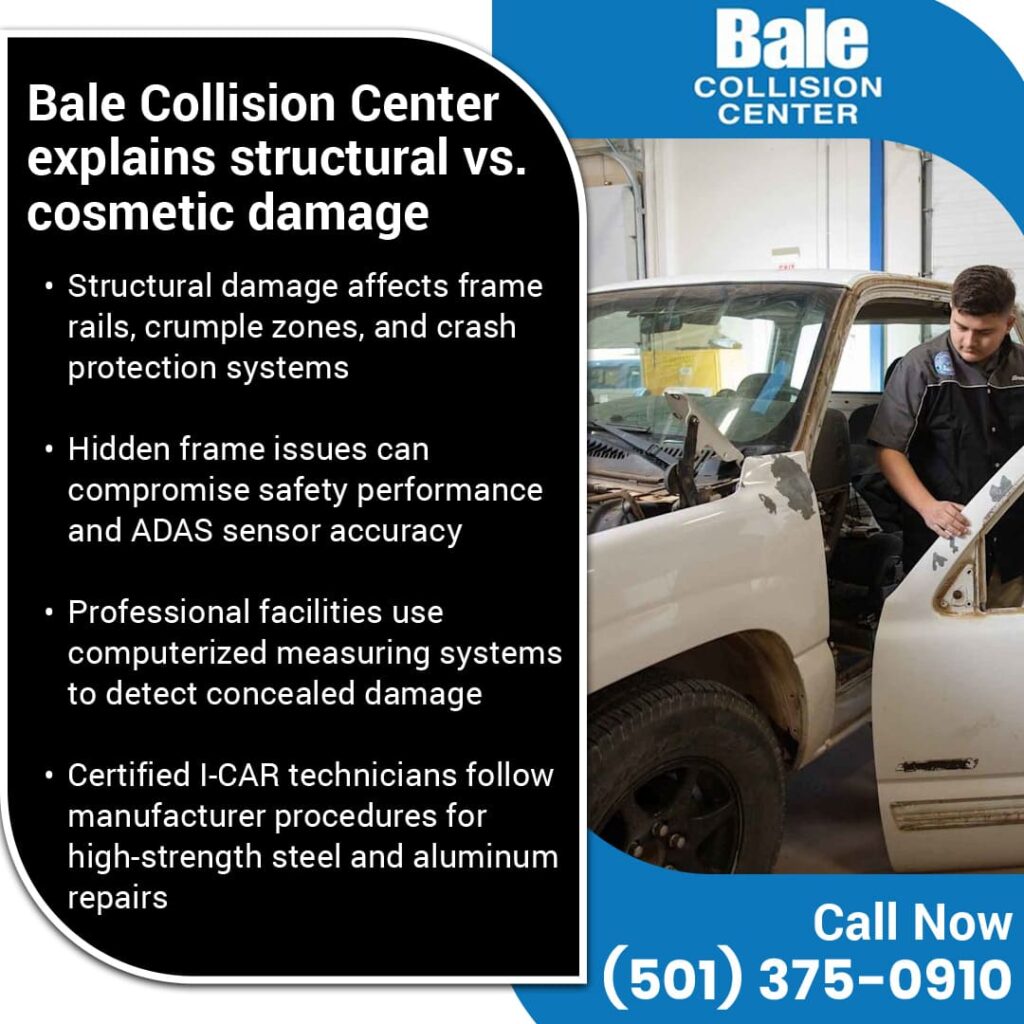
Identifying structural damage hidden beneath cosmetic panels requires specialized knowledge beyond basic auto body repair skills. Technicians need to understand how modern vehicles are engineered, where structural components are located, and what signs indicate frame compromise. Without proper training, repair shops may miss critical damage or use incorrect repair methods that leave your vehicle unsafe. Modern vehicles require specialized repair knowledge for:
- High-strength steel that loses its protective properties when heated improperly.
- Aluminum components that require different welding equipment and procedures than steel.
- Adhesive bonding that has replaced traditional welding in many structural areas, requiring precise surface preparation and curing processes.
The Inter-Industry Conference on Auto Collision Repair (I-CAR) provides standardized training and certification for repair facilities and technicians. I-CAR Gold Class facilities demonstrate commitment to proper training, equipment, and procedures. I-CAR Platinum-certified technicians represent the highest level of individual certification available.
I-CAR-trained technicians have demonstrated enhanced knowledge of structural repair standards and assessment procedures compared to technicians without I-CAR training. I-CAR Gold Class and Platinum certifications reflect ongoing education and adherence to industry best practices for collision repair.
How Long Repairs Take
The time required to complete repairs varies between cosmetic and structural damage based on complexity and required procedures.
| Repair Type | Typical Timeline | What’s Involved | Factors Affecting Timeline |
| Cosmetic Repair | Several business days | Taking parts apart, ordering parts if needed, performing repair or replacement work, painting, and putting everything back together | Parts availability, paint drying requirements, and shop scheduling |
| Structural Repair | Longer timeframe depending on damage severity | Initial disassembly to reveal full damage extent, supplemental insurance authorization, frame straightening, structural part replacement, manufacturer-specified welding procedures, precise measurement verification, safety system adjustments | Damage complexity, insurance approval process, specialized equipment requirements, and manufacturer procedure compliance |
Most cosmetic repairs proceed smoothly because the work doesn’t require insurance supplements or unexpected complexity. Structural repairs require more time because frame straightening and structural part replacement cannot be rushed without compromising quality and safety.
Following Manufacturer Guidelines
Vehicle manufacturers provide detailed repair procedures specifying how to restore their vehicles properly after collision damage. Following these manufacturer procedures represents the difference between proper auto collision repair and inadequate work that compromises safety.
Why Manufacturers Set Specific Rules
Each vehicle model uses specific materials and joining methods. Aluminum repairs require different procedures than steel. High-strength steel cannot be heated and straightened like regular steel without losing its protective properties. Adhesive-bonded joints supplement or replace welds in many modern vehicles, requiring specialized preparation and bonding procedures.
Manufacturers engineer these specifications through extensive crash testing and engineering analysis. Deviating from manufacturer procedures creates repairs that look correct but don’t perform properly during collisions.
Accessing Current Information
Manufacturer repair procedures change frequently as they introduce new models and update existing ones. Repair facilities need access to current manufacturer databases containing repair procedures, part specifications, and testing requirements.
At our auto collision center, we maintain subscriptions to manufacturer repair information systems. This provides our technicians with current procedures for all makes and models we service.
Common Questions About Structural and Cosmetic Repairs
Can a vehicle with repaired structural damage be as safe as before the accident?
When structural repairs follow manufacturer procedures and use proper equipment, your vehicle can be restored to its original safety specifications. The key is choosing a facility with certified technicians who use computerized measuring systems to verify frame accuracy and follow OEM repair guidelines precisely.
How do I verify repairs were done correctly after I pick up my vehicle?
Request documentation showing before and after frame measurements, diagnostic scan results confirming safety systems function properly, and photos of the repair process. Reputable auto collision centers provide this documentation and explain what repairs were performed and why they were necessary.
Does the repair type affect my vehicle’s resale value differently?
Vehicles with properly documented structural repairs using OEM procedures typically maintain better resale value than those with incomplete documentation or non-certified repairs. Vehicle history reports show collision damage regardless of type, but professional repair documentation can reassure potential buyers.
What documentation should I keep from my collision repair?
Keep all repair invoices, frame measurement reports, parts receipts, diagnostic scan results, photos of the damage and repair process, and insurance correspondence. This documentation protects you if issues arise later and provides valuable records for future buyers.
Bale Collision Center: Certified Expertise for All Collision Damage Types
Bale Collision Center has provided trusted collision repair in Little Rock since 1952. Our 72 years of experience combine traditional craftsmanship with modern technology and manufacturer-certified procedures.
Equipment and Expertise
Our facility holds I-CAR Gold Class certification, demonstrating our commitment to proper training, equipment, and procedures. Our technicians maintain I-CAR Platinum individual certifications, representing the highest technical achievement available in the collision repair industry.
We use advanced computerized measuring systems for structural assessment and repair verification. Our testing capabilities include professional scanning tools that identify safety system problems other facilities miss. Frame straightening equipment and certified welding procedures allow us to restore structural integrity following manufacturer specifications.
Clear Communication
We manage insurance claims on your behalf, working directly with adjusters to document damage properly and obtain authorization for all necessary repairs. Our team provides regular updates throughout the repair process, explaining any additional damage discovered during disassembly and how it affects the repair timeline.
Communication extends to explaining the differences between structural and cosmetic damage in your specific situation. We help you understand why certain repairs require more time and investment than others, always prioritizing safety over convenience.
Trust Little Rock’s Collision Repair Experts
The distinction between structural and cosmetic damage determines your safety, repair quality, and vehicle value after collision repairs. Accurate assessment using professional equipment and certified expertise protects you from hidden problems that compromise safety and create expensive issues down the road.
Contact Bale Collision Center at (501) 375-0910 or bccdowntown@baleautomotive.com for a professional damage assessment. Our certified technicians will explain exactly what type of damage your vehicle sustained and the proper repair procedures needed. We provide the expertise, equipment, and integrity you need for safe, reliable vehicle collision repair in Downtown Little Rock, AR, and nearby areas.
