
After a vehicle accident, one question weighs heavily on every driver’s mind: when can I get back on the road? The uncertainty of not knowing whether repairs will take days or weeks makes planning difficult. Between coordinating with insurance companies, arranging alternative transportation, and managing daily responsibilities, the auto collision repair process can feel overwhelming without clear information about what to expect.
The timeline for restoring your vehicle depends on multiple interconnected factors. Damage severity represents just one piece of the puzzle. Parts availability, insurance approval processes, and the complexity of modern vehicle technology all play roles in determining how long your car stays in the shop.
At Bale Collision Center (Downtown) in Little Rock, AR, we have been serving the community since 1952. Our experience has taught us that transparent communication about timelines reduces anxiety and helps vehicle owners plan effectively. This article explains the factors affecting repair duration, typical timeframes for different damage types, and how proper procedures protect your safety even when they extend the timeline.
Understanding Repair Timelines by Damage Type
The extent of damage your vehicle sustained directly determines how long repairs will take. Different collision scenarios create distinct repair challenges requiring varying time investments.
Minor Damage Repairs
Minor damage repairs typically require 1 to 3 days. This category includes small dents, scratches, minor bumper damage, or single-panel repairs that don’t affect structural components. Paintless dent repair (PDR) for small dings can often be completed in a single day when no repainting is necessary.
These repairs focus on cosmetic restoration without requiring extensive disassembly. Our technicians can address surface damage efficiently while maintaining quality standards. However, even minor work may take longer if parts need ordering or if insurance documentation requires additional time for processing.
Moderate Damage Repairs
Moderate collision damage typically requires 3 to 7 days for proper restoration. This level includes bumper replacements, fender repairs, door replacements, or damage affecting multiple panels on one side of your vehicle. These repairs often involve both body work and refinishing to restore proper appearance.
Moderate auto collision repairs may require paint blending across multiple panels to achieve consistent color matching. The paint application and curing process add necessary time but provide the quality finish your vehicle deserves.
Major Collision Repairs
Major collision repairs involving structural damage commonly take one to several weeks to complete. Industry summaries estimate that roughly one-third of collision repairs involve frame or structural work that requires specialized equipment and expertise.
Significant accidents affecting your vehicle’s frame, requiring extensive panel replacement, or damaging safety systems, need comprehensive repair processes. These repairs cannot be rushed because your vehicle’s structural integrity directly affects crash protection in future collisions.
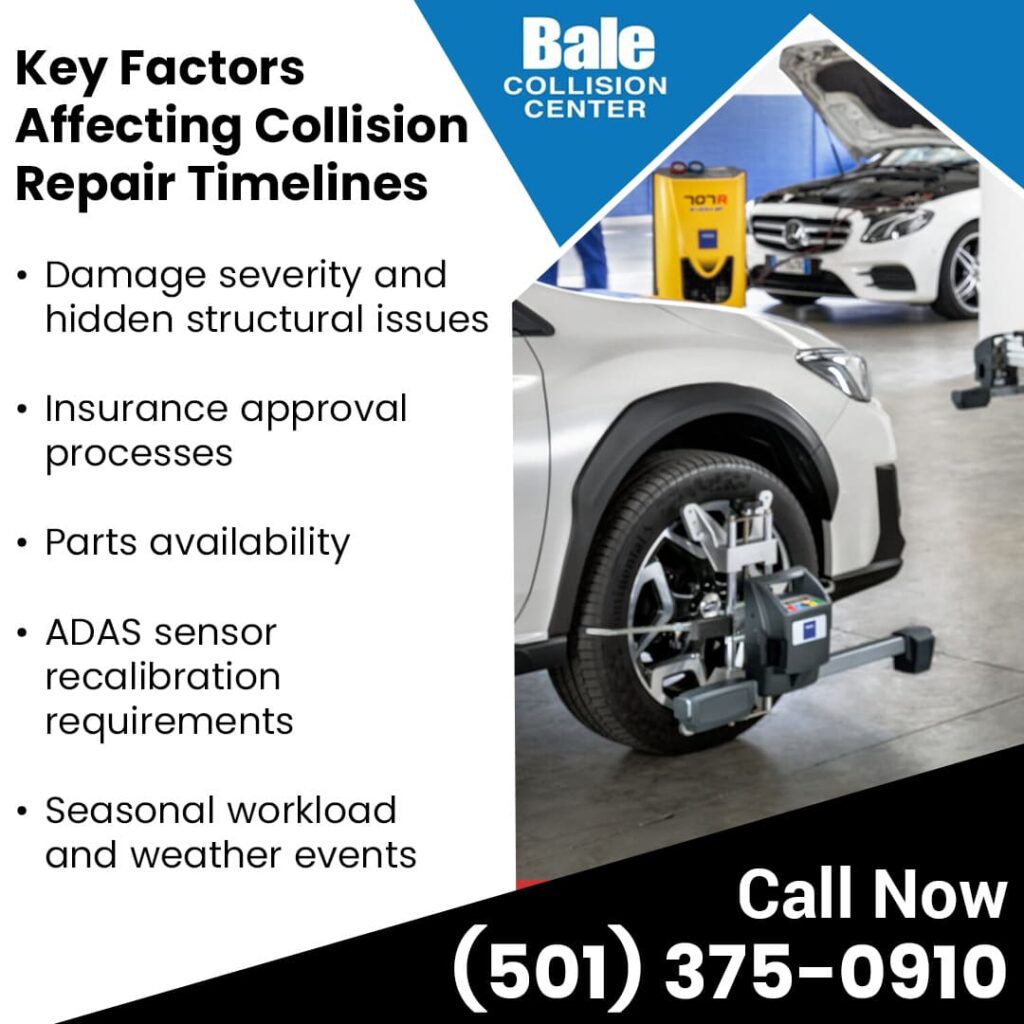
Key Factors Affecting Repair Duration
Multiple variables influence how long your specific repair will take. Understanding these factors helps you anticipate the timeline for your vehicle’s restoration.
Damage Severity and Hidden Issues
Visible damage after a collision often represents only part of the total vehicle collision repair needs. When technicians begin disassembly, they frequently discover additional damage to mounting brackets, support structures, or components hidden behind exterior panels.
Hidden damage extends repair timelines because technicians must document new findings, obtain additional insurance approval, and order parts not included in the initial estimate.
Parts Availability and Ordering
Parts procurement can add anywhere from a few days to several weeks to your repair timeline. Common parts for popular makes are often available quickly, sometimes within a few days, but OEM backorders, shipping delays, or discontinued parts for older vehicles can extend lead times. Specialized parts for luxury vehicles, rare models, or vehicles requiring Original Equipment Manufacturer (OEM) components may take longer.
Supply chain conditions affect delivery times. Global shipping delays, manufacturer backorders, or discontinued parts for older vehicles can extend wait times beyond normal expectations. Auto collision centers order parts as soon as insurance companies approve estimates to minimize delays.
Insurance Approval Processes
Insurance review and authorization timelines vary. Simple claims may be approved in a couple of days, while complex claims or those requiring supplemental estimates can take several days to several weeks, depending on the insurer and the documentation required. Insurance adjusters must verify damage, review estimates, and authorize repair work outlined in the shop’s assessment.
Simple claims involving minor damage may receive approval within 48 hours. Complex claims requiring detailed documentation, supplemental estimates, or additional adjuster inspections take longer to process.
At Bale Collision Center, we work directly with all major insurance companies, including State Farm, Allstate, Liberty Mutual, USAA, and Nationwide. Our experience with insurance protocols helps streamline approvals and reduce delays. When technicians discover hidden issues and submit supplemental estimates, additional insurance approval is required. That approval can take several days or longer, depending on the complexity of the new work and the insurer’s review process.
Vehicle Technology and Complexity
Your vehicle’s specific characteristics affect repair complexity and duration. Standard vehicles with widely available parts and straightforward repair procedures typically move through shops more quickly than luxury or specialty vehicles requiring unique expertise.
Modern vehicles equipped with advanced technology present additional challenges. Aluminum body panels require different welding techniques than traditional steel construction. Carbon fiber components need specialized repair methods. Electric vehicles require additional safety protocols and may need high-voltage system deactivation before repairs begin.
The complexity of today’s vehicles means auto collision centers must invest in specialized training and equipment. Technicians must receive ongoing education in the latest repair techniques to handle evolving vehicle technologies properly.
ADAS Calibration Requirements
ADAS (Advanced Driver Assistance Systems) calibration typically adds 1 to 3 hours to repair timelines, but represents necessary work for vehicle safety. Modern vehicles depend on cameras, radar sensors, and other technology to power safety features like automatic emergency braking, lane departure warning, and adaptive cruise control. These systems require precise calibration after collision repairs, windshield replacement, or any work affecting sensor mounting points.
At Bale Collision Center, we perform ADAS calibration with VSSTA diagnostic and calibration tools that support manufacturer specification checks and verification. Our technicians complete pre-scan diagnostics before repairs begin and post-scan verification after work finishes. This process adds time but provides the safety assurance your family deserves. Skipping this step leaves safety systems unable to function properly when you need them most.
Shop Workload and Scheduling
The repair facility’s current workload affects when your vehicle enters the shop and how quickly work progresses. Busy periods following severe weather events or during high-accident seasons may result in scheduling delays.
Minimizing Delays in the Repair Process
While many factors affecting the collision repair duration are outside your control, you can take steps that help streamline the process.
Provide Complete Information Upfront
When scheduling your initial estimate, bring all relevant documentation, including insurance information, accident reports, and any photos you took at the accident scene. Complete information helps shops prepare accurate estimates and reduces back-and-forth communication that can delay the process. Quick responses to requests for authorization or decision-making keep repairs moving forward without unnecessary pauses.
File Insurance Claims Promptly
Contact insurance companies immediately after accidents to initiate claims processes. The sooner claims begin, the sooner adjusters can review damage and authorize repairs. Delays in filing claims push back every subsequent step in repair timelines.
Provide insurance companies with accurate information about accident circumstances and damage extent. Inconsistencies or missing information can trigger additional investigation that extends approval processes.
Choose a Certified Repair Facility
Selecting a qualified auto collision center from the start prevents problems that could extend repair timelines. Shops with proper certifications, equipment, and insurance relationships handle repairs more efficiently than facilities lacking these resources.
At Bale Collision Center, our I-CAR Gold Class facility certification and Platinum-certified technicians demonstrate our commitment to providing proper collision repair in Downtown Little Rock, AR. We maintain established relationships with all major insurance companies and follow manufacturer-specified repair processes.
How Bale Collision Center Manages Repair Timelines
Our approach to collision repair in Downtown Little Rock, AR, balances efficiency with quality. Several practices help us deliver timely repairs without sacrificing thoroughness.
Thorough Initial Assessment
We invest time in a detailed damage assessment before submitting estimates to insurance companies. This front-end thoroughness reduces the likelihood of discovering major hidden damage later that would require supplemental estimates and extend timelines. Our technicians use decades of combined experience to anticipate potential issues during initial evaluations.
Proactive Parts Ordering
We order parts as soon as insurance approval is received to minimize delays. While we strive to have components arrive before your scheduled repair date, delivery times vary based on parts availability and supplier schedules. For vehicles requiring specialized components with longer lead times, we communicate expected delivery schedules upfront so you understand the full timeline. If parts arrive later than anticipated, we contact you immediately with updated information.
Regular Customer Updates
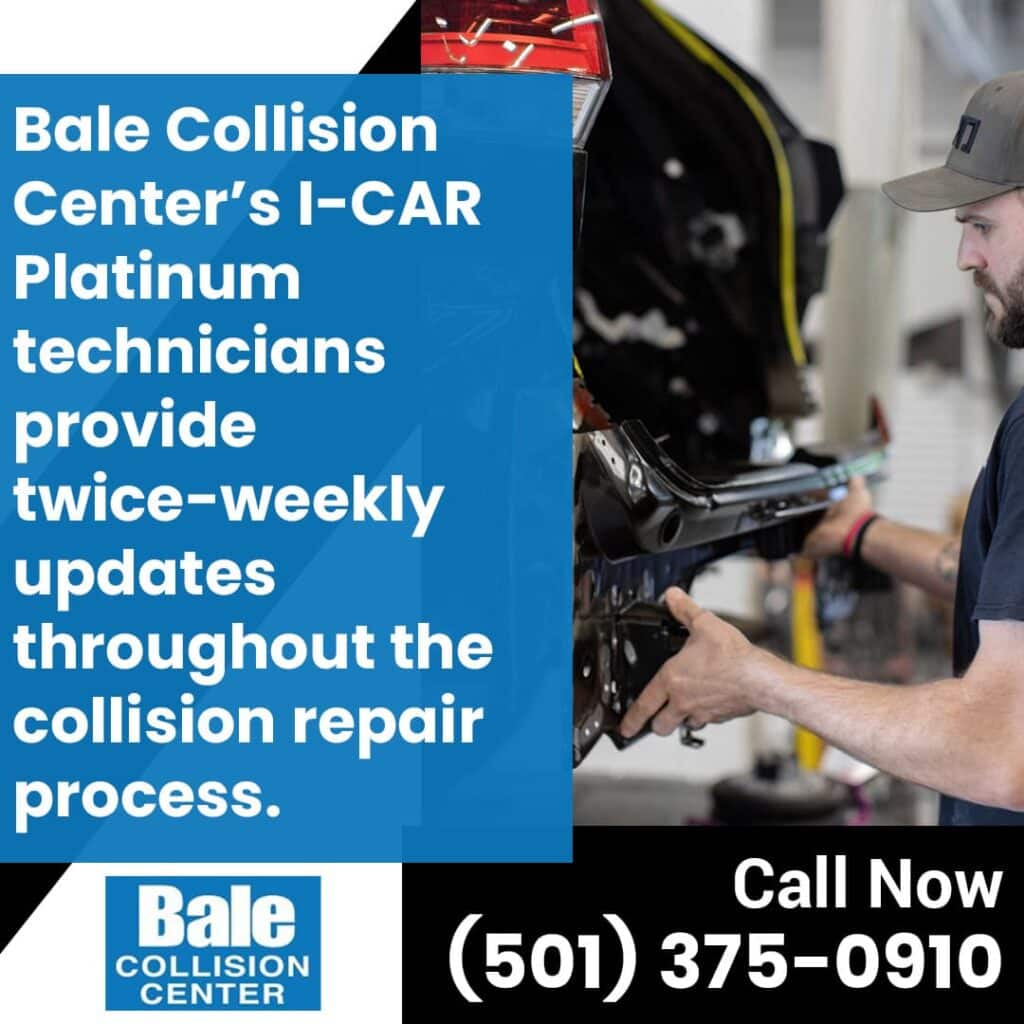
At Bale Collision Center, we communicate with you twice weekly throughout the vehicle collision repair process. These updates keep you informed about progress, any issues discovered, and changes to expected completion dates. Regular communication prevents frustration and helps you plan around actual return dates. This transparency helps you feel connected to the process even though your vehicle is in our facility.
Trust Expert Collision Repair in Downtown Little Rock, AR
Understanding auto collision repair timelines helps you make informed decisions and set realistic expectations when your vehicle needs restoration. Repair duration depends on damage severity, parts availability, insurance processes, and vehicle complexity.
At Bale Collision Center, we’ve provided trusted collision repair services to Little Rock families for 73 years. Our I-CAR Gold Class certification, Platinum-certified technicians, and professional equipment enable us to handle repairs of all complexities. We work with all major insurance companies to streamline approvals and manage every aspect of repairs from initial estimate through final delivery.
Our commitment to following OEM procedures, performing proper ADAS calibration, and maintaining quality standards means repairs are done right the first time. We understand the inconvenience of being without your vehicle and work efficiently to return it safely and promptly.
Schedule Your Repair Estimate Today
Don’t let uncertainty about repair timelines keep you from getting your vehicle properly restored after a collision. Contact Bale Collision Center today for a thorough damage assessment and realistic timeline for your specific repairs.
Call us at (501) 375-0910 or email bccdowntown@baleautomotive.com to schedule your appointment. Our experienced estimators will evaluate your vehicle’s damage, explain the repair process, and provide a detailed timeline based on your specific situation. We serve Downtown Little Rock, AR, and nearby areas with the quality vehicle collision repair your vehicle deserves.

