A door ding in a parking lot or a small dent from hail may not seem serious at first glance. However, the repair shop you choose makes the difference between restoring your vehicle’s original condition and creating new problems that cost more to fix later. When selecting paintless dent repair in Chenal Parkway, Little Rock, AR, asking the right questions before work begins protects both your vehicle and your wallet.
Quality varies across repair facilities. Professional shops with certified technicians and specialized equipment restore panels without compromising factory paint or vehicle value. Less experienced facilities may attempt repairs they’re not qualified to perform, resulting in paint stress, visible imperfections, or damage that worsens over time. Knowing which questions to ask helps you identify shops with genuine expertise.
Since 1952, Bale Collision Center (Chenal) has built a reputation on transparent service and quality workmanship. Our technicians use advanced equipment in climate-controlled facilities to restore most vehicle makes and models. Certain electric vehicles, including Tesla and Rivian, may require manufacturer-specific repair procedures. We believe informed customers make better decisions, which is why we encourage questions at every step of the repair process.
Basics of Paintless Dent Repair
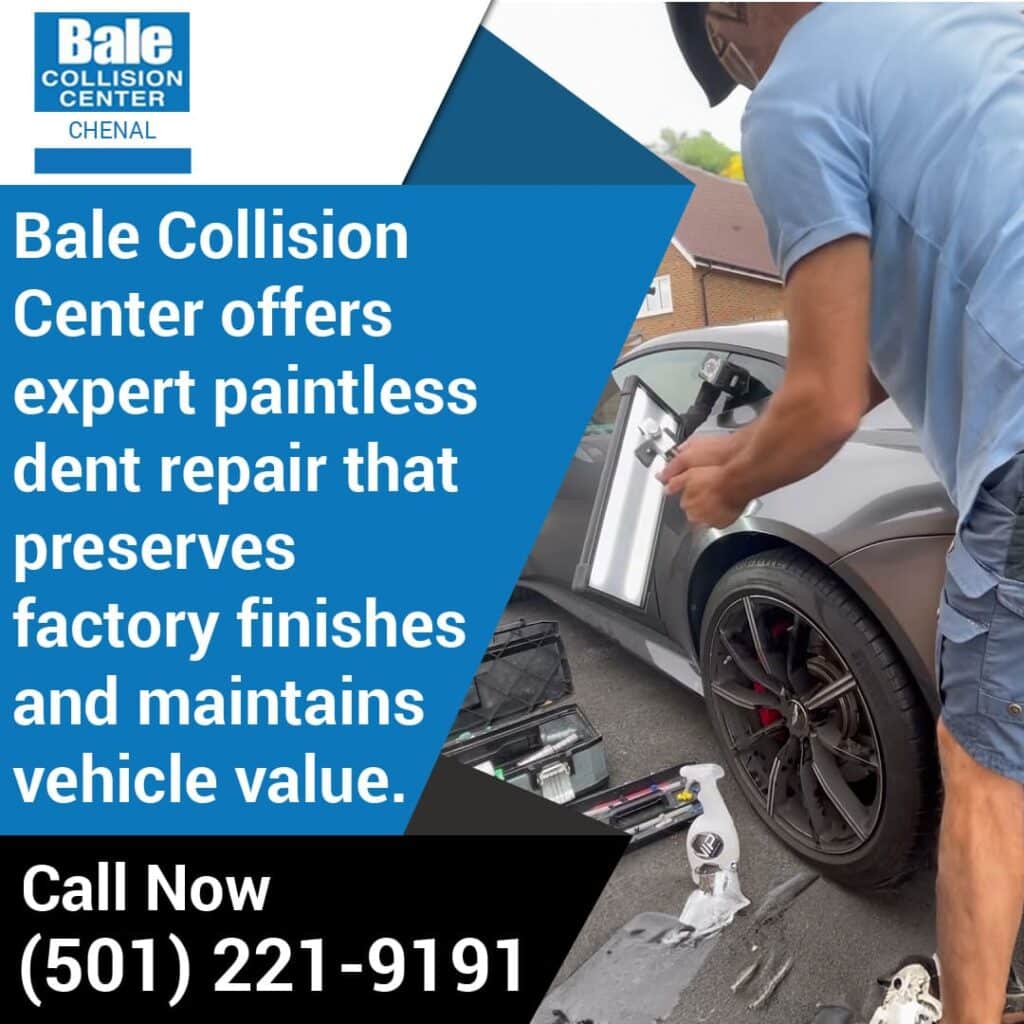
Paintless Dent Repair (PDR) is a specialized technique that removes dents without sanding, filling, or repainting damaged areas. Technicians access the damaged panel from behind and use specialized metal rods to apply controlled pressure. This pressure gradually reshapes the dented metal back to its original contour. The process preserves the factory paint system because no surface preparation or refinishing occurs.
The technique works by manipulating the metal’s elasticity. When panels receive impact, the metal deforms but retains memory of its original shape. Skilled technicians use this property to guide the metal back into position through carefully applied pressure points.
Professional lighting systems help technicians see surface variations during the repair process. Reflection boards create light patterns that reveal remaining imperfections measuring less than one millimeter. This precision allows complete restoration without guesswork.
Is the Damage a Good Candidate for PDR?
Not all dents qualify for paintless repair, and professional assessment determines whether your specific damage meets the necessary criteria.
Paint and Metal Condition Requirements
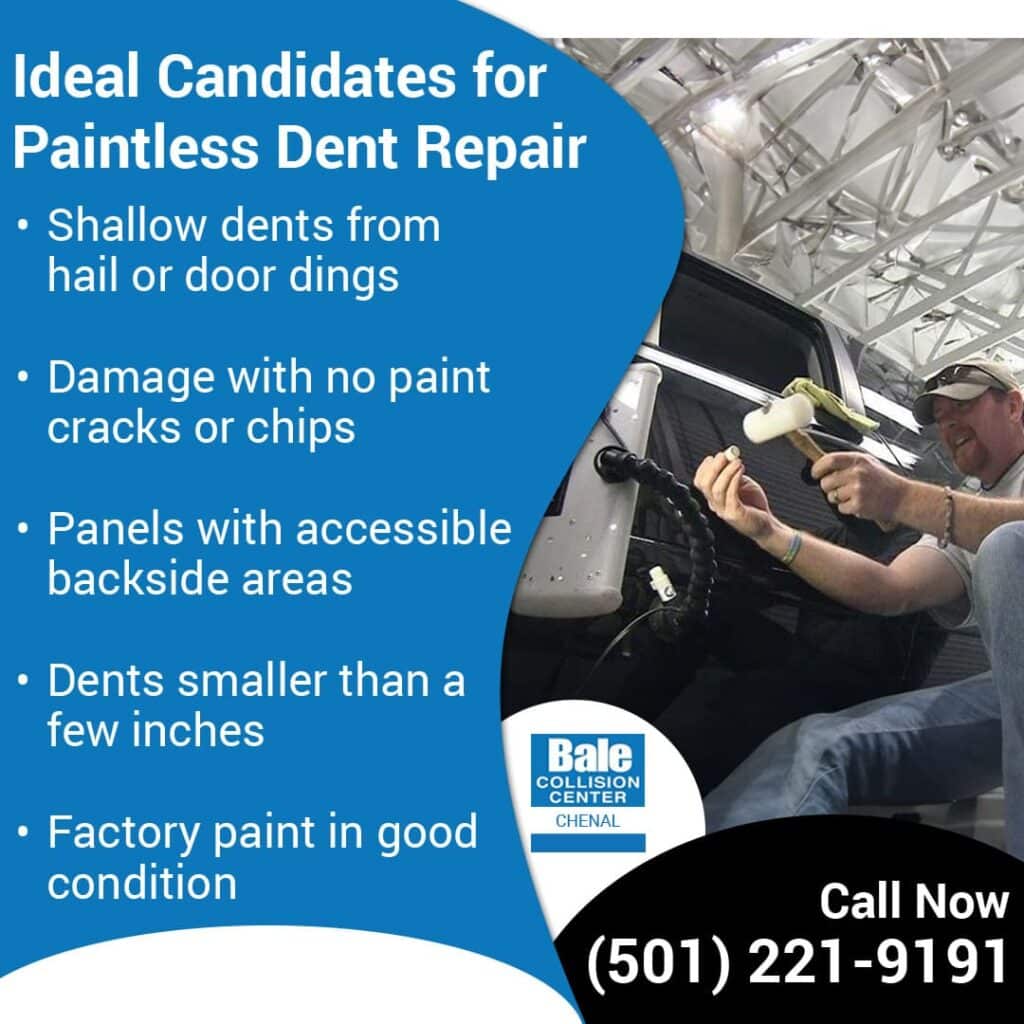
Paint condition represents the primary consideration for successful repairs. Technicians evaluate several factors to determine whether your damage qualifies:
Paint integrity assessment:
- The damaged area must show no cracks, chips, or existing paint damage. Even microscopic paint cracks may expand during manipulation, requiring traditional bodywork instead.
- Original factory paint must remain intact across the entire damaged section. Previous touch-up work, aftermarket paint jobs, or refinishing disqualify panels because layered paint systems behave unpredictably under pressure.
Metal deformation analysis:
- Shallow impacts create temporary deformation that responds well to reshaping techniques. Deep impacts or sharp objects thin the metal beyond repairable limits.
- Metal stretch indicates whether the dent has permanently altered the panel structure. Excessive stretching prevents proper restoration and necessitates filler application and repainting.
Access and Location Factors
Dent location affects accessibility and repair success. Areas with direct backside access through existing openings allow straightforward tool placement. Restricted areas near bracing, double walls, or structural components may prevent proper technique application.
Door panels provide excellent access through interior door card removal. Hoods and deck lids offer access from underneath or through existing service openings. Roof dents require headliner access, which professional technicians handle routinely.
Quarter panels present more challenges depending on the interior construction. Some designs allow access through trunk areas or wheel well removal, while others have structural components that block tool placement entirely.
At Bale Collision Center, we start every paintless dent repair in Chenal Parkway, Little Rock, AR, with thorough inspections using paint thickness gauges and specialized lighting. This assessment allows us to provide honest recommendations about whether the technique will deliver the results you expect for your vehicle.
Damage Types That Qualify vs. Require Traditional Repair
Qualifying damage:
Door dings from parking lot incidents, hail damage with intact paint, minor collision dents from low-speed impacts, and weather-related damage from falling branches or ice qualify for PDR.
Requiring traditional repair:
Paint damage, including cracks or chips, extreme dents that have creased or folded metal, structural damage affecting frame components, and areas where previous body filler exists.
What Experience Does the Technician Have With Similar Repairs?
Technician skill and certification directly determine repair quality and long-term results.
Certification Standards
I-CAR Platinum certification represents the highest individual technician achievement in collision repair. This credential requires extensive coursework covering modern vehicle materials, manufacturer repair procedures, and advanced techniques specific to paintless methods.
Platinum-certified technicians complete specialized training in aluminum panel manipulation, high-strength steel properties, and temperature effects on metal behavior. All these are critical factors that determine PDR success.
ASE (Automotive Service Excellence) certification validates technical knowledge through standardized testing. For PDR work, this includes understanding panel access, metal elasticity, and non-structural repair techniques that preserve factory finishes.
Our technicians at Bale Collision Center maintain both I-CAR Platinum and ASE certifications through continuous education. This training keeps skills current with evolving vehicle materials and repair techniques that protect your vehicle’s value.
Material-Specific Expertise
Modern vehicles use diverse materials that require different approaches. Aluminum panels demand different techniques than steel panels. Aluminum has lower elasticity and a higher risk of work hardening, requiring specialized tools and pressure control.
High-strength steel in newer vehicle construction resists deformation more than traditional steel. Technicians need an understanding of how these materials respond to manipulation and what force levels prevent damage.
Ask shops about their experience with your specific vehicle make and model. Facilities that regularly service similar vehicles understand the particular challenges your repair may present.
Hands-On Experience Value
Certification provides foundational knowledge, but experience develops the judgment needed for complex repairs. Experienced technicians recognize subtle damage patterns that indicate whether reshaping will succeed.
Years of practice develop the touch sensitivity required for precise metal manipulation. Technicians learn how different metals respond to pressure and how to adjust technique for various panel thicknesses and curves.
Our team has performed thousands of repairs across all vehicle types, building the expertise that delivers consistent, quality results for every dent repair we handle.
What Approach Will Be Used During the Repair?
Understanding the repair method helps you evaluate whether the shop follows proper procedures for your damage type.
Assessment and Planning Process
Professional repairs begin with a detailed damage analysis that determines the specific technique and tool selection for your vehicle. Technicians map the entire damaged area, noting depth variations, panel stress patterns, and access points. This mapping creates a repair strategy that addresses damage systematically rather than randomly.
Access planning identifies which interior or exterior components need removal for tool placement. Door panels, trim pieces, or headliners may require temporary removal depending on the dent location.
Tool selection matches specific damage characteristics. Shallow, wide dents need different tools than deep, small depressions. Panel material also affects tool choice, with aluminum requiring specialized equipment.
Execution Steps and Quality Control
The actual repair follows a methodical process:
- Gradual reshaping works from the dent’s outer edges toward the center. This progression prevents over-manipulation and maintains smooth transitions between repaired and undamaged areas.
- Reflection lighting guides progress throughout the process. Technicians reposition lights frequently to view the panel from different angles, revealing remaining imperfections invisible under standard lighting.
- Fine-tuning addresses subtle low spots and surface variations. This precision work differentiates professional results from incomplete repairs that become visible in bright sunlight.
At our facility, we use professional-grade equipment, including specialized rods for aluminum panels and advanced reflection lighting systems. This combination allows showroom-quality results on the repairs we perform.
Verification Methods
Post-repair inspection confirms complete restoration through multiple checks:
- Paint thickness measurement documents that the factory finish remains unchanged. This verification provides proof that no material removal or paint work occurred.
- Multiple lighting angles reveal any remaining surface variations. Technicians check repairs under different lighting conditions that simulate various environments your vehicle will encounter.
Customer walk-through allows you to inspect the repaired area and ask questions about completed work. We encourage detailed examination and provide magnification tools if desired.
How Long Will the Repair Take?
Timeline expectations prevent scheduling conflicts and help you plan alternative transportation if needed.
Duration Factors
Most repairs are completed within one to three days, depending on damage extent, panel access requirements, and shop workload.
Damage quantity directly affects completion time. Single door dings may take just a few hours, while multiple panels with several dents each require proportionally more time. Complexity matters because deep dents need more manipulation than shallow ones. Multiple impact points or unusual damage patterns increase the work required.
Component removal adds time when technicians must access panels through interior trim or exterior parts. Most removal and reinstallation proceed quickly, but some vehicles have more complex assembly that extends timelines.
Communication and Updates
Professional shops maintain clear communication about timing. Progress updates keep you informed during multi-day repairs. At Bale Collision Center, we send notifications about the current work phase and updated completion estimates. Schedule adjustments occur if hidden damage appears or unexpected complications arise. Honest communication about delays maintains trust and prevents frustration at pickup time.
Will Any Interior or Exterior Components Need Removal?
Component removal requirements affect repair complexity and help you understand what the process involves.
Common Access Requirements
Technicians often need to remove interior trim panels or exterior components to reach the backside of damaged areas for proper tool placement.
- Door panel removal provides access to the door skin backside. This common procedure involves removing door handles, window switches, and mounting screws. Professional technicians protect removed components and reinstall them properly.
- Headliner access may be necessary for roof dents. Technicians carefully lower headliners without damaging clips or mounting points that secure them.
- Trunk liner removal allows access to the deck lid and quarter panel backsides. These soft trim pieces usually remove and reinstall without difficulty.
- Taillight or reflector removal sometimes provides tool access points near the rear quarter panels. These components unbolt and reconnect without affecting electrical function.
At Bale Collision Center, we handle component removal and reinstallation as routine parts of quality repair service. Our technicians’ experience prevents damage and maintains the proper fit and function of all removed parts.
Bale Collision Center: Your Trusted Partner for Paintless Dent Repair in Chenal Parkway, Little Rock, AR
Quality dent repair requires specialized training, proper equipment, and honest assessment practices that protect your vehicle’s value. Our facility combines all three elements to deliver results that preserve factory finishes and meet manufacturer standards.
Dedicated PDR Specialists
We employ full-time technicians who focus exclusively on paintless dent repair, not general collision work. This specialization builds the precise touch control and judgment required for flawless results. Our specialists have restored thousands of panels, developing expertise that occasional PDR work cannot match.
Climate-Controlled Facility
Temperature affects how metal responds during reshaping. Our climate-controlled environment maintains stable conditions year-round, allowing consistent results that unheated shops cannot achieve. This controlled setting protects your factory finish and prevents stress marks caused by temperature fluctuations.
Professional-Grade Equipment
We invest in specialized PDR tools, including aluminum-specific equipment and professional reflection lighting systems. These tools reveal surface details measuring less than one millimeter. These imperfections cannot be detected under standard shop lighting. Advanced equipment allows for complete restoration rather than incomplete repairs that become visible in sunlight.
Honest Damage Assessment
We perform detailed inspections using paint thickness gauges before recommending PDR. This transparent assessment identifies whether your damage qualifies for paintless methods or requires traditional dent repair. We explain exactly what your vehicle needs rather than attempting repairs that might fail.
Schedule Your Professional Dent Assessment
Asking informed questions before approving work protects your vehicle investment and provides confidence in repair quality. Understanding damage suitability, technician credentials, repair methods, timelines, and component requirements helps you select qualified professionals for the best PDR experience.
At Bale Collision Center, our certified technicians deliver expert paintless dent repair in Chenal Parkway, Little Rock, AR, using specialized equipment in climate-controlled facilities. Contact us today at (501) 221-9191 or email bccwlr@baleautomotive.com for a free damage assessment and experience why drivers choose us for quality dent repairs that preserve vehicle value and factory finishes.